The air in North London during early spring has a specific, biting clarity. It is the kind of day where the sun tricks you into shedding a coat, only for the wind to remind you that winter hasn’t quite packed its bags. In Golders Green, this atmosphere usually carries the hum of a community in motion—the scent of fresh rugelach drifting from bakeries, the rhythmic clip of footsteps on the pavement, and the multilingual chatter that defines one of the most vibrant Jewish hubs in the world.
Then, the rhythm broke.
It didn't break with a cinematic explosion. It broke with a scream, a scuffle, and the sudden, sickening realization that the sanctuary of the everyday had been punctured. When news broke that two people had been stabbed outside a kosher supermarket on Hamilton Road, the facts arrived in the cold, clinical shorthand of police dispatches: Two victims. Non-life-threatening injuries. One male suspect in custody.
But facts are skeletons. They don't tell you about the way the breath catches in a grandmother’s throat when she hears the sirens. They don't describe the immediate, instinctive huddle of a community that has spent centuries learning how to look over its shoulder.
The Anatomy of an Instant
A man walks into a store. He isn’t there for groceries.
Witnesses described a scene that shifted from mundane to macabre in seconds. A 27-year-old man, reportedly armed with a knife, entered the establishment and targeted those inside. We often talk about "incidents" as if they are isolated dots on a map. For the people standing near the checkout counter, however, it wasn't an incident. It was a total collapse of the assumed safety that allows a society to function.
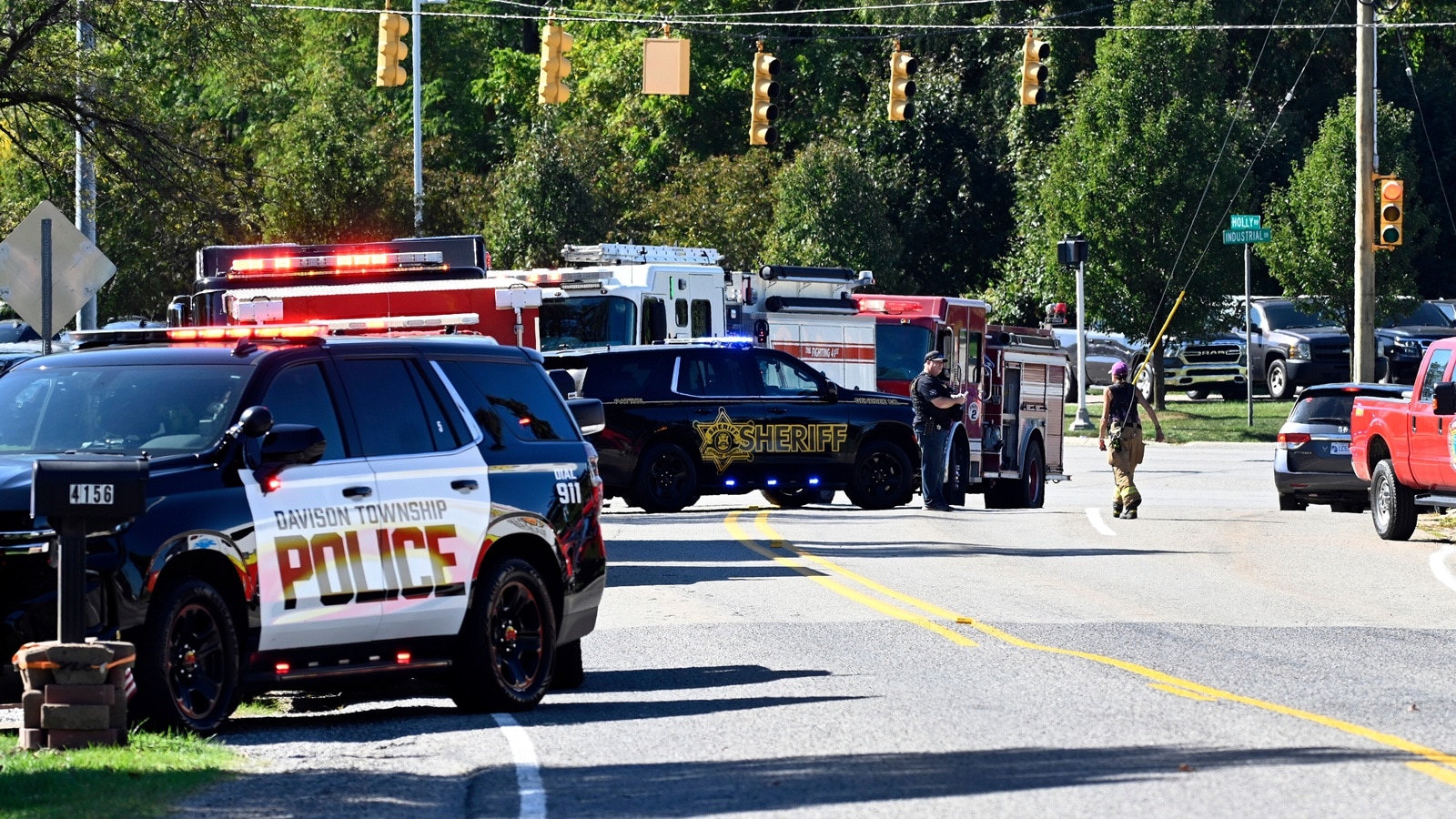
The physical wounds—blunt, bleeding, and terrifying—were attended to quickly. Emergency services arrived with the practiced urgency of a city that has seen too much. The victims were treated at the scene and taken to the hospital. Their recovery will be measured in stitches and physical therapy.
The recovery of the neighborhood follows a different timeline.
When a stabbing occurs in a specific cultural enclave, the blade cuts through more than skin. It slices into the collective psyche. Golders Green isn't just a collection of postcodes; it is a symbol of resilience. Seeing blue lights flashing against the backdrop of Hebrew signage sends a pulse of adrenaline through a population that is already hyper-aware of the rising tide of global tensions.
The Sentinel Effect
Community security groups like Shomrim and the CST (Community Security Trust) aren't just logistical organizations. They are the physical manifestation of a lived experience that says: We cannot afford to be complacent. On that afternoon, their presence was immediate. While the Metropolitan Police moved in to make the arrest—charging a man with two counts of Section 18 grievous bodily harm and possession of an offensive weapon—the local security teams were already weaving a net of reassurance around the perimeter.
This is the invisible labor of the Jewish community in London. Every school has a guard. Every synagogue has a reinforced door. When you grow up in this environment, you learn to see the world through a dual lens. You see the beauty of the tradition, but you also see the exit routes. You notice the person standing too long on the corner. You memorize the color of a passing car.
It is an exhausting way to live, yet it is a necessary one. The arrest of the suspect brought a technical end to the threat, but it did not lower the heart rates of those who watched it happen. The police later clarified that the event was not being treated as terror-related, a distinction that matters immensely for legal proceedings and national statistics. Yet, for a person who just saw a neighbor attacked with a knife, the technical classification of the motive feels like a distant, academic exercise.
The Echo in the Streets
Consider the ripple.
One person is attacked. Five people witness it. Fifty people hear the screams. Five thousand people receive the WhatsApp alert within ten minutes. By nightfall, the story has traveled across the ocean.
This is how trauma scales.
The suspect, identified in court proceedings as a local individual with a history of mental health challenges, represents a specific kind of modern tragedy. It is the collision of a fractured mind and a vulnerable target. When the legal system takes over, the focus shifts to "fitness to plead" and "containment." But the streets stay behind.
The bakeries opened the next morning. They had to. That is the defiance inherent in Golders Green. You sweep the glass, you scrub the pavement, and you put the bread in the oven. But the eyes of the shopkeepers are different. They linger on the door a second longer. They trade stories not of what happened, but of what could have happened if the intervention hadn't been so swift.
Metropolitan Police Inspector Scott Lubin noted that extra patrols were deployed to provide "reassurance." It is a standard phrase in the wake of violence. But what does reassurance look like? It looks like a police officer standing outside a kosher butcher shop. It is a paradox of modern urban life: we feel safer because the police are there, but their very presence reminds us that we are in a place where we need protection.
The Architecture of Fear and Faith
We often treat news as a consumable product. We read the headline, we feel a flicker of sympathy or outrage, and we scroll to the next story. We forget that for the victims, the "story" doesn't end when the news cycle moves on.
One of the victims was a man in his 60s. Think about the decades of life he has carried through those streets. He has seen the neighborhood change, seen generations grow up, perhaps walked that same route ten thousand times. Then, on a Tuesday, the map of his life was redrawn by a stranger with a blade.
The psychological cost of such an event is a tax paid by the entire community. It is the "security tax"—not just in pounds and pence for the guards and the cameras, but in the mental bandwidth required to simply exist in public.
Yet, there is a counter-narrative here. It is found in the way people didn't run away, but ran toward.
Witnesses and shop staff didn't just wait for the sirens. They intervened. They used what they had—crates, chairs, their own voices—to corral the chaos until the professionals arrived. This is the human element that a police report misses. It is the realization that while one person chose to destroy, a dozen others chose to protect.
Beyond the Yellow Tape
The cordons eventually come down. The yellow tape is balled up and thrown into a bin. The news vans pack their tripods and head toward the next crisis.
What remains is the quiet, stubborn persistence of a people who refuse to be defined by the worst moments of a Tuesday afternoon. The conversation in the cafes shifts from the attack back to the weather, the rising cost of rent, and the upcoming holidays. But the shift is conscious. It is an act of will.
We live in a world that is increasingly jagged. The "dry facts" of a stabbing in London are part of a larger, messier portrait of a society struggling to balance mental health, public safety, and the protection of minority groups. We want easy answers. We want to know exactly why it happened so we can tell ourselves it won't happen to us.
The truth is more uncomfortable.
Safety is a fragile, shared illusion that we all agree to maintain. In Golders Green, that illusion was torn for a moment, revealing the raw nerves beneath. The man in the dock will face his charges. The victims will heal their scars. The community will continue its watchful vigil.
As evening falls over Hamilton Road, the lights in the shop windows flicker on, casting long shadows across the pavement where the struggle took place. The street is busy again. The hum has returned. But if you look closely at the faces of the people passing by, you see it—the subtle, steely resolve of those who know exactly what it costs to stay.
The sirens are gone, but the silence that follows them is never quite the same as the silence that came before.