Sunlight moves slowly across a worn linoleum kitchen floor in Kowloon. It creeps past the leg of a wooden dining table, climbs the rungs of an empty chair, and stops at the edge of a tea cup that hasn't been warmed since morning.
In thousands of homes across Hong Kong, this is the architecture of modern life: quiet, vertical, and increasingly lonely.
Mathematics has a cold way of describing human destiny. By the year 2046, nearly one in three residents in this city will be aged 65 or older. The numbers are clean columns on bureaucratic spreadsheets, neatly typed projections drafted in air-conditioned offices. But human reality is messy. It looks like an elderly woman staring at a jar of medicine she cannot open because her knuckles have surrendered to arthritis. It looks like a son who loves his mother dearly, yet finds himself crushed between the impossible demands of a seventy-hour workweek and the unyielding timeline of bodily decay.
We built a metropolis that moves at the speed of high-frequency trading, yet we forgot how to slow down for the bodies that built it.
For generations, the default answer was simple: domestic care. Families relied on migrant workers from abroad to bridge the widening gap between corporate productivity and domestic survival. Yet, as the demographic cliff approaches, the traditional model of household care is fracturing under its own weight. The supply lines are straining. Other nations are bidding higher, offering softer landings, or tightening their own borders. Hong Kong woke up to a sobering realization: you cannot import an entire social safety net without competing for it.
Enter the government’s labor import schemes, specifically designed to inject oxygen into a suffocating eldercare ecosystem. Policy makers look at institutional care facilities, at newly minted training programs, and at managed quotas for imported care workers. They call it structural adjustment. They call it strategic foresight.
To understand what is actually happening, let us walk away from the government press releases and step inside a hypothetical facility in Tsuen Wan. Let us call her Auntie Mei.
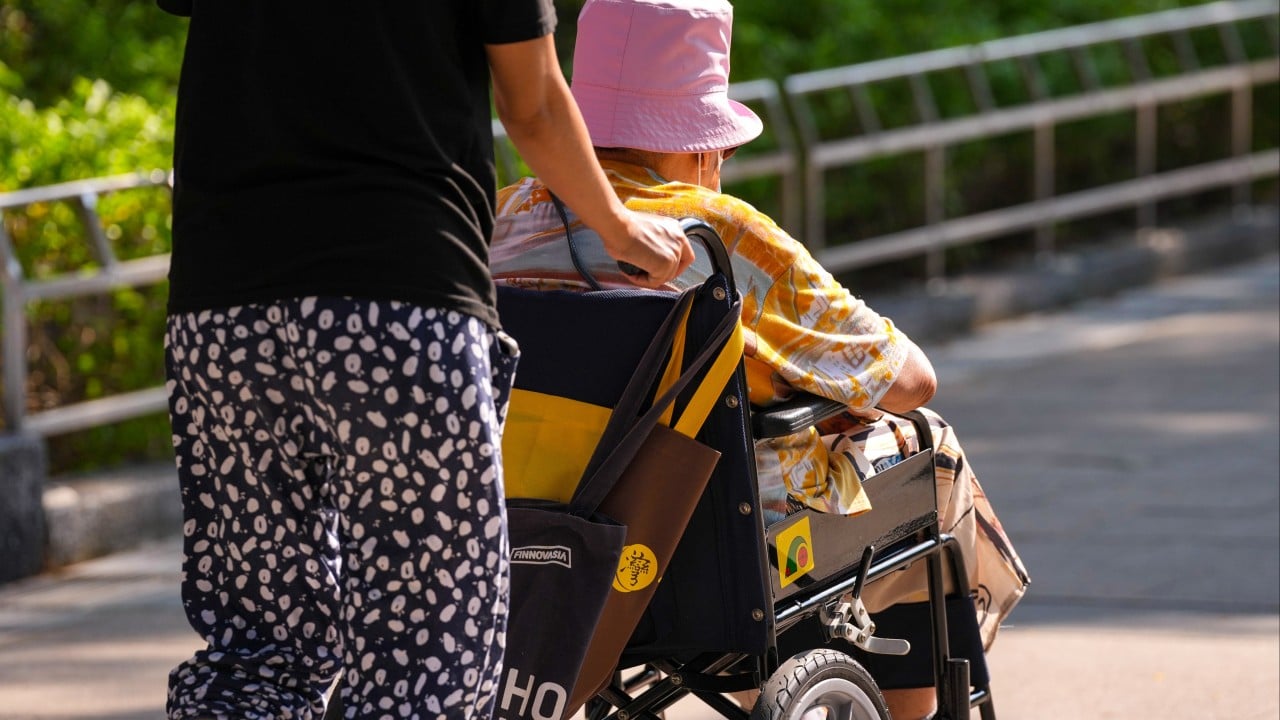
Mei is eighty-two. Her world has shrunk to the dimensions of a motorized wheelchair and the television screen playing endless Cantonese melodramas. She remembers when the harbor smelled of diesel and ambition, when every street corner hummed with the raw energy of manufacturing. Now, the city's pulse has slowed for her, but it races for everyone else.
When a new care worker arrives from across the border—let us call him Li, trained in specialized geriatric support, speaking fluent Cantonese, carrying his entire life in a nylon suitcase—he does not represent a policy metric to Auntie Mei. He represents the difference between a morning spent staring at a blank wall and a morning that begins with a warm towel, a gentle joke, and a cup of lukewarm water brought precisely when she is thirsty.
This is the invisible stakes of the carer scheme. It is not merely about plugging workforce deficits. It is about dignity under pressure.
Critics often look at such programs through a lens of skepticism, and rightly so. Anytime a government opens channels for imported labor, valid fears arise. Will wages depress? Will training standards dilute? Will workers find themselves vulnerable to exploitation in hidden apartments and understaffed wards? These are not trivial concerns. They are moral guardrails that must be held with absolute rigidity. If we build a system of care on the backs of the unprotected, we have solved nothing; we have simply transferred our cruelty to a different ledger.
Yet, to reject the mechanism entirely out of fear is to embrace a paralysis that sentences thousands of elderly residents to isolation.
Consider the alternative. Picture an eldercare facility operating at twenty percent capacity because no local workers can be found at prevailing wages. Picture nurses running down sterile corridors, their pagers buzzing incessantly, forced to choose between changing a soiled sheet and holding the hand of a dying man who just wants someone to stay in the room until the fear passes.
That is not efficiency. That is systemic failure.
The brilliance—and the peril—of Hong Kong's revised foreign carer initiatives lies in the execution. Bringing workers into institutional residential care homes requires more than a visa stamp. It requires integration. It requires housing that does not treat human beings like temporary inventory. It requires rigorous certification standards that ensure the person lifting an elder's frail frame knows the biomechanics of bone density as well as the empathy required to soothe a frightened mind.
We are watching a grand social experiment unfold in real-time. A hyper-dense, hyper-capitalist city is attempting to engineer its own compassion.
Behavioral patterns across developed East Asian societies show a striking convergence. Japan faced this wall decades earlier, experimenting with robotics and rigid immigration controls before slowly realizing that iron and silicon cannot replace human touch. Singapore carved out a different path, tightly regulating foreign domestic helpers while subsidizing community care networks. Hong Kong sits somewhere in the middle, uniquely pressured by its geographic constraints, astronomical real estate costs, and a culture that traditionally viewed family care as an absolute moral obligation.
That moral obligation has not vanished. It has simply collided with the hard geometry of economics. When both parents must work just to maintain a tiny flat, the traditional multi-generational household—where a grandmother watched the children while the daughter-in-law managed the home—dissolves. The math no longer closes.
So we outsource the care, or we crumble.
But outsourcing is too clinical a word for what actually occurs in the quiet hours of the night. When Li adjusts Auntie Mei’s pillow at three in the morning, listening to the rhythmic hum of the air conditioner, there is no policy document in the room. There is only another human being making sure that life, in its twilight, retains its shape.
We must stop talking about the aging population as if it were a natural disaster, like a typhoon or an earthquake. Aging is not a catastrophe. It is a triumph. It is proof that we built a society healthy enough, wealthy enough, and stable enough for people to actually grow old. The failure is not that our people are living longer; the failure would be if we decided we were too busy to care for them once they got there.
The schemes and quotas will evolve. Bureaucrats will adjust the dials, tweak the salary thresholds, and debate the ratios in legislative chambers. Headlines will scream about labor shortages and economic competitiveness.
Yet, beneath the noise of the news cycle, the fundamental question remains startlingly intimate.
It is about who answers the bell when the room goes quiet. It is about whether we have the courage to invite the world into our homes and institutions to help us carry the oldest, heaviest burden of human existence: the simple duty of looking after one another when our strength finally gives way.
The sunlight shifts again, moving off the linoleum and climbing the wall toward the ceiling clock. The hands keep turning. The chairs remain filled, or they do not. And the city keeps moving, deciding every single day what kind of ancestors it wishes to be.