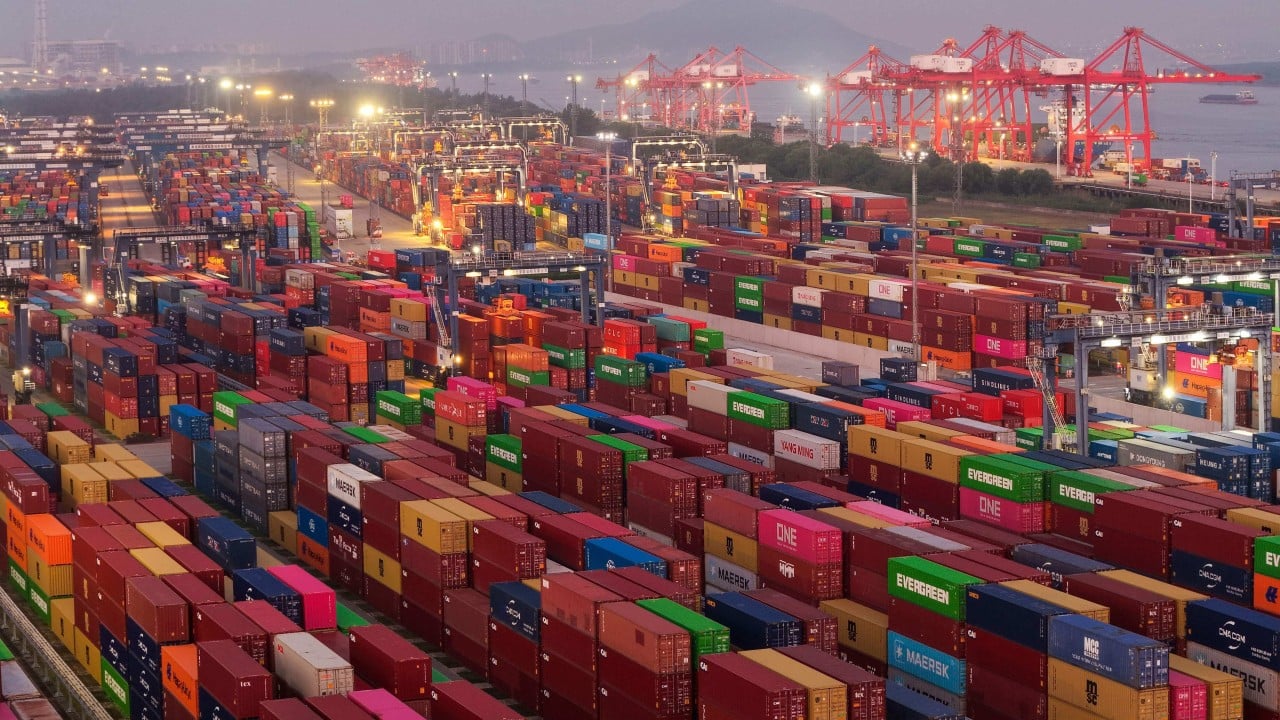
The shipping containers stacking up at the ports of Rotterdam and Antwerp do not shout. They are painted in corporate blues, reds, and grays, weathering the North Sea mist in absolute silence. Inside those steel boxes rest the quiet victors of a modern industrial transformation: electric motors, solar cells, and rows of pristine automated components built half a world away.
To the office workers in Brussels, these imports are lines on an Excel spreadsheet. To Thomas, a third-generation foreman at an industrial manufacturing plant in Germany’s Ruhr Valley, they are a slow-moving flood. Also making news recently: Stop Chasing Happiness Because It Is Making You Weak.
"We used to set the standard for what precision engineering looked like," Thomas says, wiping grease from his hands as he gestures toward an empty assembly line. "Now, we spend half our morning meetings trying to figure out how competitors can ship finished goods across oceans and still undercut our raw material costs."
This dynamic forms the core of an escalating economic puzzle that has cornered the European Union. Official data shows the bloc's goods trade deficit with China ballooned to roughly 360 billion euros. That translates to a billion euros a day bleeding across borders, an imbalance that European policymakers have finally labeled unsustainable. More details on this are covered by Investopedia.
Enter the October deadline.
Behind closed doors in Brussels, trade commissioners and visiting ministers have drawn a hard line in the calendar. The target is autumn, specifically an mid-October leadership summit where tangible results must materialize to stem the tide. It is a diplomatic tightrope walk. On one side sits a defensive European industrial base choking on high energy prices and structural disadvantages. On the other side stands an economic powerhouse capable of swift retaliation, already proven by duties slapped on European cognac, pork, and dairy products when past anti-subsidy punches were thrown.
Consider what happens next: Brussels hesitates, Beijing waits, and factories in the heartland keep turning off their lights.
The European Commission’s previous interventions, such as the lengthy anti-subsidy investigations into battery electric vehicles, taught bureaucrats a bitter lesson. The resulting tariffs were meant to act as a shield, but they ultimately divided member states, dragged on for twelve months, and triggered immediate retaliatory strikes against vulnerable European agricultural sectors. The rulebook Europe relied on for decades was written for a different era of global commerce—an era before state-backed economies achieved massive scales of manufacturing efficiency that domestic European firms simply cannot match on a level playing field.
Now, the strategy has shifted from blunt punitive tariffs toward negotiated guardrails. Negotiators are attempting to build a joint monitoring platform to track sudden import surges before they swallow entire market segments. They are wrestling with critical mineral export controls that threaten Europe's access to rare earths.
Yet, skepticism hangs thick in the air. Seasoned trade watchers point out that complex structural issues rarely resolve neatly by arbitrary calendar dates. The pressure inside European capitals is immense, driven by local chambers of commerce watching their profit margins evaporate.
Back in the Ruhr Valley, Thomas looks up at a crane moving a half-empty crate. He does not care about WTO reforms or ministerial dinners in Belgium. He cares about whether his plant will still be casting steel when the leaves finish falling.
The clock keeps ticking toward October, and the containers keep arriving.
EU sets October deadline to get 'tangible' results with China
This video provides additional context regarding the high-stakes ministerial talks in Brussels and the strategic priorities behind the European Union's October deadline.
_1617603374686.jpg)