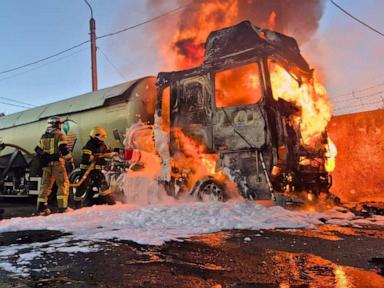
The Silence Before The Siren
The morning air in the city tasted of iron and ash. It was a cold, gray dawn, the kind that settles deep into the bones of a population that has forgotten how to sleep without one ear open. We had been told that a truce was coming. A temporary stillness, a breath of air between the endless hammer of artillery. People spoke of it in hushed, almost reverent tones at the breadlines and the water stations. A few hours of quiet. A chance to bury the dead and check on the wounded without the whistling shrapnel overhead.
Then the sky broke.
The strike came at 9:00 AM, a brutal punctuation mark at the end of a long, terrifying sentence of war. Five people were dead before the first notes of the ceasefire could even be rehearsed.
Consider the life of Oksana. She is not a real person, but rather a composite of the mothers and grandmothers I have met in the shattered villages of the east. Oksana had spent the previous evening sweeping glass from her living room floor, her hands trembling with the sheer exhaustion of survival. She had told her youngest son that the next day would be different. The guns would stop. They would walk down to the river, just to feel the sun on their faces without the terror of an incoming shell.
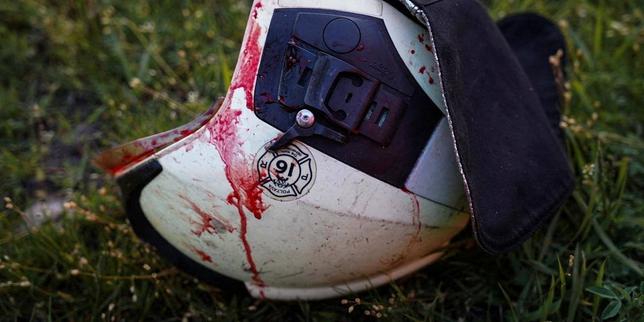
Instead, Oksana spent the morning pulling debris from the ruins of her neighbor’s kitchen. Five lives were snuffed out in a flash of heat and concrete dust, their final moments stolen by a barrage that arrived just hours before the guns were supposed to fall silent.
The Anatomy Of Cynicism
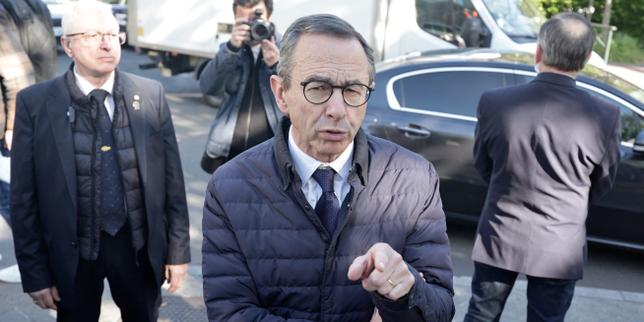
Ukrainian President Volodymyr Zelenskyy did not mince words when the news reached the capital. He called it "utter cynicism."
To understand that phrase, you have to understand the psychology of the people who are subjected to it. Cynicism, in the context of this conflict, is not merely a philosophical detachment. It is a kinetic weapon. It is the deliberate raising of a person's hopes, only to crush them with extreme violence the moment before the promise is realized. It is the act of offering a hand of peace with a knife hidden in the sleeve.
Think about the transition from hope to despair. It is not a gentle slope. It is a precipice. When a temporary truce is announced, the human mind immediately begins to relax. The adrenaline, which has kept the body running on emergency rations of fear and focus, begins to drain away. People let their guard down. They look at their neighbors. They allow themselves to think about tomorrow, rather than just the next ten seconds.
That relaxation of fear makes the strike that follows far more devastating. The five people who died that morning were not just statistics in a briefing room. They were individuals who had dared to believe, for a fleeting moment, that they might see another day without violence.
Let us look closer at the individuals whose lives were erased that day. There was a teacher who had spent her life’s savings on textbooks for the local school, a young boy who wanted to be an engineer, an elderly couple who had lived in the same apartment for fifty years. Their deaths are not just losses for their families. They are losses for the entire community, representing a fragment of the future that has been stolen away.
The Paradox Of Temporary Peace
We must ask ourselves what a brief truce actually achieves when it is bracketed by such violence. Is it an attempt at humanitarian relief, or is it a cynical maneuver designed to reposition troops and resupply the front lines?
The historical record offers little comfort. Ceasefires in prolonged conflicts often serve as a pause for both sides to catch their breath, reload their weapons, and prepare for the next phase of the slaughter. But when the violence is allowed to escalate just minutes before the truce takes effect, it sends a chilling message to the civilian population. It says that no one is safe, and that no promise made by the aggressor can be trusted.
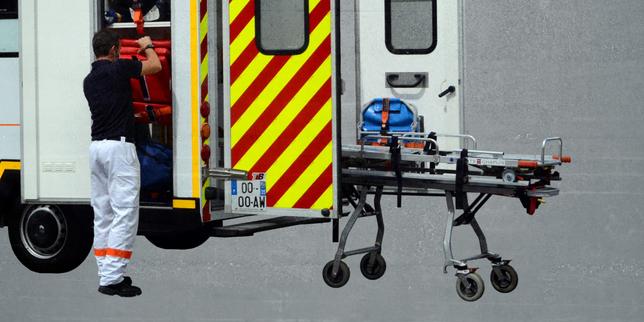
Consider what happens next in the quiet hours after the strike. The sirens wail, the emergency workers arrive, and the survivors wrap themselves in thick blankets against the freezing cold. The world looks on, issuing statements of condemnation, but the reality on the ground remains unchanged. The rubble must be cleared. The graves must be dug. The children must be taught to recognize the sound of incoming artillery.
The timing of these attacks is not an accident. It is a calculated act of terror, designed to break the spirit of a population that has already endured so much. By striking when people are preparing for a moment of peace, the aggressor ensures that the terror is amplified, that the wound is deeper, and that the scars remain visible for much longer.
The Mechanics Of War And Hope
Imagine the conflict as an immense, rusted machine. It grinds through days and nights, consuming fuel made of human lives, dreams, and homes. The operators of this machine do not care about the gears that snap or the oil that spills. They only care that the machine keeps moving.
When a truce is proposed, it is like turning off the machine for a brief inspection. The gears stop. The screeching noise fades, and people come out from the shadows to look at the sky. But then, right before the switch is flipped, the machine is cranked to its maximum speed for one final, violent revolution. It is an act of pure malice.
The people of Ukraine know this machine intimately. They have lived with its roar for years. They have learned to read the rhythm of its destructive cycle. They know that when a temporary ceasefire is announced, the violence often spikes beforehand. This is not a coincidence; it is a pattern of behavior that has been observed in countless conflicts throughout history. The aggressor seeks to maximize the psychological impact of the violence by contrasting it with the impending peace.
This psychological warfare is designed to induce a state of learned helplessness. When every moment of hope is followed by a brutal strike, the human mind begins to question the value of hope itself. Why look forward to a ceasefire if the ceasefire is preceded by death?
The Human Cost
Let us look closer at the victims. They were ordinary people going about their morning routines. A teacher grading papers by the glow of a kerosene lamp. A baker lighting the ovens before the morning rush. A young girl playing with a stray cat.
The loss of five lives in a single strike might seem small compared to the vast numbers of the war. But numbers obscure the human reality. Each of those five individuals was a node of connection, a person who held together a family, a community, a memory. When they are erased by a single explosion, the space they leave behind is not just an empty room. It is a void in the social fabric that cannot be replaced.
I remember standing in a bombed-out courtyard a year ago, talking to a man who had lost his entire family in a similar attack. The air was thick with the smell of burning rubber and brick dust. He looked at me and said something that I have never forgotten. He said that the hardest part was not the destruction of the buildings. The hardest part was the realization that the people who ordered the strike did not even consider them human.
That is the true meaning of the cynicism Zelenskyy spoke of. It is the reduction of human life to a mere coordinate on a map.
When you look at the destruction, you realize that it is not just the physical structures that are being targeted. It is the very fabric of daily life. The simple acts of walking a dog, buying bread, or sitting on a park bench are transformed into acts of profound courage. Every time a civilian steps out into the street, they are making a choice to continue living despite the threat of violence.
The Ripple Effect
The impact of such strikes extends far beyond the immediate blast zone. It ripples outward, affecting the morale of the entire nation. When people see that a promised truce is treated with such contempt, they begin to lose faith in the possibility of any diplomatic resolution. The psychological toll of this hopelessness is immense. It creates a state of chronic trauma that will take generations to heal.
Think about the children who grow up in this environment. Their baseline for reality is the sound of explosions and the sight of shattered glass. They learn to calculate the distance of a strike by the time it takes between the flash and the sound. They know which basements are safest. They know how to breathe when the air turns thick with smoke.
This is not just a military conflict. It is a crisis of the human spirit. The decision to launch strikes just before a ceasefire is a direct assault on the psychological resilience of the Ukrainian people.
Consider the long-term consequences of this continuous exposure to violence. The human brain is not designed to process such levels of stress for extended periods. It adapts by entering a state of hyper-arousal, where the nervous system is always on alert for the next threat. This adaptation allows people to survive, but it leaves deep, invisible scars. Relationships fray under the strain. The ability to trust others diminishes. The simple joys of life are overshadowed by the constant expectation of disaster.
The Shape Of Endurance
Despite the cynicism and the violence, there is something profoundly enduring about the people on the ground. When the smoke clears, they do not pack up and leave in despair. They pick up the pieces. They sweep the glass. They share what little food and water they have left.
The resilience of Oksana and her neighbors is the true story of this war. It is not a story of high politics or strategic maneuvers. It is a story of ordinary people holding onto their humanity in the face of absolute inhumanity.
When the truce finally takes hold, even if only for a brief and fragile moment, it is not given to them by the politicians. It is taken by the people themselves. They create their own islands of peace in a sea of violence. They sit in the quiet, bruised and battered, but unbroken.
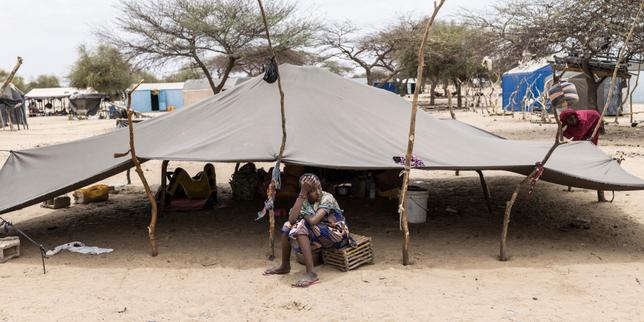
The final image that stays with me is not the fire or the destruction. It is the sight of an old woman sitting on a wooden stool outside her ruined house, wrapped in a faded woolen blanket. She is holding a cup of lukewarm tea, watching the smoke rise from the distant horizon. She is not crying. She is simply waiting. And in her quiet endurance, there is a strength that no artillery can ever destroy.