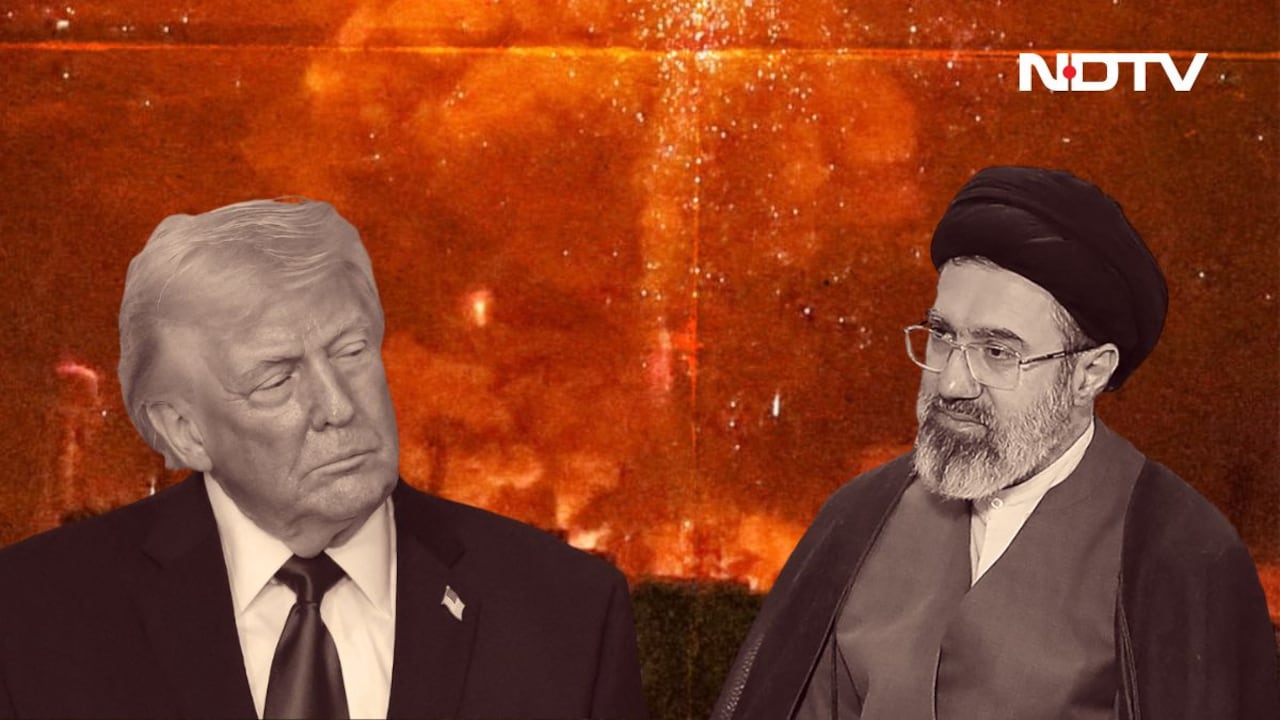
Every few months, a diplomatic envoy steps in front of a microphone, drops a soundbite about how the United States could "absolutely" strike Iran by the weekend, and sends cable news anchors into an orgasmic frenzy of graphic maps and retired generals pointing at aircraft carriers.
You are being played.
That headline is not intelligence. It is not a leak of imminent kinetic action. It is coercive diplomacy dressed up as breaking news, and the mainstream press eats it up every single time because panic sells ads. When a diplomat says a military strike is "on the table" or could happen "this weekend," they are performing a scripted psychological operation aimed at Tehran's leadership, domestic political critics, and regional allies who are getting nervous about American resolve.
If the Pentagon were actually preparing to launch a massive air and naval campaign against Iranian nuclear or military infrastructure within 48 hours, the last person on earth allowed to hint at it would be a diplomatic envoy chatting with reporters. Operational security does not work via press conference.
Let's dismantle the lazy consensus around "imminent" strikes on Iran and look at the cold, hard logistics, doctrine, and economic realities that make a sudden weekend blitz nearly impossible—and why Washington actually benefits from pretending otherwise.
The Myth of the Clean Weekend Strike
Cable news pundits love the fantasy of the surgical strike. They talk about B-2 stealth bombers flying out of Whiteman Air Force Base, dropping Massive Ordnance Penetrators on Fordow or Natanz, and being back in Missouri in time for Sunday dinner.
That is pure Hollywood fiction.
In real military planning—the kind taught at the Naval War College and practiced in Pentagon war games for the last two decades—there is no such thing as a limited, one-off strike against a state actor with asymmetric reach like Iran. The moment the first Tomahawk cruise missile hits Iranian soil, the United States no longer controls the escalation ladder.
I have spent years analyzing defense logistics and regional force posture, and the amateur mistake analysts always make is looking at capability instead of sustainment. Yes, the U.S. Air Force and Navy have the raw firepower to destroy above-ground Iranian facilities in a single night. The problem is not Day One. The problem is Day Two through Day Ninety.
What Happens on Monday Morning
If Washington pulls the trigger on Friday night, here is the immediate sequence of events that military planners actually have to budget for:
- The Strait of Hormuz freezes. Iran does not need a modern blue-water navy to shut down 20% of the world's petroleum transit. Fast-attack craft, sea mines, coastal anti-ship cruise missiles, and swarms of cheap drones are enough to make maritime insurance premiums skyrocket to infinity. Tankers stop moving instantly.
- Regional bases come under saturation fire. Tens of thousands of American troops stationed across Iraq, Syria, Kuwait, Bahrain, Qatar, and the UAE become immediate targets for ballistic missiles and one-way attack drones launched not just from Iran, but from proxy networks across the Levant and Yemen.
- Air defense stockpiles burn out. Interceptor missiles—Patriot, THAAD, and naval Standard Missiles—cost millions of dollars per shot and take years to manufacture. Trading $4 million interceptors for $20,000 Iranian Shahed-style drones is a math problem the Pentagon loses within weeks.
A "weekend strike" is a contradiction in terms. You do not start a regional war on a Friday unless you are prepared to fight a multi-month, multi-front attrition campaign that sends global oil prices past $150 a barrel and craters the global economy.
Why Diplomats Love Empty Threats
If a surprise strike is logistically suicidal without months of visible force buildup, why do envoys keep saying the U.S. could strike "this weekend"?
Because ambiguity is cheap, and deterrence requires the illusion of madness.
In international relations theory, this goes straight back to Thomas Schelling’s classic work on brinkmanship and "the threat that leaves something to chance." If Tehran believes Washington is strictly rational, predictable, and terrified of oil price spikes, Iranian leadership will push enrichment, proxy attacks, and regional provocations right up to the red line without ever fearing consequences.
To stop that behavior without actually firing a shot, U.S. officials have to periodically inject chaos into the narrative. They have to convince the Islamic Revolutionary Guard Corps (IRGC) that the White House just might be reckless enough to do it anyway.
- The Envoy's Audience: When an envoy speaks to the press, their real audience sits in Tehran, Jerusalem, and Riyadh.
- The Signal to Allies: It tells regional partners, "Hold your fire, we have this under control, don't go rogue."
- The Signal to Tehran: It warns Iranian negotiators that stalling tactics carry a kinetic price tag.
- The Media's Failure: Reporters treat a negotiating tactic as a literal calendar forecast.
The Invisible Tell: How You Actually Know a Strike Is Coming
Stop listening to what officials say in front of cameras. Watch what the Pentagon moves on the chessboard. Modern warfare of the scale required to hit Iran cannot be hidden behind a podium. Before a single bomb drops, you will see massive, undeniable logistical footprints across the globe.
The Real Pre-War Checklist
If a strike were actually happening this weekend, open-source intelligence analysts would already be tracking the following movements:
- Tanker Bridges: Dozens of KC-135 and KC-46 aerial refueling tankers deploying to airbases in Europe and the Middle East. Strike packages cannot reach deep inside Iran without massive aerial gas stations.
- Carrier Strike Group Convergence: Not just one carrier sailing lazily through the Gulf, but two or three Carrier Strike Groups positioned outside the immediate choke point of the Strait of Hormuz, operating in the Arabian Sea with full escorts.
- Patriot and THAAD Airlifts: Heavy C-17 Globemaster transport flights working around the clock for weeks to reinforce air defenses at Al Udeid, Al Dhafra, and Camp Arifjan.
- Non-Combatant Evacuation Orders (NEO): The State Department quietly pulling embassy dependents and non-essential personnel out of Beirut, Baghdad, Erbil, and Gulf capitals.
When those four things happen simultaneously, cancel your weekend plans. Until then, an envoy saying "we could strike this weekend" is just noise.
Answering the Wrong Question Entirely
Whenever headlines like this trend, search engines light up with the same predictable questions: "Is the US going to war with Iran?" and "When will the US attack Iran?"
Both questions miss the actual conflict already happening.
The United States and Iran are not waiting for a weekend to start fighting. They have been locked in a low-intensity, continuous shadow war for years. Cyberattacks disabling fuel stations and port infrastructure, covert maritime sabotage, targeted assassinations of scientists and commanders, sanctions warfare choking currency reserves, and proxy skirmishes across four countries—that is the war.
Asking when the "real" war starts assumes conflict only counts when supersonic jets drop 2,000-pound bombs. That is an outdated 20th-century mindset. Modern great-power and regional conflicts are fought in the gray zone precisely because neither side wants the catastrophic price tag of full-scale conventional war.
The Flaw in the Contrarian View
To be completely honest about the risks here, relying on deterrence theater carries one massive, terrifying flaw: miscalculation.
Bluffing works until the other guy calls your bluff, or worse, believes your bluff is real and decides to strike first. In military doctrine, the "use it or lose it" dilemma is dead serious. If Iranian commanders genuinely become convinced by reckless American rhetoric that an incoming strike is 48 hours away, their most rational military move is to launch a preemptive salvo of ballistic missiles at U.S. bases and regional oil infrastructure before their own launch sites are destroyed on the ground.
By talking tough to look strong, diplomats accidentally raise the risk of stumbling into a war neither Washington nor Tehran actually wants to fight.
How to Read Geopolitical Headlines Without Getting Played
If you want to stop falling for clickbait war scares, apply a simple filter every time a headline screams about imminent military action:
- Check the messenger. Is the quote coming from an anonymous defense official detailing troop movements, or a political appointee/diplomat making a theoretical statement? Theoretical statements equal zero action.
- Look at the calendar. Sabre-rattling routinely spikes right before nuclear talks, UN General Assembly meetings, or domestic election cycles. Timing tells you the motive.
- Follow the oil markets, not the pundits. Brent crude traders have billions of dollars riding on whether bombs actually fall on Friday night. If Brent crude is sitting flat or moving by less than two percent while cable news screams about World War III, the smart money knows it is a bluff.
Stop treating diplomatic posturing like a weather forecast. Until the tankers fly, the embassies empty out, and the insurance markets freeze, "this weekend" is just another talking point designed to keep you watching through the commercial break.



