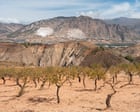
The tap in Ana’s kitchen does not flow; it gasps. It is a dry, metallic rattle that has become the background track to summers in the interior of Portugal. For generations, water here was a quiet certainty. It was the dew on the olive groves, the cool depth of the stone wells, the predictable rhythm of winter rains. Now, it is a currency counted in drops.
A few kilometers away, beneath the jagged hills, lies a different kind of currency. Lithium. Cobalt. Neodymium. The shiny, subterranean building blocks of a green tomorrow.
Europe has made a grand promise to transition away from fossil fuels, to sever its reliance on foreign powers for the critical minerals that power electric car batteries, wind turbines, and smartphones. It is a noble, necessary ambition. But as the European Union accelerates approvals for mega-mining projects across the continent, a quiet mathematical tragedy is unfolding. The rocks we desperately need are buried precisely where the water is running out.
To understand the scale of what is happening, we have to look past the pristine mock-ups of electric vehicles gliding through emissions-free cities. We have to look at the mud.
The Chemistry of Thirst
Mining is an inherently thirsty business. Extracting a single ton of lithium through hard-rock mining can require hundreds of thousands of liters of water. It is used to suppress dust, to wash the crushed ore, and to separate the microscopic flecks of valuable metal from millions of tons of useless rock.
Consider a hypothetical but statistically accurate village we will call Santa Maria, nestled in a Mediterranean valley. The European Union recently designated the surrounding region as a priority zone for critical mineral extraction. On paper, in Brussels, the math looks flawless. The mine will bring jobs. It will secure Europe’s technological sovereignty. It will lower carbon footprints.
But the regional climate models tell a completely different story. Santa Maria is already experiencing what hydrologists call severe water stress. The local aquifer, an underground sponge that takes centuries to fill, is depleting faster than the rains can replenish it.
When a industrial mine moves into a landscape like this, it does not just participate in the local water economy. It dominates it.
The process requires deep open pits or massive underground shafts. To keep these mines from flooding, operators must continuously pump water out of the ground. This process, known as dewatering, creates a phenomenon called a cone of depression. Picture sticking a straw into a milkshake and sucking hard; the liquid immediately dips around the straw. In the earth, that dip can extend for kilometers.
Suddenly, the shallow wells used by local farmers go dry. The roots of ancient cork oaks can no longer reach the lowered water table. The river that sustained the valley’s ecosystem shrinks to a muddy trickle.
The paradox is dizzying. We are quite literally draining the life from our landscapes to build the machines that are supposed to save the planet.
The Arithmetic of Risk
Policy advocates often argue that modern technology can mitigate these risks. They speak of closed-loop recycling systems, dry stacking of mine waste, and strict environmental regulations. They treat these safeguards as absolute guarantees.
They are not.
In reality, operating a massive chemical processing plant in a drought-prone zone is a high-stakes gamble. If a tailing pond—a massive reservoir holding the toxic, chemical-laden sludge left over from mining—dries out too quickly in a heatwave, the toxic dust becomes airborne, blanketing nearby towns. Conversely, if a sudden, violent flash flood hits the parched region—a hallmark of modern climate volatility—those same ponds can overflow, spilling heavy metals into the remaining drinking water supplies.
Industry insiders sometimes refer to this balancing act as a calculated risk. But for the people who live downstream, it feels less like calculation and more like Russian roulette.
The data backing this anxiety is stubborn. According to global hydrological assessments, more than half of the world's current and planned lithium and copper projects are located in regions facing high or extreme water stress. In Spain, Portugal, and parts of Central Europe, the intersection of mining permits and water scarcity maps looks like a bullseye.
The European Union's Critical Raw Materials Act aims to slash red tape, cutting the permit approval time for strategic projects down to just two years. In bureaucratic terms, this is viewed as a triumph of efficiency. In ecological terms, it is a terrifyingly short window to assess how a massive industrial project will disrupt an underground water system over the next fifty years.
Hydrology is not an exact science where you can flip a switch and see the results tomorrow. Underground water moves with an agonizing, invisible slowness. By the time a village notices their well water tastes metallic, or that their crops are failing, the damage to the aquifer was actually done a decade prior.
The Illusion of the Clean Break
We have fallen into the trap of thinking about the green transition as a series of simple substitutions. Swap a combustion engine for an electric motor. Swap a coal plant for a wind farm. Swap oil for lithium.
But earth systems do not recognize our neat economic categories. Every resource extraction has a physical footprint, a messy trail of displaced earth and consumed liquids.
The confusion stems from a lack of proximity. The average consumer buying an electric vehicle in Berlin or Paris sees only the absence of an exhaust pipe. They do not see the massive gray craters being carved into the hills of Extremadura or northern Portugal. They do not feel the anxiety of a farmer watching his livestock look at a dry trough.
It is easy to support a mine when it is an abstract data point on a spreadsheet labeled Strategic Autonomy. It is much harder when that mine sits at the headwaters of the river that supplies your city’s drinking water.
This is not an argument for inaction. The climate crisis is real, fast, and unforgiving. We cannot simply stop building green technologies. But we must find the courage to admit that our current path is riddled with hypocrisies. If we ruin our remaining freshwater systems to secure the minerals for a low-carbon future, we will have traded one existential crisis for another. You cannot drink an electric car.
A Different Way Home
The real problem lies in our stubborn refusal to look at the demand side of the equation. We are trying to sustain an economic model based on infinite growth using a different set of limited rocks.
What if the primary goal of the Critical Raw Materials Act wasn't just finding new places to dig, but radically reducing the amount we need to dig in the first place?
True security does not lie deeper in the parched earth. It lies in the circularity of what we have already extracted. Right now, Europe recycles only a tiny fraction of its electronic waste and spent batteries. The technology to reclaim these metals exists, but the economic incentives are skewed; it is often cheaper to blast open a new mountainside in a water-stressed valley than it is to build the sophisticated urban mining infrastructure required to recycle our old gadgets.
We need to invest in batteries that use abundant, non-toxic materials like sodium-ion, which don't require the same ecological devastation. We need to design electronics that are meant to be repaired and upgraded, not thrown into a drawer after twenty-four months.
Most importantly, we need to give local communities a real, binding voice in the process. True sustainability cannot be imposed from above by technocrats who will never have to buy bottled water just to cook their dinner.
Ana stands on her porch as the sun dips below the horizon, painting the dry hills in shades of bruised purple. The dust from the exploratory drilling rigs down the road hangs in the still air, a faint golden haze. She knows the world is changing, and she knows the city folk want clean air. She wants that too. But as she looks at the dying orange trees in her orchard, she asks the question that Europe has so far refused to answer.
When the metal is gone, and the trucks drive away, what will be left to drink?