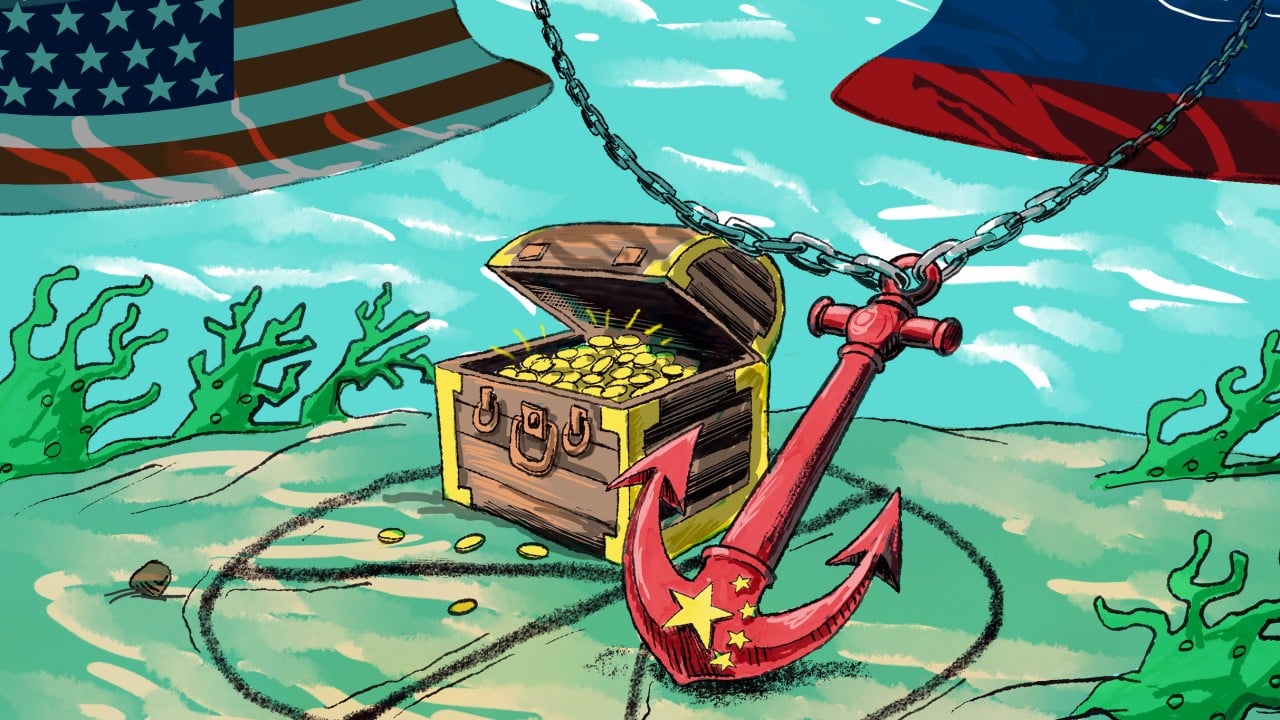
The headlines tell you that the world is fracturing into hostile, unyielding blocs. You see the bitter trade fights, the collapsed arms control treaties, and the relentless geopolitical posturing. But if you look closely at the actual movements of global leaders, a much different, highly pragmatic reality emerges.
Major powers aren't trying to blow up the board right now. They're managing their rivalries to avoid total chaos. Both Washington and Moscow are treating Beijing as a critical stabilizing anchor to keep their own competing agendas from spinning out of control.
This isn't about sudden global harmony or heartfelt trust. It's pure, cold self-interest. With the expiration of the New START Treaty leaving U.S.-Russia nuclear oversight at a dangerous dead end, and economic frictions rubbing raw, China has become the only major player capable of hosting the ultimate balancing act. Washington wants to stabilize economic ties and avoid a catastrophic multi-front conflict. Moscow needs a reliable economic lifeline to withstand Western pressure.
The Ultimate Time Management Strategy
The simultaneous diplomatic tracks between the world's biggest capitals look contradictory on the surface. They aren't. They represent a classic exercise in strategic time management. Nobody is trying to fundamentally change the global balance of power this week. Instead, they're regulating the speed of their competition to give themselves room to breathe.
Consider the recent high-level diplomatic choreography ahead of the major G20 and APEC summits. You had high-profile U.S. economic delegations traveling to Beijing to talk risk control, while Russian leadership consistently keeps the path to China warm. These back-to-back visits send a massive signal to the world. Even when core contradictions seem entirely irreconcilable, everyone still wants to maintain a bare minimum of communication to prevent a terrible miscalculation.
The goal here isn't to sign grand, historic peace treaties. It's about building a temporary buffer. Think of it as a political shock absorber. By keeping channels open through Beijing, both the U.S. and Russia can pursue their national goals without accidentally triggering a direct, hot confrontation that nobody actually wants.
Two Completely Different Agendas for One Capital
While both superpowers look to Beijing for stability, they want entirely different things out of the relationship. Their goals don't match up at all.
- The American Angle: Washington views the relationship through the lens of strict risk management. The priority is to stabilize the massive, interconnected economic ties and set guardrails around sensitive tech like artificial intelligence. It's not about expanding the friendship. It's about buying precious time for domestic strategic adjustments while ensuring trade competition doesn't morph into military friction.
- The Russian Angle: Moscow views Beijing as its most vital external pillar. For Russia, long-term stability with China is a strategic necessity to absorb Western economic sanctions and secure diplomatic room to maneuver. It's a deep partnership built on shared resistance to a unipolar international order, even if their ultimate visions for global governance diverge.
This puts China in a remarkably unique position. It functions as a geopolitical buffer zone. By engaging pragmatically with both sides, Beijing provides a predictable space where competing superpowers can gauge each other's boundaries without directly colliding.
The Limits of the Balancing Act
Don't mistake this managing of tension for a permanent fix. The foundation of this stability is incredibly fragile, and it's constantly being tested by real-world friction points.
For one, the growing economic and defense ties between Russia and China cause deep anxiety in Western capitals, where it's often viewed as a systemic challenge. Yet, the reality on the ground is far more nuanced than a simple, unbreakable alliance. Beijing has consistently avoided steps that would trigger sweeping secondary Western sanctions, demonstrating that its own economic stability always comes first.
At the same time, the U.S. continues to pursue security partnerships in the Indo-Pacific while attempting to keep its economic channels with Beijing open. It's a delicate tightrope walk. If trade frictions escalate too sharply or a miscommunication occurs in contested waters, the current strategic buffer could easily buckle under the weight of domestic political pressures.
Navigating the New Tripartite Reality
International stability right now depends entirely on interest bargaining and raw pragmatism, not lofty ideological talk. For businesses, investors, and policymakers, navigating this landscape means looking past the loud public rhetoric and focusing on where the actual lines are being drawn.
To thrive in this environment, you need to stop waiting for a return to the old global status quo and adapt to this fluid, three-way dynamic.
First, diversify your supply chains to withstand sudden, localized regulatory shifts without assuming a total global economic decoupling is imminent. The major powers are actively working to prevent total economic collapse, so complete isolationism isn't the baseline reality.
Second, closely track the specific guardrails being established in bilateral tech talks, particularly around AI and critical infrastructure. These agreements will define the legal boundaries of global tech commerce for the next decade.
Finally, build your organizational strategy around flexibility. The current stability is a managed window of opportunity, not a permanent guarantee. Keep your operations nimble enough to pivot whenever the tension between Washington, Moscow, and Beijing inevitably shifts.