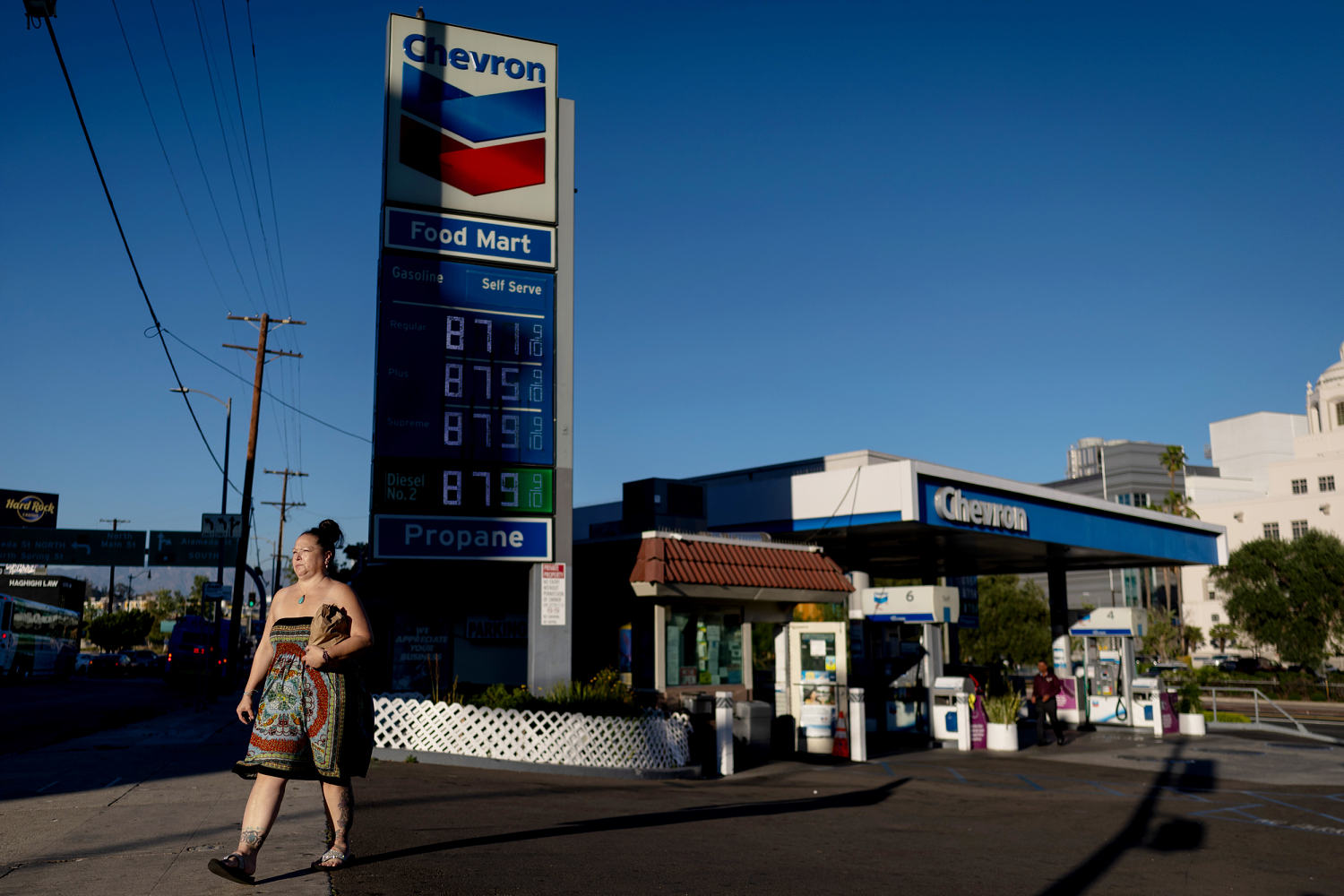
Fear sells. Panic drives clicks. When a headline screams that conflict in the Middle East is coming for your wallet, it is playing on a primal, outdated reflex. You are being told that geopolitical friction in the Persian Gulf is the primary lever of your daily cost of living. That is a convenient lie. It’s a narrative designed for 1974, not 2026.
The lazy consensus suggests that every drone strike or naval skirmish in the Strait of Hormuz adds a direct tax to your commute. It doesn’t. If you are staring at the pump and blaming a specific foreign capital, you are missing the massive, structural shifts in energy arbitrage and domestic refining that actually dictate your bank balance.
The Myth of the Iranian Premium
The market has already "priced in" the threat of Iranian disruption. It’s been priced in for forty years. When a conflict actually escalates, the price spike is often a brief, speculative spasm followed by a sharp correction. Why? Because the global supply chain is no longer a fragile glass thread.
In the old world, a closed Strait of Hormuz meant global paralysis. Today, it means a reshuffling of tankers. I have sat in rooms with energy traders who pray for conflict because it creates the volatility they need to extract profit from your fear. They know what you don't: the United States is currently the largest producer of crude oil in the history of the planet. We produce more than Saudi Arabia. We produce more than Russia.
The idea that we are beholden to the whims of a regional power in the Middle East is a ghost story told by analysts who haven't updated their models since the Carter administration. The real "Iran War" isn't happening in the Gulf; it's happening in the spreadsheet of every major ESG-focused investment firm that has choked off capital for new refinery capacity right here at home.
The Refining Bottleneck is the Real Enemy
You don't put crude oil in your car. You put gasoline in your car. This is the distinction the "geopolitical experts" ignore because it’s boring.
The United States has lost significant refining capacity over the last five years. We are trying to run a 21st-century economy on 20th-century infrastructure that is being decommissioned faster than it can be repaired. When the price of gas goes up, it is rarely because there isn't enough oil in the world. It is because there isn't enough "crack spread" capacity—the ability to turn that crude into usable fuel.
Imagine a scenario where the price of wheat drops by 50%, but every bakery in town burns down. Does the price of bread go down? No. It skyrockets. That is the state of the American energy market. Iran could sign a permanent peace treaty tomorrow, and your gas prices would still stay high because we lack the industrial "bakeries" to process the record-breaking amounts of oil we are pulling out of the Permian Basin.
Stop Asking About "The Future of Oil"
Most people ask: "When will oil prices go back to normal?"
This is the wrong question. It assumes "normal" is a fixed point. In reality, the price you pay at the pump is a composite of three things that have nothing to do with Iran:
- Refining Margin Disruption: Our refineries are running at over 90% capacity. Any hiccup—a hurricane in the Gulf, a maintenance delay in Ohio—causes a price surge that dwarfs anything a stray missile in the Middle East can accomplish.
- The Dollar as a Weapon: Oil is priced in USD. When the Federal Reserve pivots on interest rates, it moves the price of gas more effectively than any OPEC quota. A strong dollar makes oil cheaper for us, but more expensive for everyone else, shifting global demand patterns in ways that eventually bite us back.
- Inventory Management as Just-in-Time Torture: Major oil companies have moved to a "lean" model. They don't keep massive reserves. They keep just enough to satisfy the next quarter's projections. This makes the system incredibly efficient when things are calm, but catastrophically fragile the moment a single tanker gets delayed.
If you want to know what’s coming for your budget next, stop looking at maps of the Middle East. Start looking at the maintenance schedules of refineries in the Philadelphia and Houston corridors.
The Geopolitical Distraction
Focusing on Iran is a gift to domestic policymakers. It provides an external villain for an internal failure. If gas is $5 a gallon, a politician can point to a map and say, "It’s the war." They don't have to explain why permitting for new energy infrastructure takes a decade, or why our national grid is incapable of handling the transition they claim is mandatory.
I’ve watched executives at the highest levels of the energy sector laugh at the "geopolitical risk" segments on cable news. They know that even if Iran were to attempt to block the Strait of Hormuz, the response would be a coordinated, global effort that would likely see the strait reopened in a matter of days. The world's largest navies are not going to let $100 billion of cargo sit idle because of a regional skirmish.
The real risk is the slow, quiet decay of our own ability to move and process energy.
The Counter-Intuitive Strategy for Your Wallet
If you are waiting for "peace" to bring down your energy costs, you will be waiting forever. Conflict is a constant. The solution isn't hoping for a quiet Middle East; it’s understanding that energy is now a game of logistics, not just extraction.
If you are an investor or a consumer trying to hedge against these costs, stop buying into the "war narrative" stocks. Don't go long on defense contractors every time a headline mentions Tehran. Instead, look at the companies that own the "toll booths" of the energy world—the pipelines and the specialized refining tech. They are the ones who profit regardless of who is shooting at whom.
The "Iran War" isn't hitting your gas budget. Your gas budget is being hit by a combination of aging domestic policy, a lack of industrial investment, and a global shipping industry that has become too efficient for its own good.
The fear is the product. The war is the distraction. The reality is that we are swimming in oil and starving for the capacity to use it.
Stop checking the news from the Gulf. Check the capacity reports from the Port of Corpus Christi. That is where your money is actually being won or lost.
Stop being a spectator in a manufactured drama. Admit that the crisis is coming from inside the house.
Stop looking at the map. Start looking at the machine.