The scar across a survivor’s collarbone is never just a mark of healing. It is a border monument. It stands where the scalpel went in, carving away a malignant shadow, drawing a clean line between what was a life and what might become a ghost story.
Ask anyone who has stared down a high-risk melanoma diagnosis what haunts them most, and they will rarely point to the operating room. They point to the quiet that follows. They point to the months and years spent waiting in the low-light hum of living rooms, listening for the internal footstep of a disease that learned how to hide. For decades, oncology operated on a terrifying premise of reaction. We waited for the tumor to return, grew it back into visibility, and fought it all over again.
Until recently.
Consider what happens when science stops chasing ghosts and starts building wanted posters.
In late-stage clinical data that has fundamentally shaken the foundations of modern medicine, an experimental, personalized mRNA vaccine—developed by Moderna and Merck under the designation intismeran autogene—has rewritten the rules of engagement for skin cancer. In a massive Phase 3 trial tracking over one thousand high-risk patients who had already undergone surgery to remove their tumors, the vaccine when paired with the immunotherapy drug Keytruda achieved what researchers once considered impossible: it dramatically stopped the cancer from returning and kept it from spreading to other organs.
To understand why this matters, you have to understand why cancer is such an elusive enemy. Traditional therapies are broad instruments. Radiation and standard chemotherapies are blunt weapons that scorch the landscape, damaging healthy tissue while hunting errant cells. Immunotherapies like Keytruda are smarter; they take the blindfolds off your immune system, allowing your body's native defenses to recognize and destroy foreign invaders. But even immunotherapy can stumble if it doesn't know precisely what face the enemy is wearing.
Every tumor is unique. It is a chaotic, mutating library of cellular errors. Two patients diagnosed with the exact same stage of melanoma carry entirely different sets of genetic mutations. Giving them a generic vaccine is like handing a security guard a composite sketch of a stranger and asking them to secure a crowded city.
The new approach changes that equation entirely through the quiet power of personalization.
When a surgeon removes a high-risk melanoma tumor today, that tissue isn't just discarded. It is sequenced. Scientists map the genetic aberrations unique to that specific person's cancer, singling out up to thirty-four distinct mutated proteins—neoantigens that normal, healthy cells do not possess.
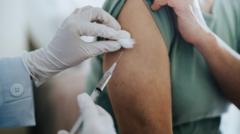
Those specific targets are translated into a custom strand of messenger RNA. Wrapped in a microscopic bubble of fat, this genetic recipe is injected into the patient's arm over the course of several months. It is an instruction manual. The mRNA teaches the body's immune cells how to recognize those precise molecular fingerprints. It trains the T-cells to patrol the bloodstream, scanning for any microscopic cellular fragment that dares to match the blueprint.
It is the biological equivalent of giving your immune system a wanted poster with your specific enemy's face printed squarely on it.
The results from the trial data are stark. Patients receiving the personalized vaccine alongside Keytruda saw a statistically significant and clinically meaningful drop in recurrence and distant metastasis compared to those receiving immunotherapy alone. In earlier phases of trial tracking, the combination slashed the relative risk of recurrence or death by nearly half.
Numbers on a spreadsheet do not capture the psychological weight being lifted from an examination room. They represent parents who can plan a decade ahead instead of a month ahead. They represent the slow erosion of that perpetual dread, the quiet background hum of fear that hums behind every routine blood test and scan.
Of course, the road ahead involves massive logistical hurdles. Manufacturing a bespoke, individualized medicine for thousands of patients requires an extraordinary choreography of biotechnology, speed, and precision. Every single vaccine must be custom-built from scratch in a matter of weeks. Regulators are currently looking toward accelerated pathways, and developers anticipate these treatments could reach clinical availability soon. Trials are already expanding into lung, bladder, and kidney cancers, hunting for other solid tumors where the immune system can be awakened.
We are standing at the edge of an entirely different era in medicine. We are moving away from an age where we merely react to the body's betrayals, and stepping toward an era where we teach the body to recognize the threat before it ever darkens the door again.
The scar remains. But the shadow behind it is beginning to lift.