The humidity in Caracas has a way of clinging to the skin like a second, unwanted layer of clothing. It carries the scent of exhaust, street food, and something metallic that you can’t quite name. But for those who find themselves behind the heavy, reinforced doors of the city's detention centers, the air changes. It becomes stagnant. It smells of bleach and old fear.
While the world watches the oscillating charts of global oil prices or the latest diplomatic posturing in New York, a different kind of reality is unfolding in the basement levels of Venezuelan security buildings. These are not just rooms. They are the friction points where the abstract concept of human rights meets the cold, hard surface of a concrete floor.
The United Nations recently received a series of reports. On paper, these documents are sterile. They use words like "allegations," "consistent patterns," and "detention protocols." But if you peel back the bureaucratic jargon, you find the stories of people whose lives have been reduced to the space between four walls.
Take, for instance, the hypothetical case of a man we will call Mateo. Mateo isn't a high-ranking politician or a revolutionary leader. He is a teacher who happened to be in the wrong place at the time of a protest, or perhaps he shared the wrong thought on a digital platform. When the black gear of the security forces arrives at his door, the world he knew—the one involving lesson plans and coffee with his mother—vanishes.
The Architecture of Silence
In the reports handed to the UN, the descriptions of torture are not sporadic. They are rhythmic. There is a terrifying consistency to how these operations are described, suggesting that what is happening is not the result of a few "bad apples" losing their temper. It is a system.
Detainees describe the use of "the box"—a space so small that sitting or standing becomes an agonizing feat of geometry. They speak of waterboarding, of electric shocks applied to sensitive areas, and of the psychological grinding that comes from never knowing if the sun has risen or set.
Consider the mechanics of a shock. It is not just the pain. It is the betrayal of your own nervous system. Your muscles seize against your will. Your heart hammers against your ribs like a trapped bird. In those moments, the "rule of law" is a ghost. The only thing that exists is the person holding the wires and the absolute, crushing weight of their power over your pulse.
The UN investigators noted that these practices are often used to extract confessions or to neutralize perceived threats to the state’s stability. But the "threats" being neutralized are often just voices. A student. A journalist. A neighbor.
The Weight of the Testimony
Why does it matter that the UN is receiving these reports now? After all, stories of abuse in Venezuela have circulated for years.
The significance lies in the persistence. Despite international scrutiny, despite the threat of ICC investigations, and despite the "reforms" promised by the government in Caracas, the machinery of repression appears to have merely shifted gears rather than ground to a halt.
Statistics can be numbing. When we hear that dozens or hundreds of cases are being documented, the individual agony gets lost in the math. But imagine the silence of a mother waiting for a phone call that never comes. Imagine the permanent tremor in the hands of a young man who was released but left his spirit behind in a cell.
The reports highlight a specific evolution in tactics. There is a growing emphasis on "white torture"—methods that leave fewer physical scars but shatter the mind. Sleep deprivation. Constant, high-pitched noise. Being forced to stand for forty-eight hours straight. These methods are designed to be deniable. When a prisoner is eventually presented to a judge, they might look intact. They might even be wearing a clean shirt.
But their eyes tell a different story.
The Invisible Stakes
This isn't just a Venezuelan problem. It is a fundamental question about the value of a human being when they are stripped of their utility to a state. If a government can disappear a citizen into a basement and rewrite their reality through pain, then the very concept of citizenship is a lie.
The UN’s role in this is often criticized as being "too little, too late." Critics argue that reports don't stop batons. They don't unlock cell doors. There is some truth to that frustration. A UN rapporteur cannot physically walk into a Caracas prison and pull a victim out.
However, these reports serve a vital function: they act as a ledger of the truth. They ensure that when the history of this era is written, it cannot be claimed that nobody knew. They provide the evidence needed for future trials, for sanctions, and for the slow, grinding process of international justice.
They are a message to the person holding the wires: We are watching. We are writing this down. Your name is being added to a list.
The Echo in the Streets
Outside the detention centers, life in Venezuela continues in a state of hyper-vigilance. The fear is not always loud. Often, it is a quiet calculation made before speaking on the phone or posting an update on social media.
When a society realizes that anyone can be subjected to the "whispering walls" of the detention centers, the social fabric begins to fray. Trust evaporates. People stop talking to their neighbors. They look at the ground when they pass a police officer. This is the ultimate goal of torture—not just to break the person in the chair, but to break the spirit of everyone who hears about it.
The UN documentation suggests that the target isn't just the individual detainee. The target is the very idea of dissent. By making the cost of disagreement so visceral and so terrifying, the system seeks to build a silence that is absolute.
Yet, despite this, the reports keep coming.
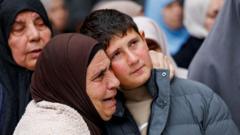
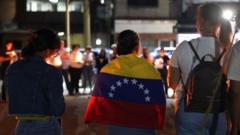
This is the most remarkable part of the story. For every person who is silenced, another finds a way to get a message out. Lawyers risk their lives to smuggle testimony to international observers. Families protest in the streets, holding up photos of their disappeared loved ones, knowing full well that they might be next.
The Final Chord
The sun sets over Caracas, painting the mountains in hues of violet and orange. From a distance, the city looks peaceful. It looks like any other sprawling metropolis, full of dreams and struggles.
But beneath that beauty, in rooms without windows, the air remains heavy. A man sits on a cold floor, listening to the drip of a leak in the ceiling, wondering if the world has forgotten he exists.
He doesn't know that miles away, in a brightly lit office, a UN official is typing his story into a database. He doesn't know that his pain has been transformed into a data point that will eventually become a blunt instrument of diplomacy.
He only knows the cold.
The reports will continue to pile up. The international community will continue to express "deep concern." And the walls in Caracas will continue to whisper the secrets of those who were never supposed to be heard again. The question remains whether the world is actually listening, or if we are merely waiting for the next headline to drown out the sound of a closing door.