The air inside the command bunker smells of damp concrete, cold chicory, and the electric hum of a thousand satellite relays tracking things the sky was never meant to hold.
Outside, the perimeter is quiet with the particular, hollow quiet that precedes a storm. Inside, Volodymyr Zelensky checks his watch again. It is a small, involuntary gesture, the tic of a man whose currency is no longer money or territory, but minutes. In Moscow, American envoys have just stepped out of gilded doorways, breathing the heavy air of the Kremlin, carrying messages written in the restrained, ambiguous dialect of modern diplomacy. Soon, those same envoys will cross the border, landing in Kyiv to place those messages on a scarred wooden table.
Between the lines of diplomatic cables and the dry Reuters tickers lies a human geometry that algorithms fail to capture. We speak of geopolitics as if it were a board game played by giants who never bleed. We measure war in square kilometers and gross domestic product. But right now, in a subterranean room beneath a city that refuses to die, war is measured in the heavy silence between two heartbeats.
Consider what happens next. The envoys arrive. They bring words minted in Washington—proposals, warnings, red lines drawn in ink that dries too quickly. Zelensky listens. He does not look like a statesman in these moments; he looks like a father calculating whether the roof will hold through the winter. He knows the weight of every comma in the translated transcripts. He knows that an alliance is not a monolith of steel and concrete, but a fragile pact sustained entirely by human attention, by the willingness of strangers thousands of miles away to remember that distant cities are made of flesh and stone, not pixels on a screen.
I remember the first winter of the full-scale invasion. The sheer disorientation of waking up to a world where the rules of gravity had changed overnight. When you live through the sirens, you learn a strange new literacy. You learn to read the pitch of a drone engine before you see it. You learn the exact cadence of your neighbor's footsteps running for the cellar. That is the texture of the reality that the men in suits are negotiating over. It is not an abstract chess match. It is the cold kitchen floor at three in the morning when the power cuts out. It is the terrifying, luminous hope that tomorrow might bring a pause, just a brief pause, in the ceaseless math of destruction.
When American emissaries move between Moscow and Kyiv, they are walking a tightrope stretched over an abyss. In Moscow, they encounter a regime insulated by layers of historical grievance and paranoid certainty, a leadership that views time as a weapon to be weaponized against democratic impatience. In Kyiv, they encounter a society running on adrenaline and profound exhaustion, defending not just a border, but the radical idea that a nation has the right to choose its own broken, imperfect future.
The diplomacy here is an act of translation. How do you translate the grief of a ruined suburb into the polite prose of a joint communiqué? How do you explain to a diplomat sipping espresso in a secure compound that every delay in ammunition delivery costs lives that cannot be recovered by subsequent concessions?
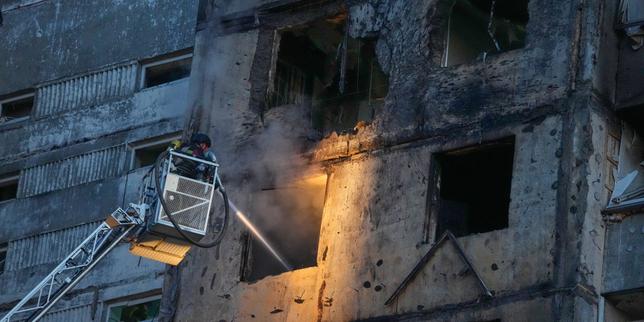
The tragedy of our current historical moment is that we have grown accustomed to watching other people's apocalypses from the comfort of our couches. We consume suffering as content. We scroll past the wreckage of an apartment block to reach the sports scores. But the people sitting across from each other in Kyiv today do not have the luxury of scrolling away. They are tethered to the consequences of every diplomatic pivot, every delayed shipment, every whispered compromise.
Zelensky stands by the window, looking out over a city draped in camouflage netting and defiant blue-and-yellow flags. The envoys’ motorcade is on the tarmac. The heavy wooden doors of the conference room are swinging open. The air inside shifts, charged with the nervous, electric energy of a turning point that no one can quite predict.
History is rarely made by lightning strikes. Most of the time, it is made in the waiting rooms, in the heavy silences between sentences, and in the quiet courage of individuals who refuse to let the dark have the final word.