Ink on cheap paper smells like old attics and rain. If you opened a copy of The Magician's Nephew printed in the mid-seventies, the pages curved slightly inward like dry leaves. Generations of children crawled into those paper worlds, seeking a place where animals spoke and a great, golden lion ruled with a terrifying, tender gravity. That lion had a name. He had a magnificent mane. He had pronouns written in capital letters by a professor who smoked a pipe in Oxford rooms.
Now, the lion has a voice that belongs to a woman who has worn a dozen different histories on screen.
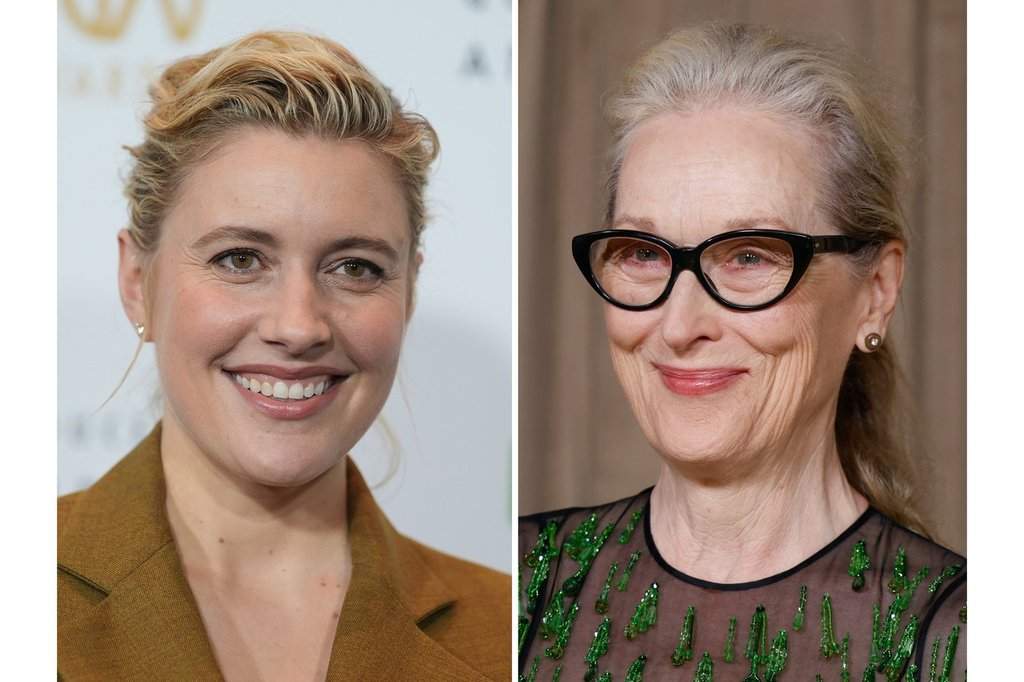
When the casting choice leaked—Meryl Streep stepping behind the microphone to breathe life into Aslan for Greta Gerwig’s upcoming Netflix adaptation—the internet did not merely react. It fractured. Traditionalist commentators and conservative media figures sounded immediate alarms, framing the decision as an ideological intrusion into sacred texts. C.S. Lewis’s family members were reportedly unsettled. Critics argued that altering the vocal architecture of a figure widely revered as a literary Christ archetype crosses a line from creative license into theological revisionism.
Consider what happens when a childhood memory is touched by modern hands.
For millions, Aslan is not just a character in a fantasy series that has sold over 120 million copies. He is an anchor. He is the embodiment of absolute, protective goodness who sings a world into existence from the dark. To introduce a female voice actor to a character historically depicted as male feels, to some, like rewriting the grammar of faith itself. Dr. Ted Baehr of Movieguide voiced a sentiment shared by many alarmed believers, warning that the choice challenges foundational Christian understandings of divine representation.
Yet, the counter-argument points to the mechanical reality of cinema. Animation and drama have long relied on cross-gender vocal performances. Women have voiced iconic male youths for decades. Actors act. Furthermore, scholars of Lewis note a deeper irony: Aslan is a divine, cosmic entity, not a biological creature. Does a creator of universes possess chromosomes? Does an eternal spirit require human anatomy to validate its power?
Gerwig herself has remained largely quiet on the specific cultural furor, though she outlined her artistic criteria plainly. She wanted someone older than seventy, possessing profound gravitas without pretentious self-seriousness, capable of carrying both the weight of experience and the innocent wonder of a child. In Streep, she saw that instrument. Reports have even surfaced that the visual design for Gerwig’s lion draws eclectic inspiration from David Bowie, mixing bold styling with an unsettling, magnetic beauty.
This is where the friction lives. It is a collision between textual nostalgia and auteur interpretation.
Think of a hypothetical reader, sitting by a bedroom window in 1985, tracing the illustrations of Pauline Baynes with a flashlight under the covers. That reader built an internal theater where Aslan’s voice was a deep, rumbling baritone that shook the floorboards. To that reader, substituting Streep’s iconic cadence feels jarring. It disrupts the private ownership we all maintain over the books we loved before the world complicated us.
Conversely, consider a young viewer today, encountering Narnia for the first time through a cinematic lens shaped by a director who redefined Little Women and Barbie. For them, the authority of wisdom does not depend on a beard or a booming patriarchal register. It depends on resonance.
The debate over the Narnia adaptation ultimately reveals less about a lion and more about us. We guard our myths fiercely because we are terrified of losing the certainties they provided in our youth. We want our stories frozen in amber, untouched by the shifting tides of culture and interpretation.
But stories are living things. They refuse to stay in the attic. They demand to be re-sung, re-voiced, and reimagined, even when the notes catch in our throats and force us to argue about what we believe in the dark.
The film arrives in February. Until then, the roar remains unheard, echoing only in the space between what was written and what might yet be.
The video above explores the ongoing cultural discussions surrounding the casting choices for the upcoming Narnia film.