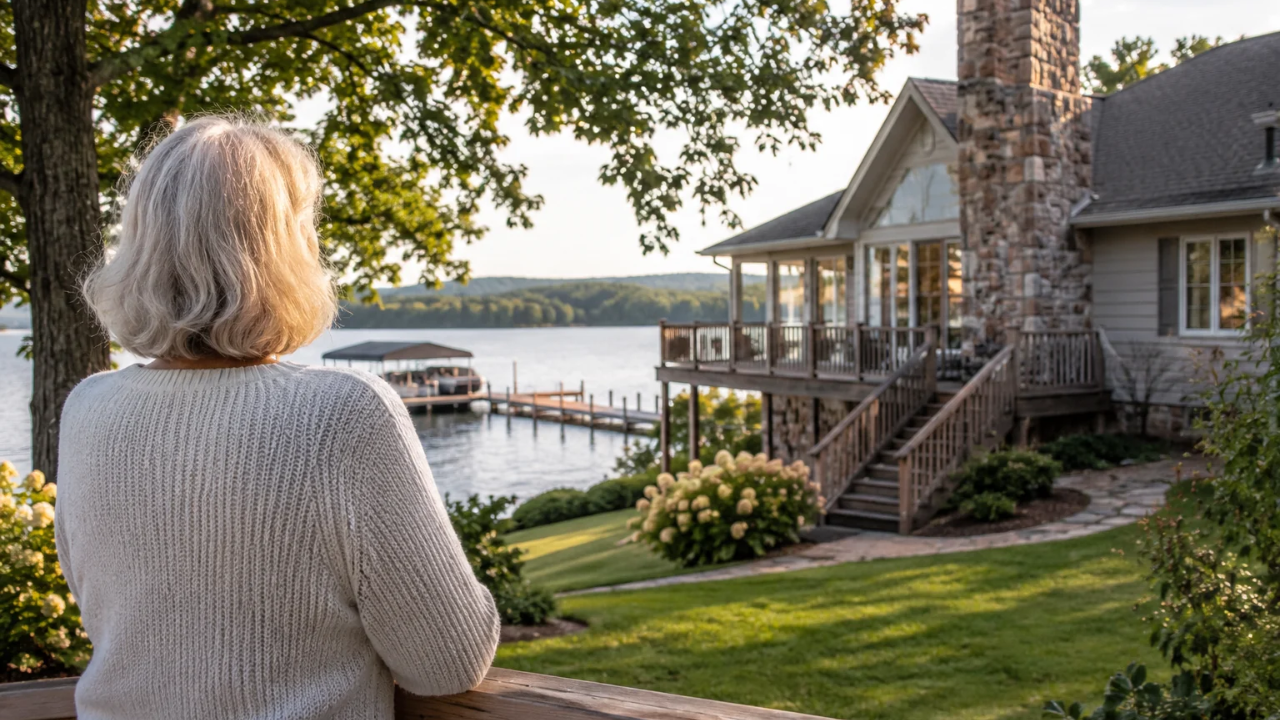
Every legal blog covering the latest Virginia court ruling on a disputed lakeside home wants you to pick a side. They frame it as a tear-jerking soap opera. On one side, the grieving widow clinging to her sanctuary. On the other, the late husband’s children fighting for their rightful birthright.
That narrative is lazy. It is comforting, clickable, and completely misses the point.
The real story isn't about an evil stepmother or greedy kids. The real story is that Virginia probate law is a meat grinder for blended families, and most estate planners are feeding their clients straight into the blades. When a Virginia court steps in to referee who gets the keys to a waterfront property, nobody wins except the litigators billing $550 an hour.
I have sat across the table from dozens of families tearing themselves apart over deeds, life estates, and ambiguous trusts. I have watched seven-figure estates evaporate into court costs over a single poorly drafted paragraph. The conventional wisdom says you just need a "good will" and an open conversation at Thanksgiving. That advice is malpractice. If you own real estate in Virginia and have children from a previous marriage, standard estate planning will betray you.
The Lie of the Simple Will in Virginia
Most people think a last will and testament is a bulletproof shield. You write down who gets the lake house, sign it in front of two witnesses, and rest easy.
In Virginia, a simple will in a blended family is an invitation to a knife fight.
Here is the legal reality that standard coverage glosses over. Under Virginia Code § 64.2-308.1 and its companion statutes, a surviving spouse has the absolute right to claim an elective share of the augmented estate. You cannot simply disinherit a spouse in the Commonwealth, even if you bought that lakeside cabin twenty years before you ever met them. Depending on the length of the marriage, the surviving spouse can claim up to 50 percent of the marital-property portion of the augmented estate.
Let that sink in. You leave the lake house to your kids in your will. You leave your cash accounts to your second wife. Your wife decides the cash isn't enough, files for her elective share within six months of probate, and suddenly your children are forced to liquidate the family retreat just to pay off her statutory claim.
Conversely, what happens when the husband leaves the property to his children subject to a life estate for his widow? This is the classic "compromise" recommended by mediocre attorneys. The widow gets to live there until she dies, and then the kids get the house.
It sounds poetic. In practice, it is a ticking time bomb.
The Life Estate Trap
When you create a life estate, you are forcing two parties who likely tolerate each other at best into a decades-long business partnership. Under Virginia common law, the life tenant—the widow—is responsible for ordinary maintenance, property taxes, and routine upkeep. The remaindermen—the stepchildren—hold the future interest and are generally on the hook for major capital improvements and structural repairs.
Now, imagine a scenario where the lakeside home needs a new $35,000 septic system and a $25,000 roof.
The widow says those are structural capital improvements. She demands the stepchildren pay up. The stepchildren accuse her of neglecting routine maintenance for ten years, causing the roof to rot. They refuse to spend a dime on a house they cannot even step foot in without her permission. Meanwhile, the widow cannot sell the house without the stepchildren's signatures, and the stepchildren cannot sell their remainder interest to anyone sane because no investor wants to bet on when an elderly woman will pass away.
The property decays. Taxes go unpaid. Resentment curdles into litigation. By the time a Virginia Circuit Court judge is forced to untangle the mess through a partition suit or a waste action, the lake house is worth half its market value and the family will never speak again.
Why Media Coverage Gets the Lakeside Dispute Wrong
When mainstream outlets report on these Virginia appellate or circuit court battles, they obsess over intent. What did the husband really want? Did the widow unduly influence him on his deathbed? Did the children abandon him before he died?
Courts do not care about your dinner-table promises. Judges care about the four corners of the instrument and statutory compliance.
In Virginia, real estate passes differently than personal property. Title to real estate vests immediately in the heirs or devisees at the moment of death, subject to the executor's power to sell if the estate is insolvent. Personal property—bank accounts, investments, cars—passes through the executor. This split creates massive friction when a lakeside home is the primary asset of the estate.
If the deceased husband left a mountain of debt and a prized waterfront property, the executor might have to petition the court to sell the real estate to satisfy creditors, wiping out the inheritance before the widow and children even finish arguing in the hallway.
Furthermore, Virginia is one of the few states that still recognizes tenancy by the entirety for married couples, which includes a right of survivorship. If the husband put his new wife on the deed as tenants by the entirety—perhaps to refinance the mortgage or simply as a gesture of love—the will becomes completely irrelevant. The moment his heart stops, 100 percent of that lakeside home belongs to the widow. His children get zero. Not a single square foot. Not even the family photo albums inside unless she feels generous.
Legal commentators love to call these outcomes "tragic." They aren't tragic. They are predictable. They are the direct result of treating a complex corporate merger—which is what a second marriage with kids and real estate actually is—like a Hallmark movie.
The Questions You Should Actually Be Asking
If you search online for advice on protecting your home in a second marriage, you will run into the same tired questions. Let’s dismantle them.
"Should I just put my children on the deed now?"
No. Never. Doing this is financial self-sabotage.
First, you lose your step-up in basis under Internal Revenue Code Section 1014. If you bought that Virginia lake house in 1995 for $150,000 and it is worth $1.2 million today, gifting it to your kids during your lifetime saddles them with your original $150,000 tax basis. When they sell it, they will pay capital gains tax on over a million dollars of appreciation. If they inherit it at your death, the basis resets to $1.2 million, wiping out the capital gains tax entirely.
Second, you expose your home to your children's creditors. If your son gets divorced, goes bankrupt, or causes a catastrophic car accident, a creditor can attach a lien to his ownership interest in your house. You could lose your home because your kid ran a red light.
"Can't we just use a standard Revocable Living Trust?"
A revocable living trust avoids probate, which is great for privacy and speed, especially in Virginia where probate fees and accounting requirements with the Commissioner of Accounts are notoriously burdensome.
However, a standard joint revocable trust in a blended family is a trap. If you and your second spouse put everything into a joint trust, and you die first, the surviving spouse often retains the power to amend or revoke the trust. Five years later, she meets a nice man at the country club, rewrites the trust, and disinherits your kids completely. It happens every single week.
"Isn't a prenuptial agreement unromantic?"
You know what is truly unromantic? Watching your widow and your eldest daughter subpoena each other's medical records in a Fairfax or Bedford County courtroom.
A prenuptial or postnuptial agreement is not a bet that your marriage will fail. Every marriage ends—either in divorce or in death. A prenup is simply an agreement on which set of rules will govern the wind-down: the rules you two wrote while you loved each other, or the default rules written by politicians in Richmond who have never met you.
How to Actually Bulletproof a Lakeside Property in Virginia
If you want to keep a prized piece of real estate in the bloodline while still taking care of your spouse, you have to stop relying on deeds and wills. You need structural separation. You need to remove the emotional friction by removing the shared control.
Here is the blueprint that actually survives Virginia courts.
1. The QTIP Trust (Qualified Terminable Interest Property)
Instead of a clumsy life estate, you use an irrevocable trust structure triggered at the first spouse's death—specifically, a QTIP trust.
You transfer the lakeside home into your revocable trust during your lifetime. Upon your death, the house drops into a QTIP sub-trust. Your surviving spouse gets the right to live in the house for the rest of her life, and she must receive all net income generated by the trust (if, say, it is rented out). Because it qualifies for the federal estate tax marital deduction, no estate taxes are due at your death.
Here is the magic: she cannot change the beneficiaries. When she passes away, the property is guaranteed to go to your children.
To solve the maintenance fight before it starts, you fund the QTIP trust with a dedicated bucket of cash or life insurance proceeds. You appoint an independent, third-party trustee—a corporate fiduciary or a neutral CPA, never one of the kids and never the widow. The trustee pays the property taxes, insurance, and roof repairs out of that cash reserve. The widow never has to beg the stepchildren for money, and the stepchildren never have to worry about the widow letting the house fall into the lake.
2. The Irrevocable Life Insurance Trust (ILIT) Buyout
Sometimes, the smartest move is not to share the asset at all. If the lakeside home is a powder keg, don't force everyone to hold a match.
Leave the lakeside home outright to your children (or to a trust solely for their benefit) so they get immediate control and preservation of the family legacy. At the same time, purchase a permanent life insurance policy owned by an Irrevocable Life Insurance Trust (ILIT) naming your spouse as the sole beneficiary.
When you die, the ILIT pays out $1 million or $2 million tax-free directly to your widow. She has the liquidity to buy her own waterfront condo, travel, and live comfortably without ever needing a dime from your estate or your children. Your kids get the cabin. Your wife gets the cash. Nobody shares a title. Nobody shares a checkbook. Nobody hires a litigation attorney.
3. The Virginia Elective Share Waiver
None of the strategies above are completely immune from attack unless your spouse explicitly waives their statutory elective share rights in a valid, written marital agreement.
Under Virginia Code § 64.2-308.14, a spouse can waive the right to an elective share, homestead allowance, and exempt property—either before or after marriage. To make it ironclad, both parties must have independent legal counsel, and there must be full, fair, and reasonable disclosure of all assets and liabilities.
If you skip this step, your surviving spouse can blow up your carefully crafted QTIP trust or outright gift to your children by asserting their statutory claim against the augmented estate. Get the waiver signed, notarized, and locked in a safe.
The Uncomfortable Truth About This Approach
I am not going to pretend this strategy is cheap or painless. Setting up a QTIP trust with an independent corporate trustee, funding an ILIT, and negotiating a postnuptial elective share waiver will easily cost you $10,000 to $20,000 in upfront legal and financial fees. Corporate trustees charge annual basis-point fees to manage assets. Having a frank conversation with your spouse about asset segregation requires emotional maturity that many couples simply do not have.
You will face pushback. Your spouse might feel distrusted. Your financial advisor might tell you it is "over-engineered."
Ignore them.
The alternative is leaving a $1.5 million asset floating in the murky waters of Virginia probate law, hoping that grief and money won't turn your loved ones into enemies. Spend the $15,000 now, lock down the title, separate the cash flows, and take the decision entirely out of a judge's hands.