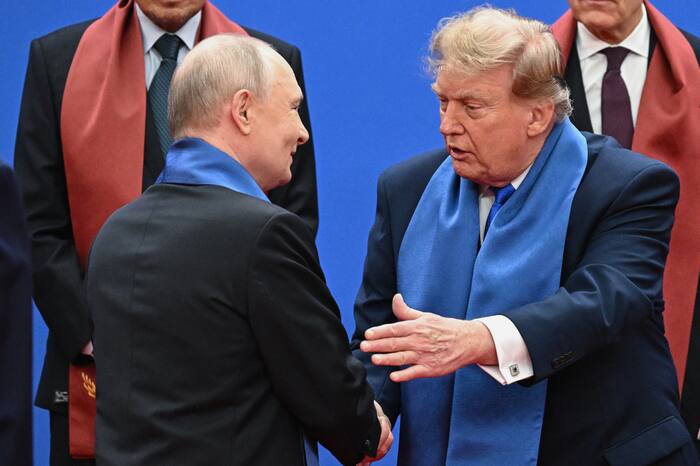
Everyone is obsessing over the handshake, the fist pump, and Donald Trump calling Vladimir Putin "my friend" on Chinese soil. They're missing the actual power play.
When Xi Jinping, Donald Trump, and Vladimir Putin exchanged greetings in Shenzhen ahead of the November 2026 Asia-Pacific Economic Cooperation (APEC) summit, the cameras captured pure political theater. A red carpet. Fighter jets trailing colored vapor overhead. Pom-pom-waving crowds shouting welcome slogans. And then came the moment that broke the internet—Trump walking toward Putin, pointing rhetorically, and calling him a friend before sharing an embrace and standing shoulder-to-shoulder with Xi. For another perspective, consider: this related article.
Most coverage treats this greeting as a chaotic diplomatic blunder or a buddy-comedy photo op. That's a surface-level read. If you look closely at the choreography in Shenzhen, those opening minutes weren't spontaneous warmth. They were a carefully staged reset of global diplomacy where Beijing held every card.
Why the Shenzhen Greeting Was Pure Choreography
In high-stakes statecraft, nothing happens by accident on an airport tarmac or outside a gala hall. Honestly, if you've ever watched how Beijing manages state visits, you know every step on a red carpet is measured to the centimeter. Similar reporting on this trend has been provided by NBC News.
Xi Jinping didn't just wait inside the venue like a standard summit host. In an unusual gesture, Xi personally met Trump at the foot of Air Force One's stairs in Shenzhen. Trump responded right from the airplane doorway by raising a fist before descending for a brief embrace and a walk past cheering crowds waving both Chinese and American flags.
Why did Xi break standard protocol to greet Trump at the plane? Because flattery is cheap, and Beijing knows how Trump measures victory.
- Ego over concessions. Trump later rated the trip a "12" on a scale of zero to 10 and bragged about getting a seat at the head table and a welcome banquet that featured a performance of his rally anthem, "YMCA".
- Optics for Moscow. By bringing Trump and Putin together in front of Xi before the November 18 welcome dinner, China positioned itself as the indispensable broker between two rival nuclear powers.
- Controlled stagecraft. Even the physical spacing during the greeting put Xi squarely at the center, visually framing China as the stabilizing anchor of a turbulent world.
What Happened Behind the Smiles at Kylin Villa
The warm greetings quickly gave way to the actual trilateral meeting on November 19 at Shenzhen's Kylin Villa. If you only looked at the viral handshake clips, you'd think the three leaders solved half the world's crises over dinner. They didn't.
The trio signed a joint document titled the U.S.-Russia-China Heads of State Declaration toward Peace, pledging to maintain strategic stability and international security. Sounds impressive on paper. In reality, the declaration completely left out the two biggest active wars on the planet—Russia's invasion of Ukraine and the escalating conflict involving Iran.
The Nuclear Elephant in the Room
One real reason Washington wanted this face-to-face wasn't camaraderie. It was arms control. The last major nuclear arms treaty between the United States and Russia expired back in February 2026, leaving the world's two largest nuclear arsenals without formal inspection limits.
Washington entered Shenzhen hoping to pull both Moscow and Beijing into conversations about nuclear risk reduction and strategic stability. While the three leaders agreed in broad strokes to reduce nuclear risks, neither Russia nor China signed onto binding warhead caps. Moscow got to stand on equal footing with Washington without giving up a single inch in Ukraine, and Beijing avoided getting locked into arms limits that would freeze its own nuclear modernization.
Ukraine and Iran Got Sidelined
Trump and Putin held their first direct, in-person talks since their inconclusive August 2025 meeting in Anchorage, Alaska. They touched on Ukraine, yet walked out with zero immediate commitments or ceasefire breakthroughs. Meanwhile, Ukrainian Foreign Minister Andriy Sybiga publicly voiced hope in Kyiv that Xi and Trump would use the summit to pressure Russia to end the war—a hope the final communique flatly ignored.
At the same time, fighting in the Middle East was flaring, with Iran launching attacks on a U.S. air base in Kuwait and targets in Bahrain right as the summit kicked off. Despite Washington's desire to address the Iran crisis in Shenzhen, the final peace declaration skipped it entirely.
Who Actually Won the Photo Op
When three leaders shake hands for the cameras, someone always walks away with more leverage than they brought in. Here's how the scoreboard actually looks once you strip away the cable-news spin.
China walked away with the biggest strategic win. For years, Xi Jinping has pushed Washington to accept a "new type of great-power relations" built on mutual respect and peaceful coexistence rather than ideological confrontation. By hosting both Trump and Putin in Shenzhen and getting the U.S. president to sign a joint stability declaration alongside them, Xi effectively got Washington to validate Beijing's preferred diplomatic framework. China didn't even have to yield on rare-earth minerals, where Trump had boasted just days earlier that the U.S. would catch up to Chinese production within 10 months.
Vladimir Putin got priceless rehabilitation. Hit by Western sanctions and grinding wartime losses, Putin needed proof that Russia isn't an isolated pariah. Having the American president point at him, call him "my friend," and post their handshake on Truth Social gave the Kremlin domestic and international propaganda gold. Canadian Prime Minister Mark Carney, also in Shenzhen for APEC, warned that sanctions would continue climbing as long as the Ukraine war drags on, yet Putin still got his global spotlight.
Donald Trump got headlines—and immediate backlash. Domestically and among traditional allies, the warm greeting backfired fast. Even staunch ideological allies in the United Kingdom distanced themselves from the White House. Richard Tice, deputy leader of Reform UK, called Trump's "my friend" post about Putin "a grave mistake" and reacted with "horror" on Sky News. Critics also seized on footage showing Trump appearing to nod off during Xi's speech at the summit, undercutting the strongman image the White House wanted to project.
How to Read Great-Power Summits Without Getting Fooled
Most people consume summit news backwards. They watch a 10-second clip of a handshake, read a fiery social media caption, and assume foreign policy just shifted overnight. If you want to understand what actually happens when leaders like Xi, Trump, and Putin meet, change how you filter the noise.
- Ignore the adjectives and read the communique. Words like "historic," "consequential," and "friend" are priced at zero in diplomacy. Look at what is missing from the joint statement. When a peace declaration omits active wars in Ukraine and Iran, that omission tells you the three sides couldn't agree on anything concrete.
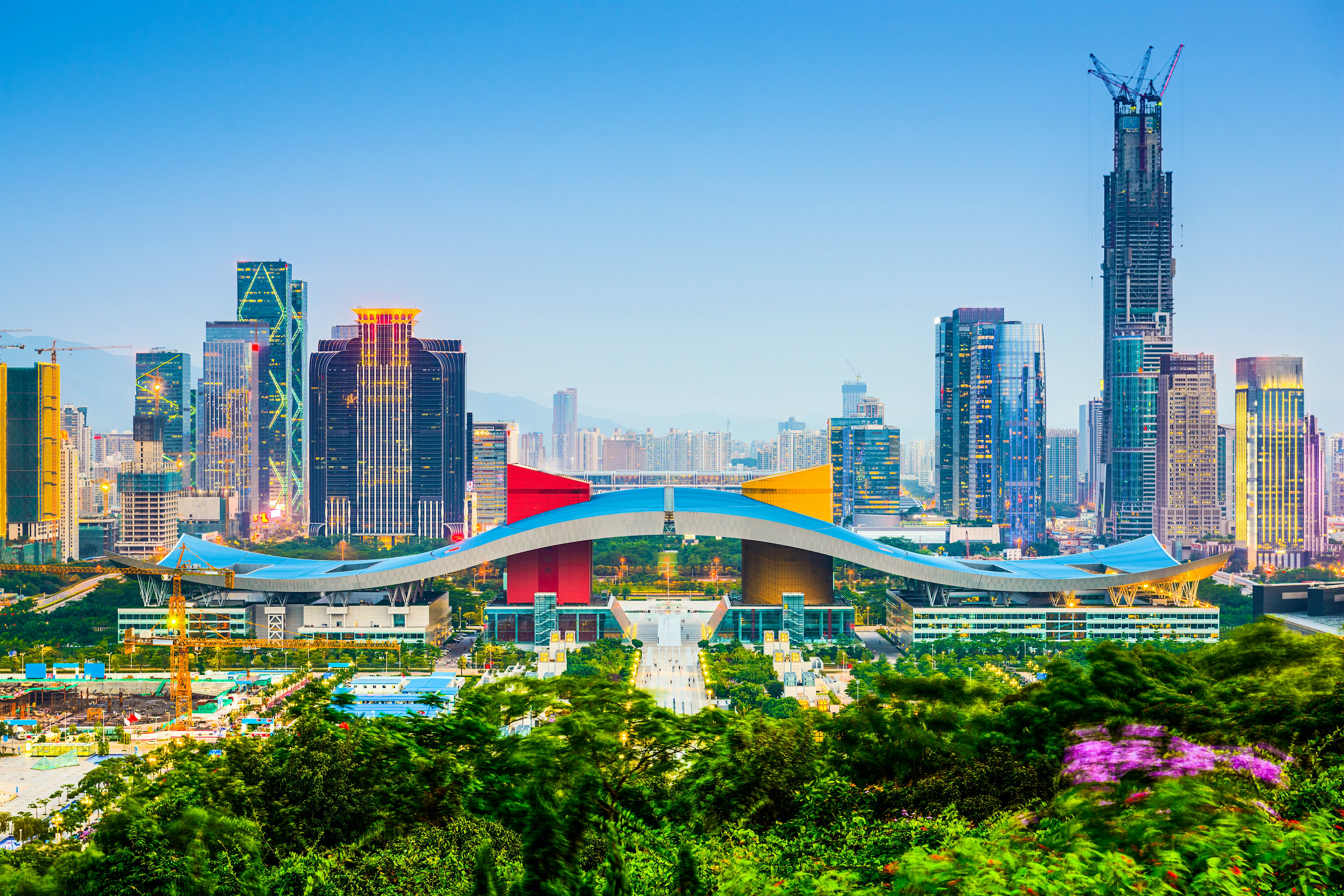
- Track who is hosting and setting the agenda. Venue equals leverage. Shenzhen wasn't neutral territory—it's China's high-tech showcase city. Hosting allowed Xi to dictate the guest list, the seating chart, and the framing of the trilateral format.
- Watch allied reactions within 48 hours. You can measure the real cost of a diplomatic photo op by watching how close partners respond. When British conservatives and Canadian officials publicly push back within days of a summit, it signals real strain inside Western alliances.
- Separate personal rapport from structural rivalry. Leaders can praise each other at a banquet while their militaries and trade ministries stay locked in fierce competition. Watch defense budgets, rare-earth supply chains, and nuclear posture over the next six months rather than banquet toasts.
Keep your eyes on concrete follow-through—specifically whether Washington, Moscow, and Beijing actually convene working-level arms control talks before spring, or whether the Shenzhen handshake fades into just another viral clip with zero policy teeth.
For a closer look at the actual footage from Shenzhen, watch Trump-Putin Handshake, Xi's Warm Welcome And Trump's Nap to see the contrasting body language during the tarmac arrival and welcome banquet.