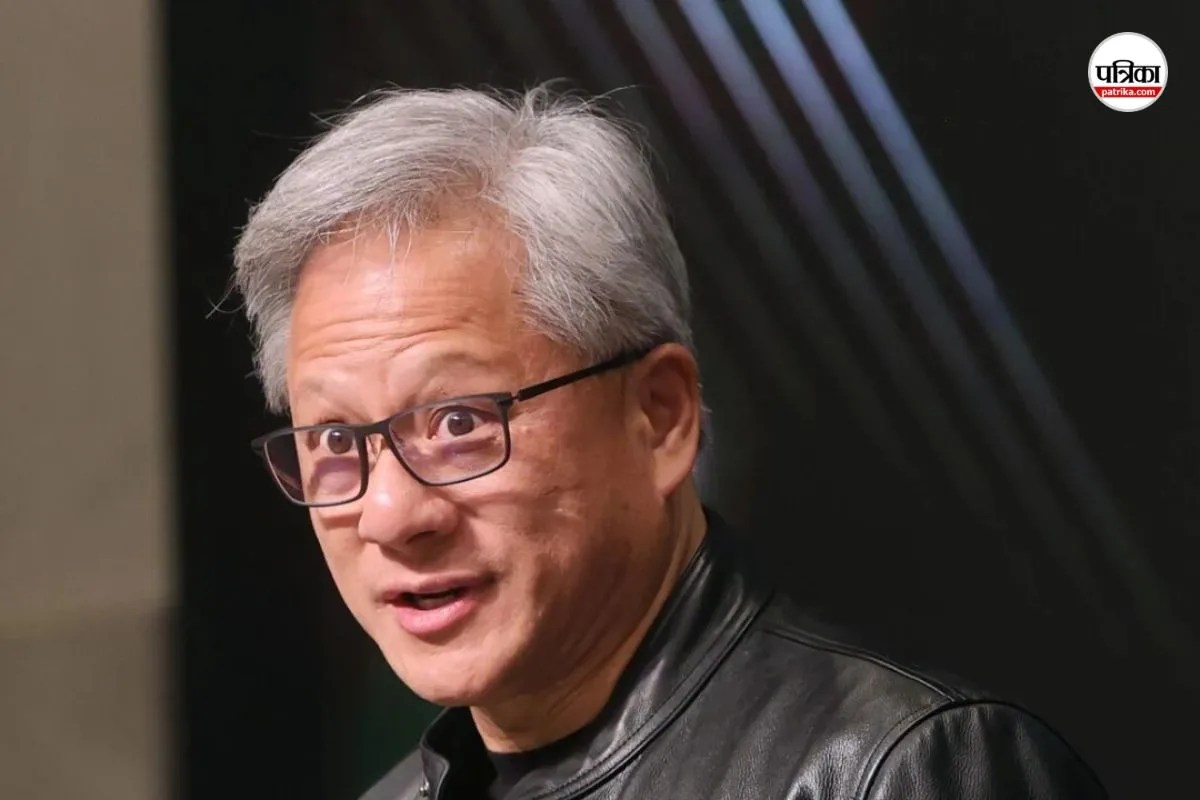
A single photograph from a humid Taipei bar in June 2024 ended up costing Nvidia $500 billion in market value, triggered a federal investigation, and forced the most powerful CEO in artificial intelligence out of his own company for eleven days.
Wild, right?
When snapshots of Jensen Huang and Chinese tech executive Alice Huang began circulating across social media and global newsrooms in November 2026, most casual observers treated them like standard Silicon Valley tabloid fodder. A married billionaire executive, a younger businesswoman, a kiss caught on security footage outside a restaurant. Easy story. Except those photos aren't just about a personal scandal. Track the locations from Taipei to Shanghai to a luxury golf resort in California, and you're looking at a physical timeline of how restricted American AI chips moved across borders while Washington tried to lock the doors.
Let's break down what those images actually show, where the timeline gets messy, and why national security officials in Washington cared way more about the background details than the romance.
The Four Photos That Sparked a Geopolitical Firestorm
If you've only seen the cropped thumbnails on X or Weibo, you're missing half the context. The visual trail spans roughly a year across three different jurisdictions, moving from crowded industry mixers to private luxury resorts.
- June 2024 in Taipei — The earliest known image places the pair at an AI industry gathering in Taiwan's capital. At the time, Jensen Huang was practically treated like a rock star in his birthplace, mobbed by fans at night markets and local tofu pudding shops. Nobody blinked twice seeing him pose next to Alice Huang, a former Hong Kong banker turned controlling shareholder of Singapore-based data center firm Megaspeed. According to The Wall Street Journal, Alice's husband, Chinese investor Kang Wei, actually introduced the two.
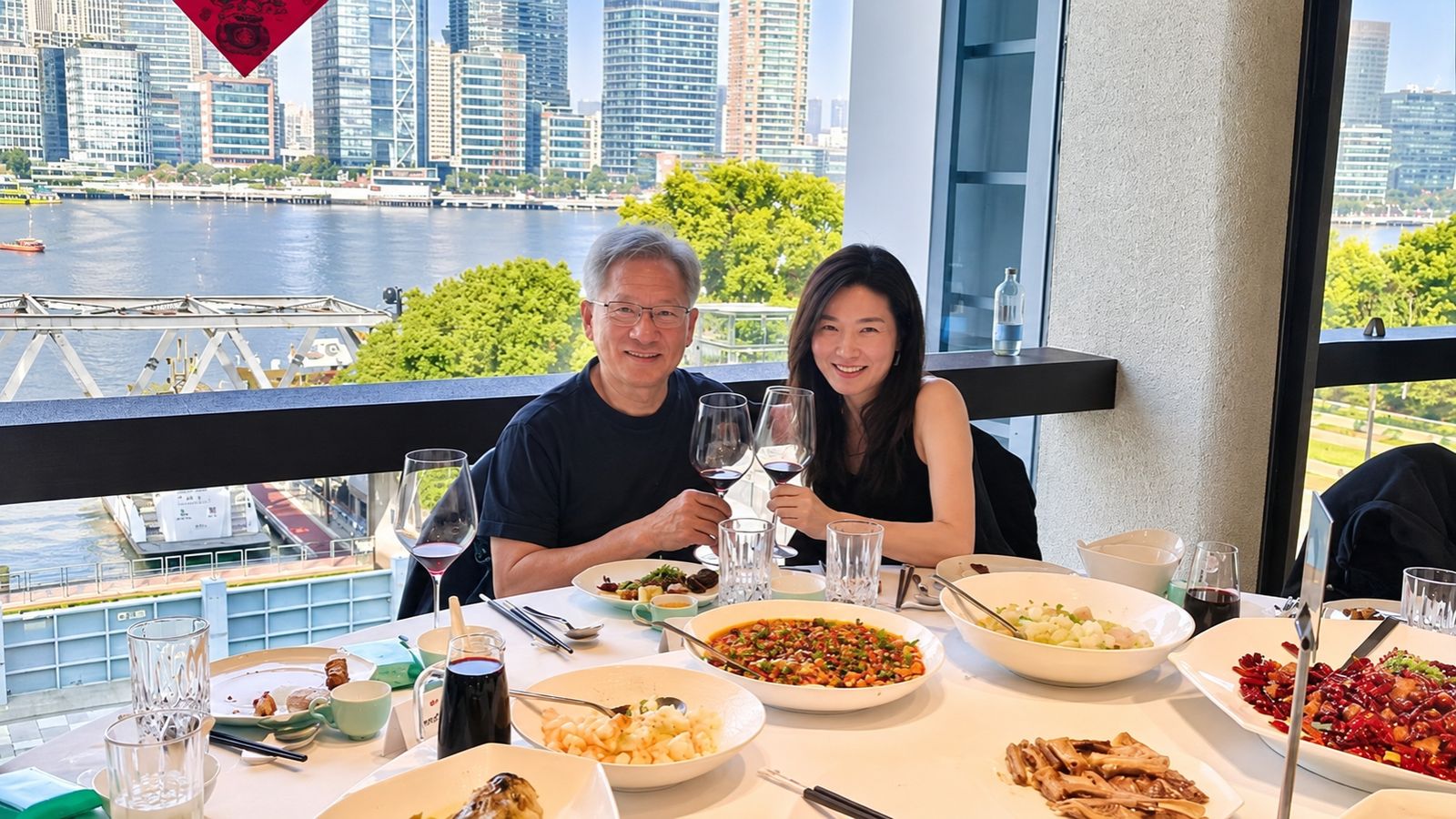
- Shanghai at Pujiang Huaiyan — Another widely shared photo, originally posted to Chinese social media platform Weibo, captures Jensen and Alice together at an upscale Shanghai restaurant. Notice the casual body language. By this point, their interactions had clearly moved past formal vendor-client handshakes.
- CordeValle Resort in San Martin, California — This is the photo that raised eyebrows inside Nvidia's Santa Clara headquarters. Alice Huang uploaded a picture to WeChat showing herself alongside Jensen on the manicured lawn of CordeValle, a secluded golf resort tucked into the hills south of San Jose. CNN later geolocated the image, confirming she wasn't just bumping into him at overseas trade shows—she was spending time with him right in his Silicon Valley backyard, roughly two months after visiting Nvidia's corporate campus in March 2025.
- May 22, 2025 in Taipei — The most damaging visuals weren't still photos at all, but video footage broadcast by Taiwanese network CTI and distributed by Reuters. Outside an upscale Taipei restaurant, cameras caught Alice walking closely behind Jensen with her hands grazing his back. Another frame shows Jensen leaning in as she kisses him on the cheek before the two climb into the same car and drive off together.
Here's the detail that makes the May 2025 Taipei dinner genuinely bizarre. Taiwanese outlet TVBS reported that Jensen's own daughter, Madison Huang—who works at Nvidia as a senior director of product marketing—was at the dinner and even snapped a photo of her father with Alice. Think about that for a second. Whatever boundaries existed between Jensen's family life, his corporate role, and his relationship with Alice had completely blurred in plain sight.
Why Washington Cared More About Megaspeed Than the Affair
Corporate boards deal with executive affairs all the time. Usually, the CEO gets a slap on the wrist, maybe forfeits a bonus, and life moves on. That didn't happen here because of who Alice Huang was doing business with.
Born in December 1982, Alice Huang (Huáng Lè) studied nursing in Xiangtan before earning a media management master's degree in Hong Kong in 2006. She climbed through finance gigs at HSBC Hong Kong, CITIC Securities, and Hexi Capital before pivoting into cloud infrastructure with her husband. In March 2023, she took controlling ownership of Megaspeed International, a Singaporean cloud company.
Between 2024 and 2025, Megaspeed received roughly 200 shipments of advanced Nvidia AI processors, according to The New York Times. On paper, selling chips to a Singaporean entity was completely legal. In practice, Megaspeed was renting out computing power fueled by those exact Nvidia GPUs to major Chinese tech giants, including Alibaba and Tencent. The Information reported that at least $7.5 billion worth of chip shipments flowed to Chinese firms through these networks since 2023.
Look at the timing of the May 2025 Taipei restaurant video again. Just one month earlier, in April 2025, the U.S. government effectively banned exports of Nvidia's high-performance H20 chips to China—a restriction Nvidia warned would wipe out $5.5 billion in revenue. Jensen Huang was actively lobbying Washington against tighter chip controls, arguing that locking China out of American hardware would only accelerate Beijing's domestic semiconductor industry. Meanwhile, he was having an affair with the controlling shareholder of a Singaporean middleman under investigation by the U.S. Department of Commerce for allegedly helping Chinese companies bypass export bans.
You don't need a security clearance to see why the optics were catastrophic.
What US Intelligence Actually Found Versus Media Rumors
Once The New York Times broke the story in October 2026, headlines immediately slapped the "Chinese spy" label onto Alice Huang. Social media ran wild with Cold War honeytrap theories. If you're trying to separate verified facts from internet speculation, though, you need to look closely at what intelligence officials actually said—and what remains unproven.
A classified U.S. intelligence memo from 2025 reportedly assessed that Alice Huang was targeting Jensen on behalf of Chinese intelligence agencies to gather information and potentially sway his stance on AI chip exports. Then on November 24, 2026, The Wall Street Journal added a crucial nuance, citing sources familiar with U.S. intelligence. While intelligence indicated Alice had been in contact with China's Ministry of State Security (MSS) during the affair, officials still lacked smoking-gun proof that Beijing had formally tasked her with running an intelligence operation against Nvidia's CEO.
Both sides have pushed back hard against the espionage framing:
- Beijing's response — Chinese officials dismissed the allegations as a fabricated smear campaign.
- Megaspeed's defense — On November 9, 2026, Megaspeed issued a statement insisting its internal reviews found zero evidence of illegal chip transfers, adding that Alice officially stepped down from the company on August 30, 2025.
- President Donald Trump's reaction — Speaking at a White House press conference on November 9, Trump confirmed the FBI was investigating the situation. Yet he publicly defended Huang, telling reporters he asked Jensen directly whether he knew Alice was a spy, believed his denial, and thought the Nvidia founder would end up in good shape.
Even Nvidia's own board stated on November 8—the same day Jensen sent an internal email admitting to employees that he had been unfaithful to his wife of over four decades, Lori Huang—that it had no reason to believe national security or company trade secrets were compromised.
The Eleven-Day Ouster and the Wall Street Whiplash
If national security secrets weren't leaked, why did Jensen Huang resign on November 12, 2026?
Simple. The scandal kept compounding. Late on November 11, The Wall Street Journal reported that Nvidia's board was preparing to oust Huang after uncovering a second extramarital affair—this one with a subordinate employee inside Nvidia. Reuters also reported that Huang had misled senior executives about the nature of his relationship with Alice and even threw a water bottle at an executive during internal fallout. Between a retail shareholder lawsuit filed by investor Mark Kistenmacher and a $500 billion wipeout in market valuation, the board pulled the trigger. CFO Colette Kress stepped in as interim CEO, and board member Harvey Jones became Nvidia's first-ever chair.
Then came one of the fastest corporate U-turns in Silicon Valley history.
Without Huang at the helm, customers and tech allies panicked. Elon Musk publicly warned that Nvidia risked losing major deals and backed petitions calling for Huang's return. Behind the scenes, President Trump—who financial disclosures showed held tens of millions of dollars in Nvidia stock—personally called board members to urge them to rehire Huang, offering assurances that the affair posed no national security threat.
On November 23, 2026, just eleven days after forcing him out, Nvidia's board voted unanimously to reinstate Jensen Huang as president, CEO, and director. Nvidia shares jumped over 30% on the news, and Musk even showed up at Nvidia's Santa Clara campus with his sons to pose for celebratory photos with Huang.
How to Read Corporate Geopolitics Without Getting Played
Watching the market lose half a trillion dollars and rebound 30% in two weeks teaches a brutal lesson if you invest in tech stocks or track AI policy. Most retail investors reacted to viral photos instead of regulatory mechanics. If you want to protect your portfolio—or just understand what actually moves semiconductor markets—pay attention to three things:
- Separate personal optics from export compliance. A CEO's personal misconduct grabs front-page headlines, but sustained business damage in the chip sector comes from Department of Commerce entity lists and export rules. Watch whether cloud intermediaries in Singapore, Malaysia, or the Middle East face new compute-rental restrictions, because that's where Nvidia's actual revenue risk lives.
- Track board governance, not just founder charisma. Nvidia's board reinstated Huang while its independent investigation was still officially open. Whenever a company overrides its own governance guardrails due to political pressure or customer panic, you're looking at elevated key-person risk. Price that volatility into your position sizing.
- Verify geolocation and timestamps before sharing viral media. The CordeValle golf resort photo and the Taipei restaurant clip circulated out of chronological order across social platforms, leading people to assume the relationship started after the April 2025 H20 chip ban. Cross-checking original publication dates and geolocation reporting prevents you from falling for distorted timelines.
Jensen Huang kept his job, and Nvidia's stock recovered most of its losses. Still, those photos from Taipei to California permanently changed how Washington views Silicon Valley's informal backchannels with Asian tech intermediaries. Next time a major chip executive shows up at a casual dinner overseas, you can bet both compliance lawyers and intelligence analysts will be zooming in on everyone sitting at the table.