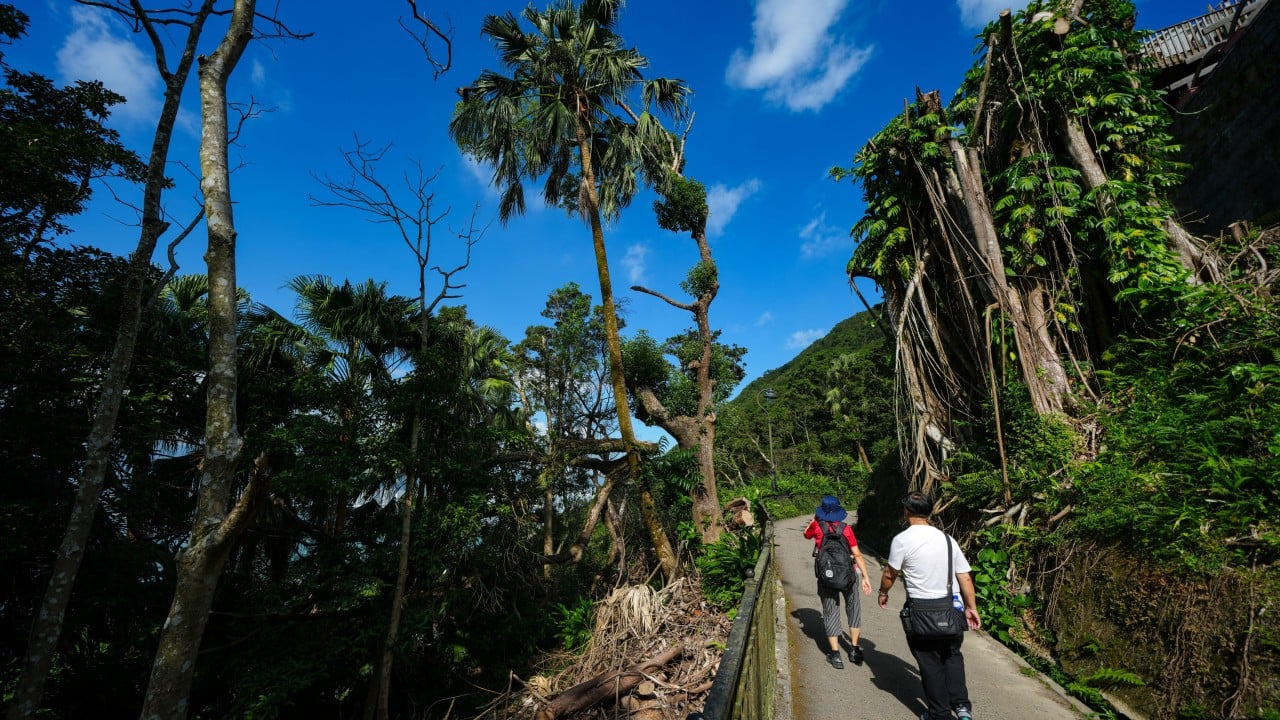
Municipal tourism boards consistently miscalculate the return on capital when deploying artificial spectacle over natural ecological value. The recent friction surrounding the proposed light display at Hong Kong’s Victoria Peak demonstrates a classic failure in urban placemaking: attempting to solve a structural visitor-yield problem with an aesthetic intervention that degrades the core asset. To resolve the deadlock between commercial revitalization and environmental preservation, stakeholders must evaluate the project through the mechanics of asset cannibalization, regulatory friction, and experience economics rather than superficial visual upgrades.
The Structural Flaw in Hong Kong’s Nighttime Economy Strategy
Urban policymakers frequently default to hardware installations—light shows, architectural projections, and illuminated walkways—when confronting declining tourism expenditure. This approach stems from a misdiagnosis of the Hong Kong tourism deficit. The city’s post-pandemic recovery has faced headwinds not from a lack of visual stimulation, but from shifting regional travel preferences, high currency valuations pegged to the US dollar, and intense competition from lower-cost mainland alternatives like Shenzhen and Guangzhou.
Installing high-intensity lighting infrastructure on Victoria Peak attempts to manufacture a "nighttime economy" catalyst where the baseline value proposition already relies on darkness. Victoria Peak’s primary economic moat is its vantage point overlooking Victoria Harbour. The harbour itself provides the light show; the Peak serves as the darkened amphitheater from which visitors observe it. Introducing localized light pollution directly onto the ridge line violates basic optical physics and degrades the contrast ratio required to view the skyline below.
When a municipality invests capital to alter a flagship attraction, it triggers a specific operational risk known as asset cannibalization. Rather than expanding the total addressable market of tourists, the intervention alienates the existing high-value segment—hikers, nature photographers, and tranquility-seeking travelers—while failing to attract new demographics who already have access to superior, purpose-built digital art installations in urban centers across Asia.
The Three Pillars of Placemaking Friction
The opposition to the Peak light display is not merely an emotional reaction from conservationists; it is the predictable output of three colliding operational variables. Understanding these pillars explains why the initiative stalled before full deployment.
1. Ecological and Astronomical Externalities
Victoria Peak sits adjacent to Pok Fu Lam Country Park, a protected ecological zone housing nocturnal wildlife, including specific species of bats, owls, and insects whose circadian rhythms and navigation mechanisms depend on ambient darkness. High-lumen LED installations introduce skyglow and light trespass into these buffer zones. From a regulatory standpoint, building artificial illumination bordering a statutory country park creates immediate friction with Hong Kong’s Environmental Impact Assessment (EIA) ordinances. Even when projects bypass formal EIA thresholds by categorizing installations as "temporary" or "artistic," the resulting public pushback forces municipal authorities into defensive postures, stalling procurement and permitting timelines.
2. Visual Clutter and Aesthetic Diminishing Returns
In high-density urban environments, sensory overload is a primary source of visitor fatigue. Hong Kong’s central business district already operates at maximum visual saturation, anchored by the nightly A Symphony of Lights multimedia show across Victoria Harbour. Replicating illuminated motifs at a higher elevation creates redundancy. In experience economics, marginal utility drops rapidly when a consumer is exposed to identical stimuli across different spatial zones. A visitor who rides the Peak Tram expects a transition from urban density to alpine calm. Interrupting that transition with commercialized lighting strips away the psychological relief that makes the Peak distinct from Tsim Sha Tsui or Central.
3. Governance Fragmentation and Land Tenure
The Peak’s administrative control is divided among multiple entities: the Leisure and Cultural Services Department (LCSD), the Agriculture, Fisheries and Conservation Department (AFCD), the Transport Department, and private commercial landlords operating the Peak Tower and The Peak Galleria. Executing an integrated lighting masterplan requires alignment across agencies with conflicting mandates. Commercial landlords optimize for footfall and retail dwell time; conservation departments optimize for habitat preservation; transport authorities optimize for crowd dispersal on narrow mountain roads. Without a single unified authority holding profit-and-loss responsibility for the entire precinct, infrastructure projects default to lowest-common-denominator compromises—resulting in fragmented, uninspired installations that satisfy neither commercial tenants nor preservationists.
The Cost Function of Artificial Spectacle
To evaluate whether a capital expenditure on urban lighting generates positive net present value, planners must model the full cost function rather than isolating hardware procurement and installation fees.
$$C_{total} = C_{cap} + C_{op} + C_{ext} - \Delta R_{net}$$
Where:
- $C_{cap}$ represents upfront capital expenditure (fixtures, cabling, structural mounting, and grid tie-ins).
- $C_{op}$ represents ongoing operational expenditure (electricity, weatherproofing maintenance in a high-humidity typhoon zone, and software programming).
- $C_{ext}$ represents negative externalities (ecological disruption, brand dilution, and resident dissatisfaction).
- $\Delta R_{net}$ represents the net incremental revenue generated exclusively by the installation, stripped of baseline organic traffic.
In the case of Victoria Peak, $C_{op}$ is chronically underestimated. The summit experiences severe microclimatic conditions, including dense fog, corrosive salt-laden moisture, and extreme wind loads during typhoon season. Standard architectural lighting degrades rapidly under these conditions, driving up maintenance cycles and replacement costs.
Simultaneously, $\Delta R_{net}$ approaches zero. Tourists do not book flights to Hong Kong to see illuminated pathways on a hill; they visit the Peak regardless of whether the trees are lit. If a visitor already plans to ride the Peak Tram and dine at the summit, adding a light display captures zero incremental demand. It merely shifts visitor movement patterns within a closed ecosystem without increasing total per-capita spend. When $\Delta R_{net}$ fails to exceed the sum of $C_{cap}$, $C_{op}$, and $C_{ext}$, the project becomes value-destructive.
The Mechanism of Regulatory and Public Pushback
When infrastructure projects lack clear economic justification, they become vulnerable to asymmetric opposition. The snag at Victoria Peak illustrates how low-salience administrative decisions escalate into high-visibility public relations liabilities.
- Information Asymmetry at Inception: Municipal tourism campaigns frequently fast-track aesthetic projects under broad revitalization budgets without publishing granular environmental or financial feasibility studies.
- Visual Proof of Concept: Unlike policy changes, physical lighting installations are immediately visible to the public during testing phases. Residents and hikers observe unshielded spotlights, exposed wiring, and glare before any official launch occurs.
- The "Eyesore" Framing: Once early imagery circulates on social media platforms like Xiaohongshu, Instagram, and local forums, the narrative solidifies. Critics frame the installation not as an upgrade, but as visual vandalism. At this stage, government agencies lose control of the messaging.
- Tactical Retreat: Facing unified criticism from environmental groups, district councilors, and disappointed tourists, officials are forced to dim the lights, alter color temperatures, or dismantle sections of the display. This reactive adjustment wastes sunk capital and signals institutional incompetence to the market.
Alternative Capital Allocation Models for High-Altitude Assets
If the strategic goal is to increase dwell time and per-capita spending at Victoria Peak after sunset, capital must be directed toward interventions that complement, rather than compete with, the natural environment.
Dark-Sky Compliance and Low-Glare Wayfinding
Instead of upward-facing floodlights that illuminate foliage and generate skyglow, municipal planners should enforce strict dark-sky engineering standards. This involves installing downward-facing, warm-spectrum (2200K to 2700K) bollard lights along pedestrian paths like Lugard Road. Low-glare illumination preserves human night vision, allowing visitors' eyes to adapt to the ambient darkness so the distant city lights appear sharper and more vibrant. This engineering approach protects nocturnal habitats while improving pedestrian safety on narrow cliffside paths.
Acoustic and Interpretive Curation
High-yield cultural tourism relies on depth of context rather than sensory volume. Redirecting funds from physical light hardware into localized, device-based audio experiences—triggered via geofencing along the Peak Circle Walk—delivers high-margin engagement without altering the physical terrain. Narratives detailing the geological formation of the Hong Kong caldera, the colonial history of the Peak Tram, and the biodiversity of the surrounding slopes transform a passive walk into an educational product. Operational costs are minimal, physical footprint is zero, and the asset remains immune to typhoon damage.
Curated Culinary and Observation Infrastructure
Revenue capture at the Peak is constrained by bottlenecks in seating capacity and the quality of hospitality offerings. Rather than illuminating the exterior terrain, capital should incentivize private operators to upgrade interior observation decks with anti-reflective glazing and expand premium, late-night dining options that capitalize on the existing view. When visitors have comfortable, weather-protected vantage points with high-margin food and beverage service, dwell time increases organically.
Strategic Execution for Tourism Authorities
The impasse at Victoria Peak serves as a case study in misaligned incentives. Tourism boards are under intense political pressure to demonstrate visible action, leading to a bias toward physical installations that photograph well in press releases. However, sustainable destination management requires protecting the core scarcity that drives demand.
To salvage the Victoria Peak precinct without further capital destruction, authorities must execute three immediate operational pivots:
- Halt all upward-facing and color-changing LED installations along the Lugard Road and Harlech Road corridors, restricting illumination strictly to shielded, low-lumen safety path lighting.
- Conduct an independent post-implementation audit of existing installations to quantify actual power consumption, maintenance liabilities, and visitor sentiment before allocating funds to secondary phases.
- Reallocate remaining nighttime economy budgets toward regulatory streamlining for private hospitality operators at the summit, enabling extended operating hours, outdoor terrace licensing, and curated cultural programming that monetizes the existing skyline view rather than attempting to outshine it.