On a Tuesday morning in Brussels, the air is usually thick with the scent of damp pavement and fresh espresso from the cafes lining the Place de Brouckère. But this morning, the air tasted like ash.
High above the historic square, the Oxy Tower was supposed to represent the future—a gleaming, high-concept monument of luxury apartments, trendy restaurants, and a rooftop bar overlooking the heart of Europe. More than two hundred laborers arrived for their shift, carrying tool belts, thermoses, and the quiet expectation of an ordinary workday. Building on this idea, you can find more in: The Sibulan Assassination and the Deadly Economics of Philippine Conservation.
They did not expect a vertical furnace.
A building under renovation is a complex, fragile ecosystem. To understand how a routine workday turns into a nightmare, consider the nature of modern construction. Fire protection systems are often disconnected or partially dismantled. The structural bones are exposed, creating massive, empty voids. Analysts at USA Today have also weighed in on this matter.
When a fire sparked on the second floor, the flames did not stay contained. They found the elevator shafts.
In any high-rise building, an elevator shaft is not just a passage for transport. It is a chimney. The draft created by the vertical shaft acts as a natural bellows, pulling oxygen from the lower floors, feeding the fire, and shooting the heat upward with terrifying velocity. Within minutes, the initial fire on the lower levels was brought under control. The real disaster, however, was already traveling through the spine of the tower, igniting a secondary inferno in the subterranean depths of the structure.
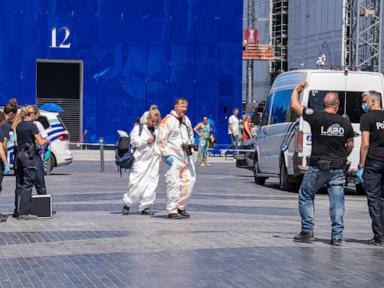
Most of the two hundred workers managed to scramble down temporary stairwells, spilling out onto the busy streets of the capital, coughing and searching for familiar faces in the crowd.
But as the dust settled, a grim headcount began. Six names went unanswered.
We talk about statistics in news reports as if they are abstract data points, but the human brain cannot process tragedy in bulk. We can only understand it through the details. It is the unfinished coffee left on a makeshift workbench. It is the smartphone ringing endlessly in a discarded jacket pocket, displaying a caller ID like "Mom" or "Home."
For hours, rescue teams fought their way through the smoldering debris. The heat inside the concrete core of the building was so intense that a responding firefighter had to be treated for severe heat exhaustion on the scene. Inside the structure, two elevator cabins were suspended, trapped in their shafts like metal cages.
When rescue workers finally forced open the doors of the first accessible elevator cabin, the horror of the event became undeniable. Inside, they discovered a grim, silent testament to the final, desperate moments of the workers who had tried to escape.
"We had small access to one of the two elevator cabinets," Brecht Speybrouck, a spokesman for the local labor inspection service, told reporters, his voice carrying the heavy, flat tone of someone who has seen too much. "And there we had a view that there are some corpses."
Imagine the confusion in those final moments. A hypothetical worker, let us call him Marc, steps into the lift hoping to escape the smoke on the upper floors. He presses the button, expecting a smooth descent to safety. Instead, the power cuts. The cabin stalls. The shaft around him begins to fill with thick, toxic carbon monoxide, rising from the secondary fire below. In the dark, claustrophobic box, the temperature climbs to unbearable heights. There is no way out.
By Tuesday afternoon, the King of Belgium and the Prime Minister arrived at the scene, standing behind police barriers under the grey sky. But royal visits and political statements cannot cool the hot metal of a ruined elevator shaft, nor can they speed up the agonizingly slow process of identifying the remains. As night falls over Brussels, rescue teams are still trying to reach the second elevator cabin, unsure of what they will find when they finally pry the heavy steel doors apart.
The Oxy Tower will eventually be finished. The charred elevator shafts will be rebuilt, the concrete scrubbed of soot, and the penthouse apartments sold to wealthy buyers who will look out over the city with a glass of wine in hand. But the foundations of the building will always hold the quiet memory of a Tuesday morning when six people went to work, stepped into a lift, and never came home.