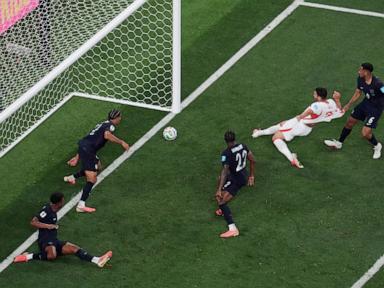
Dead rubber matches at a World Cup are supposed to be boring. Managers rotate their squads, players try to avoid injuries, and fans usually brace themselves for a sluggish ninety minutes. But the 3-2 thriller where Turkiye sunk the United States with a brutal stoppage-time winner was anything but a meaningless game. It exposed every single flaw that still plagues American soccer while proving that the Turkish national team possesses a chaotic, beautiful refusal to quit.
If you just look at the tournament standings, this result changed nothing. Both teams already knew their fates before kickoff. Yet, watching the USMNT collapse in the final seconds felt like a massive wake-up call. It was a painful reminder of what happens when tactical complacency meets raw, unfiltered international passion.
The Myth of the Meaningless World Cup Match
Elite athletes do not just turn off their competitive drive. When you wear a national team shirt at a home World Cup, every minute on the pitch is a business meeting for your career. That is why the narrative surrounding this dead rubber was completely wrong from the start.
The United States entered the match needing to salvage pride. Playing on home soil brings a crushing level of expectation, and bowing out with a whimper was never an option. Turkiye, on the other hand, brought their trademark intensity. Turkish football thrives on emotional momentum. They do not do casual friendlies, and they certainly do not treat World Cup fixtures like training sessions.
From the opening whistle, the tactical setups showed two teams trying to prove a point. The US tried to establish control through possession, building slowly from the back. Turkiye chose violence. They pressed high, forced turnovers, and turned the game into a transitional nightmare for the American midfield. It became clear very quickly that while the points did not matter for the standings, the psychological scars of this match would last a long time.
Why the US Defensively Crumbled Under Pressure
Answering the big question of how a team concedes three goals in a game with zero tournament pressure requires a hard look at defensive structure. The American backline looked disconnected. Throughout the cycle, the USMNT relied heavily on athleticism to bail out poor positioning. Against disciplined European opposition, that safety net rips apart.
Turkiye exploited the gaps between the American fullbacks and central defenders all night. When the US pushed forward, they left massive oceans of space behind their midfield. The Turkish attackers did not need a second invitation. They flooded those zones with direct, vertical passing that carved the host nation open.
The equalizing goals from the US showed flashes of what this team can do when they play with urgency. They fought back twice. They showed genuine resilience to hunt down the equalizer after falling behind. But chasing a game takes a massive physical toll. By the time the clock ticked into added time, the American lines were completely stretched.
That leads right into the biggest issue. Elite teams manage the final minutes of a game. They slow the tempo down, keep possession, and accept a draw if a win is out of reach. Instead, the US kept pushing bodies forward blindly. They got caught out on a rapid Turkish counter-attack, leading to the devastating stoppage-time winner. It was a tactical failure born out of a lack of game management experience.
The Turkish Football Identity Is Built for This Chaos
You have to admire the way Turkiye approaches these moments. Turkish football is often criticized for being too emotional or lacking structural discipline over a long tournament. But in a single, high-stakes scrap, that emotional fire is an absolute superpower.
Even when the US fought back to make it 2-2, the Turkish players did not settle for a point. They sensed the physical exhaustion in the American squad. The late tactical substitutions from the Turkish bench injected fresh pace exactly where the US was hurting most on the flanks.
The match winner was a microcosm of their entire footballing philosophy. It was direct, aggressive, and executed with absolute technical precision under immense physical pressure. While the US players looked completely spent, the Turkish attackers sprinted seventy yards to get into the box for that final cross. That desire cannot be coached. You either have it or you don't.
Structural Problems the USMNT Cannot Ignore
This 3-2 defeat highlights a systemic issue within the American soccer setup that goes far beyond a single coaching staff or a specific roster selection. The US has developed an incredibly talented pool of individual players, many of whom feature regularly in Europe top leagues. What they have not developed is a collective footballing IQ that knows how to dictate the rhythm of an international match.
When the team faces adversity, the default reaction is to run faster and fight harder. Soccer at the highest level requires intellectual patience. It requires knowing when to press, when to drop into a low block, and when to completely kill the game by passing the opponent to death. Right now, the USMNT only has one gear: fast and chaotic. When they meet a team like Turkiye who is even better at navigating chaos, the system breaks down completely.
Fixing this requires a shift in how players are developed and coached at the senior level. The focus needs to move away from purely physical metrics and transition toward tactical adaptability. Players must learn how to read shifting tactical shapes on the fly without waiting for instructions from the touchline.
Immediate Adjustments Needed for the Next Cycle
Fixing these deep issues requires immediate, practical changes rather than vague promises of future progress. The national team setup must prioritize specific operational adjustments to avoid repeating these late-game collapses.
- Establish clear leadership roles on the pitch to manage game tempos during high-pressure moments.
- Integrate defensive midfielders who specialize in positional discipline rather than box-to-box running.
- Restructure late-game tactical protocols to prioritize structural defensive solidity over emotional attacking.
- Implement rigorous transition defense drills to stop opponents from exploiting the space behind advancing fullbacks.
Relying on individual moments of brilliance from star attackers is a losing strategy against organized international opponents. Developing a rigid, disciplined defensive identity that holds firm under late-game pressure is the only path forward. The heartbreak of this stoppage-time defeat must serve as the foundation for a much tougher, smarter international program.