The headlines make it sound like a distant dream, but the Pentagon just signaled that the waiting game is over. If a US Virginia-class submarine needed a port to call home for urgent repairs right now, Western Australia wouldn't just be an option—it would be the plan.
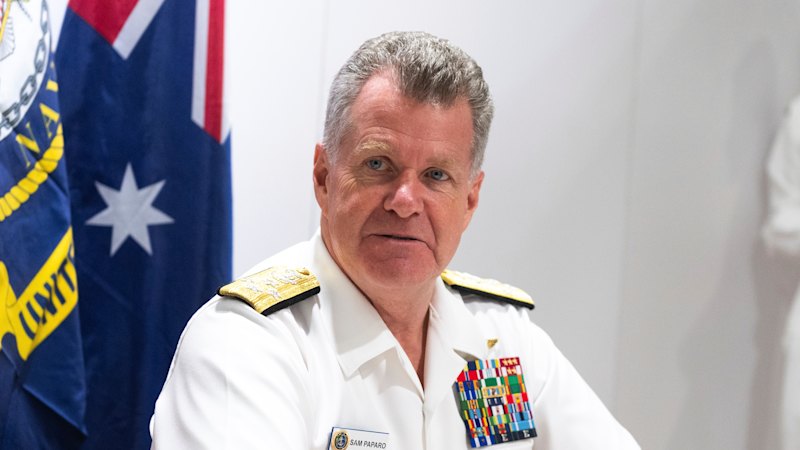
Vice Admiral Doug Perry, commander of the US Second Fleet and a key architect of the AUKUS partnership, recently dropped a bombshell on anyone still doubting the timeline. He basically told the world that Australia’s HMAS Stirling isn't just a scenic dock; it’s a fully functional node in the world’s most advanced undersea network. "Australia is ready to host these boats today," isn't just a quote. It's a massive shift in Indo-Pacific strategy.
The end of the sovereign ready debate
For years, critics argued that Australia was decades away from being able to handle the complex, radioactive realities of nuclear-powered submarines (SSNs). They pointed to the lack of infrastructure, the missing workforce, and the sheer technical gap between the aging Collins-class diesel-electrics and a nuclear reactor on the water.
That argument just hit a wall.
The US Navy doesn't use the word "today" lightly. This confidence comes off the back of the USS Vermont (SSN 792) visit and maintenance period at HMAS Stirling. This wasn't a PR stunt. It was a rigorous, "boots on the ground" test of whether Australian maintainers could work alongside Americans on a Virginia-class boat without the safety net of a US submarine tender ship.
They didn't just pass. They crushed it.
I’ve seen how these naval bureaucracies work. Usually, they're buried in "preliminary assessments" for a decade. But the USS Vermont maintenance proved that the "Optimal Pathway"—the roadmap for AUKUS—is moving way faster than the skeptics predicted. Australian industry actually developed a mobile water purification system on the fly to meet the insane purity standards required for nuclear reactors. If that's not "ready," I don't know what is.
HMAS Stirling is no longer just a pit stop
You have to understand the geography to get why this matters. Before now, if a US sub in the Indian Ocean needed significant maintenance, it often meant a long haul back to Guam or even Hawaii. That's thousands of miles of "dead time" where a billion-dollar asset is out of the fight.
By declaring Australia ready today, the US Navy is effectively extending its reach. HMAS Stirling is being transformed into a "Submarine Rotational Force-West" (SRF-West). By 2027, we're looking at a permanent rotational presence of up to four US Virginia-class subs and one UK Astute-class sub.
But the Navy isn't waiting for 2027 to start the clock. The infrastructure upgrades at Garden Island are ahead of schedule. We're talking about:
- Massive power grid uplifts to sustain nuclear boats at berth.
- Advanced radiological monitoring systems that are already operational.
- A workforce that has gone from "learning the theory" to "turning the wrenches" on active US hulls.
The nuclear stewardship hurdle
Let’s be honest. The biggest fear for the Australian public has always been the "N" word. Nuclear. There’s a lot of misinformation floating around that Australia is becoming a dumping ground for radioactive waste or that we're losing our sovereignty.
Admiral Perry and the Australian Submarine Agency (ASA) have been remarkably blunt about this. The deal is simple: Australia gets the capability, but they also get the responsibility. This means adopting the "Gold Standard" of US nuclear stewardship.
During the recent maintenance periods, not a single drop of radioactive material was moved ashore. The US Navy is training Australians not just how to fix a pump, but how to respect the reactor. It’s a culture shift, not just a technical one. They’ve already graduated the first cohort of Australian nuclear power school students. These sailors aren't just watching; they're integrated into US crews.
Why this is a nightmare for Beijing
You don't spend $368 billion and accelerate timelines just for fun. This is about deterrence. A nuclear-powered submarine is arguably the most survivable and lethal weapon system on the planet. They can stay submerged for months, moving at speeds a diesel sub can't touch, and they're incredibly hard to find.
By making Australia "ready today," the US is telling China that the undersea advantage in the Indo-Pacific is being locked in. It’s no longer about what Australia might have in 2040. It’s about the fact that US subs can now sustain operations out of Perth with local support right now.
That changes the math for any potential conflict in the South China Sea. If a submarine can get back into the water days faster because it doesn't have to transit the Pacific for a minor fix, its combat power is effectively doubled.
What actually happens next
If you're looking for the "so what," keep your eyes on the workforce. The "Propel" scholarship program and the billions being poured into the Osborne shipyard in South Australia are the real markers of success.
The US Navy has done its part by opening the door and saying, "The dock is ready." Now it's on the Australian industry to scale. We're moving from a period of "demonstration" to a period of "regularization."
Don't expect a sudden flood of thirty subs tomorrow. Expect a steady, quiet drumbeat of Virginia-class boats appearing in Western Australia. Each visit will be slightly longer, the maintenance slightly more complex, and the integration slightly deeper.
The transition is happening. The US Navy just stopped pretending it’s a future project and started treating it like a current reality. If you're in the defense industry or just a watcher of global power shifts, the message is clear. Australia is officially a nuclear-tier maritime power.
Check the job boards in Rockingham or Adelaide if you don't believe me. The money is flowing, the subs are docking, and the "today" the Navy promised is already here.