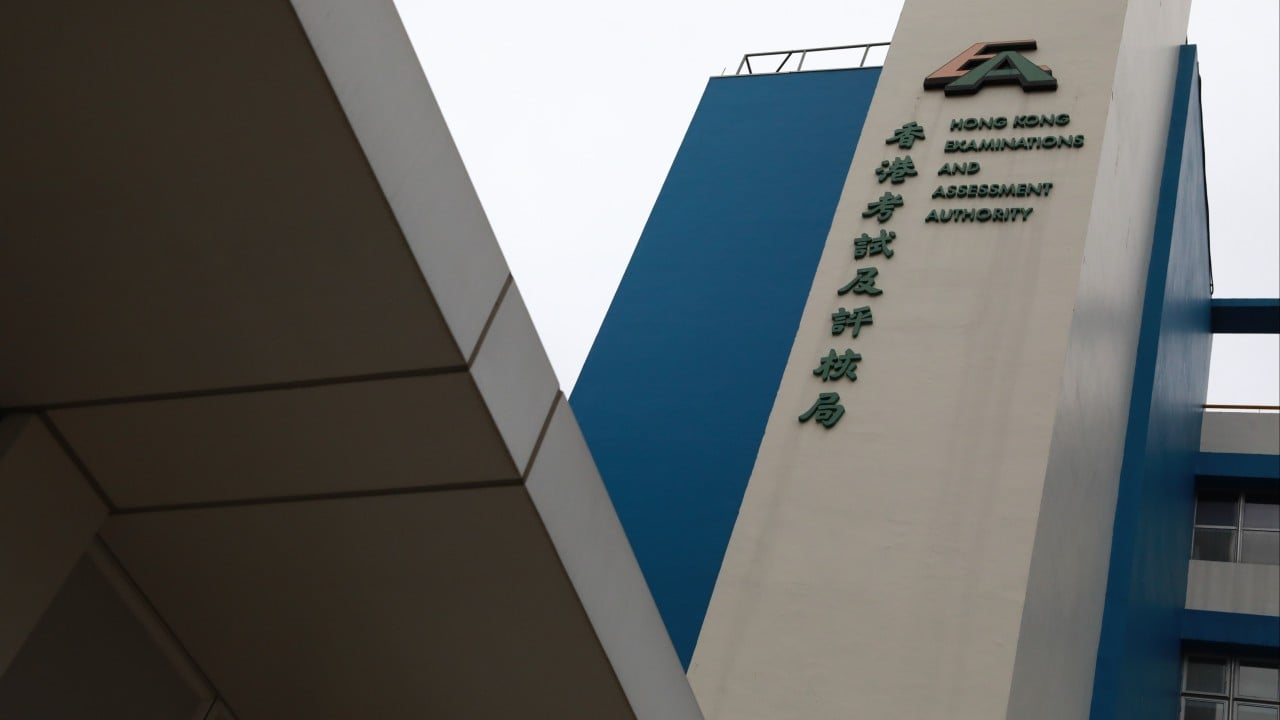
Beijing is furious. Washington just barred US-bound wireless and electronic devices from undergoing compliance testing in Chinese laboratories, and the predictable chorus of diplomatic outrage has begun. Officials warn of catastrophic supply chain disruptions, sky-high consumer prices, and fractured global trade.
Financial pundits and legacy tech reporters are eating it up. They are publishing breathless hand-wringing about how decoupling hardware certification will grind manufacturing to a halt.
They are completely wrong.
The panic over the Federal Communications Commission (FCC) restricting Chinese labs from authorizing electronics for the American market relies on a lazy consensus. It assumes that keeping the final gatekeeper of hardware compliance inside the borders of your primary geopolitical rival is somehow good for stability. It isn't. It was a ticking time bomb of regulatory capture, intellectual property leakage, and single-point-of-failure vulnerability.
Forcing companies to move compliance testing out of China does not break the supply chain. It vaccinates it against a far worse collapse down the road.
The Myth of the Frictionless Supply Chain
To understand why the mainstream narrative fails, you have to understand what "device testing" actually means in hardware manufacturing.
Before any smartphone, router, smart thermostat, or Bluetooth headset can be legally sold in the United States, it must pass electromagnetic compatibility (EMC) and radio frequency (RF) testing. This is known as FCC Equipment Authorization. Historically, the FCC outsourced this verification to accredited Telecommunication Certification Bodies (TCBs) and test labs globally—including dozens of state-affiliated and private facilities inside mainland China.
Here is the dirty secret that supply chain romanticists ignore: Co-locating final regulatory certification with mass assembly created an illusion of efficiency while hiding massive systemic risk.
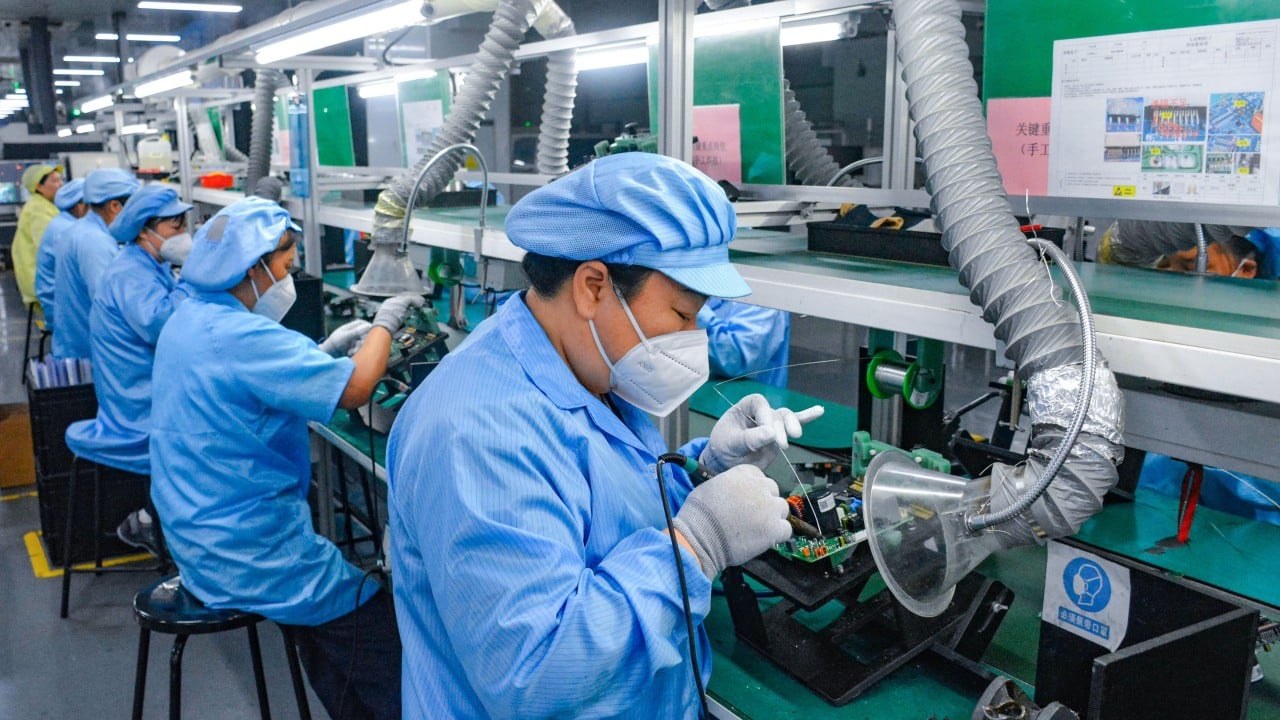
When an American hardware company designs a product in California, sources components across Taiwan and South Korea, assembles it in Shenzhen, and tests it five miles down the road at a Chinese lab, it looks great on a spreadsheet. Shipping costs are zero. Turnaround times are measured in days.
Until they aren't.
I have sat in boardrooms where hardware startups watched six months of engineering vanish because a local testing facility mysteriously delayed their RF certification—only for a suspiciously similar domestic competitor to launch a month later. You cannot submit a device for deep-dive FCC compliance testing without handing over the crown jewels: complete schematics, PCB layouts, firmware binaries, and unencrypted operational descriptions.
When Beijing warns that banning Chinese labs will disrupt supply chains, what they are actually mourning is the loss of mandatory, institutionalized visibility into every piece of foreign wireless hardware entering the Western market before it even hits retail shelves.
Dismantling the "Supply Chain Disruption" Scare Tactics
Let's look at the actual mechanics of hardware logistics and dismantle the three biggest lies surrounding this ban.
Lie 1: "There is nowhere else to test these devices."
This is pure fiction. The global compliance testing industry is massive, decentralized, and hungry for volume. Heavy hitters like UL Solutions, TÜV Rheinland, SGS, Intertek, and Bureau Veritas already operate sprawling, state-of-the-art RF and EMC laboratories across Taiwan, South Korea, Vietnam, India, Mexico, Germany, and the United States.
Moving a golden sample—the finalized prototype used for regulatory testing—from a factory in Dongguan to a test chamber in Taipei or Seoul takes a three-hour flight via DHL. It does not require moving the entire assembly line. You do not need to uproot ten thousand injection-molding machines to test fifty units in a shielded anechoic chamber.
Lie 2: "Costs will skyrocket and crush consumers."
Compliance testing is a fixed, non-recurring engineering (NRE) expense. Whether an FCC Part 15 certification costs $15,000 in Shenzhen or $22,000 in Taiwan, that $7,000 difference is amortized across hundreds of thousands—or millions—of shipped units.
On a production run of 500,000 smart devices, a $7,000 increase in testing fees adds exactly 1.4 cents to the bill of materials per unit. Anyone claiming this ban will cause runaway consumer inflation either cannot do basic division or is deliberately carrying water for corporate lobbyists who hate changing their vendor lists.
Lie 3: "This breaks international trade norms."
Standards bodies exist to guarantee safety, spectrum integrity, and national security—not to subsidize convenience. Under the World Trade Organization (WTO) Technical Barriers to Trade (TBT) Agreement, nations explicitly retain the right to enforce conformity assessment procedures necessary to protect essential security interests.
Trusting laboratories subject to China’s 2017 National Intelligence Law—which legally compels organizations and citizens to assist state intelligence agencies—to police the radio spectrum of American critical infrastructure was never a trade norm. It was a massive regulatory oversight that Washington finally closed.
What Hardware Executives Are Asking Wrong
If you read the panicked threads on industry forums, executives are asking: "How do we lobby for exemptions so we can keep using our Shenzhen test labs?"
Wrong question. Dead wrong.
The real question hardware leaders should be asking is: "Why did we allow our regulatory compliance bottleneck to sit inside a single jurisdiction in the first place?"
Consider the "China Plus One" manufacturing strategy that every major electronics brand—from Apple to HP—has spent the last five years scrambling to execute. Companies realized that having 90% of final assembly in one country meant a single lockdown, tariff spike, or geopolitical flare-up could zero out their quarterly revenue.
Yet, those same companies left their certification pipelines completely unhedged. Imagine a scenario where a company moves 40% of its assembly to Vietnam to de-risk its supply chain, but still ships its Vietnamese-built prototypes back to Guangzhou for FCC testing because their legacy compliance manager knows the lab director there.
That is operational malpractice. By banning Chinese labs from issuing US authorizations, the FCC just forced sluggish hardware companies to finish the decoupling work they claimed they were already doing.
The Brutal Reality of Transitioning Your Testing Pipeline
To be completely transparent, this shift is not painless in the short term. Pretending there are zero friction points would be dishonest.
If you are a hardware founder or VP of Operations right now, you are going to face three immediate headaches:
- Queue Congestion in Neighboring Hubs: Labs in Taiwan, South Korea, and Vietnam are about to get slammed. Lead times for chamber bookings in Hsinchu or Suwon could easily stretch from two weeks to six weeks over the next two quarters as capacity scales up.
- Debugging Friction: When a device fails radiated emissions testing—and almost every complex wireless product fails on its first pass—engineers usually swap capacitors, tweak shielding cans, or flash new firmware on the spot. Doing that when your test lab is a 30-minute cab ride from your factory is easy. Doing it when your lab is across an international border requires flying an RF engineer out with a suitcase full of soldering gear and spare boards.
- Customs Bottlenecks on Prototypes: Shipping uncertified, pre-production hardware across borders involves strict customs declarations (like ATA Carnets). If your logistics team is sloppy, your golden samples will sit in customs limbo in Taipei while your launch window evaporates.
Those are real operational hurdles. They require competent engineering management to solve. What they are not is an existential threat to global commerce.
How Smart Operators Turn This Ban Into a Competitive Weapon
While your competitors are whining to trade associations and praying for a policy reversal that isn't coming, you can use this regulatory shock to outmaneuver them. Here is the exact playbook for hardware teams that want to win in a post-China-testing world.
1. Split Pre-Compliance from Final Certification
Stop treating compliance as a single monolithic event. You do not need an FCC-accredited TCB to tell you that your switching power supply is bleeding noise at 240 MHz.
Buy your own near-field probes, a decent spectrum analyzer, and a benchtop TEM cell. Do 90% of your pre-compliance debugging in-house or at local third-party engineering shops right next to your contract manufacturer. Only ship the hardware to an accredited lab in Taiwan, Korea, or the US when you already know with 99% mathematical certainty that it will pass.
2. Lock In Multi-Year Chamber Retainers Now
Independent test labs are capacity-constrained businesses. Right now, tier-one brands are quietly buying up block bookings at accredited facilities across Southeast Asia and North America. If you wait until your engineering validation test (EVT) phase is over to call UL or TÜV for a quote, you will be put at the back of the line behind companies spending seven figures a year. Secure your testing slots during the architectural phase.
3. Build Modular RF Architectures
The smartest hardware teams stop certifying entire products from scratch. By utilizing pre-certified wireless modules (Wi-Fi, Bluetooth, cellular) from vendors like Nordic Semiconductor, u-blox, or Quectel—and strictly following their reference antenna layouts—you dramatically reduce the scope of required testing.
Instead of full intentional radiator certification, you only need permissive change filings or basic unintentional radiator verification. That slashes chamber time from weeks to hours, making lab location almost irrelevant.
4. Audit Your Entire Compliance Stack for Hidden Exposure
The FCC lab ban is not an isolated event; it is the opening salvo. Washington has already targeted telecom gear via the Covered List, restricted connected vehicle software, and tightened export controls on advanced silicon.
If your supply chain still relies on Chinese firmware signing servers, Chinese cloud telemetry for consumer devices, or state-linked component vendors for critical sensors, you are standing on a trapdoor. Map your tier-two and tier-three dependencies today, before the next Federal Register notice lands on your desk.
The Verdict Nobody in Beijing Wants to Hear
Global supply chains did not become fragile because Washington banned Chinese testing labs. They became fragile because Western corporations spent three decades prioritizing pennies of margin over structural resilience, concentrating every stage of design verification, component sourcing, assembly, and regulatory approval inside a single authoritarian state.
Beijing’s outrage is entirely rational from their perspective. Losing control over the testing bottleneck strips away leverage—both commercial and intelligence-related—over the hardware ecosystem that powers the Western economy.
For everyone else, this ban is a overdue correction. It forces hardware companies to build genuine geographic redundancy, protects proprietary RF engineering from state-mandated disclosure, and proves that regulatory independence is non-negotiable.
Stop mourning the death of cheap, convenient compliance. Book your lab time in Taipei, fix your pre-compliance engineering, and build a supply chain that doesn't collapse the moment geopolitics gets uncomfortable.