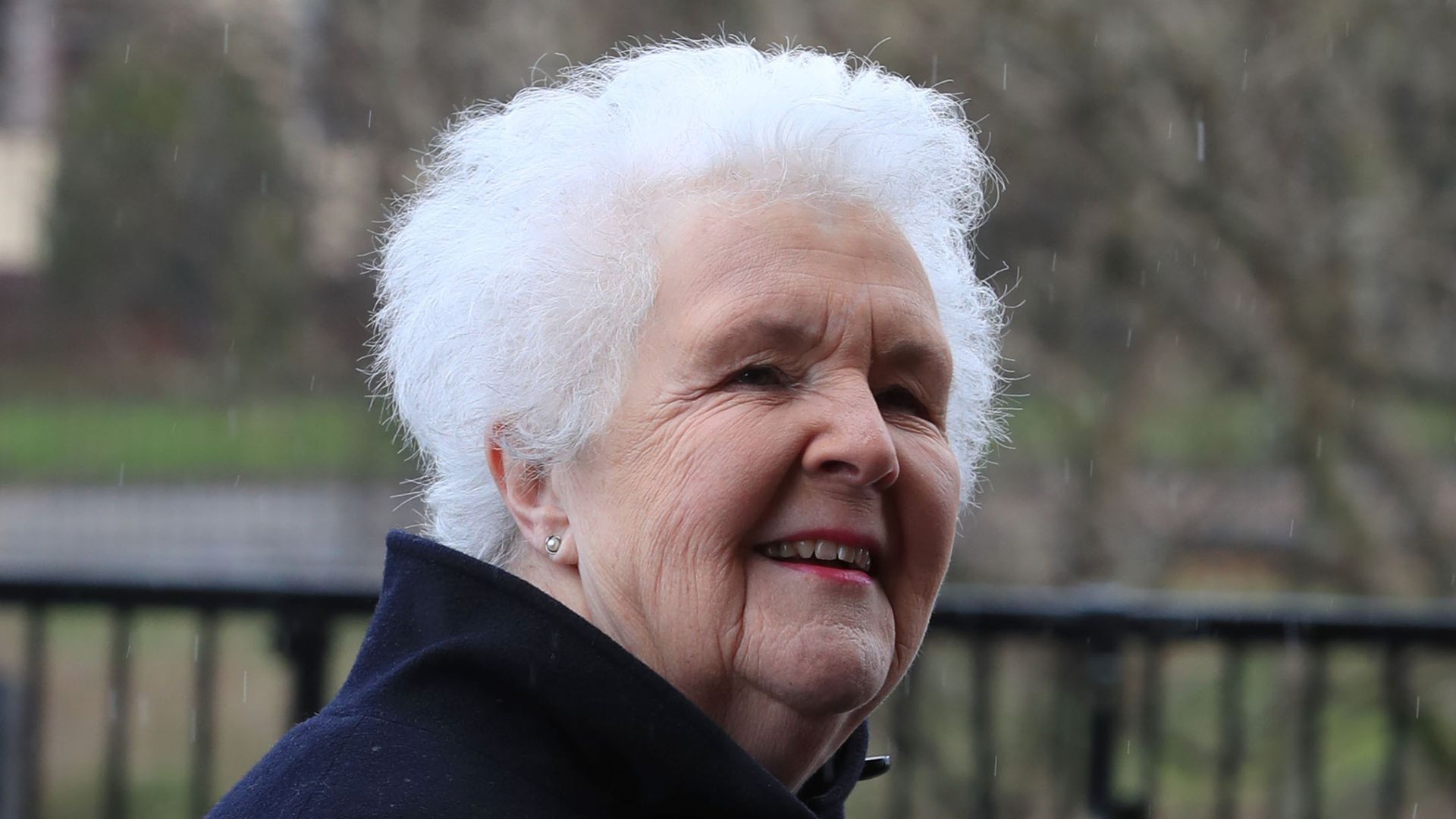
Patricia Stephanie Cole knew how to command a room before she ever stepped in front of a television camera. When the news broke that the venerated actress had passed away at the age of eighty-four following complications from Alzheimer's disease, public tributes poured in from across the British entertainment industry. Yet beneath the standard eulogies lies a far more compelling story about an artist who refused to bend to the conventional obsession with youthful ingenues. She carved out a terrifyingly sharp, profoundly humane niche playing women twice her age long before she actually qualified for a senior discount.
When she was cast as the acerbic, retirement-home rebel Diana Trent in Waiting for God at the remarkably young age of forty-eight, she did not merely act old; she captured the fierce, unyielding dignity of those whom society prefers to render invisible. Her death closes a chapter on a vanishing breed of British character actors who brought theatrical rigor, biting wit, and unflinching authenticity to both prime-time sitcoms and gritty historical dramas. To understand Cole is to understand the mechanics of British television during its golden era, an ecosystem that rewarded actors who possessed weight, voice, and an absolute intolerance for theatrical vanity.
The Tyranny of Youth and the Power of Age
Born in Solihull in 1941, Cole discovered early on that her voice and presence suited characters far more seasoned than her chronological years. While many young actors fought tooth and nail for the romantic lead, Cole leaned directly into eccentricity and authority. Her training at the Bristol Old Vic yielded immediate typecasting of the most unusual sort. At seventeen, she played Madame Arcati in Noel Coward's Blithe Spirit, a middle-aged medium, establishing a pattern that would define her early professional life.
In any other industry, being cast exclusively as harrisons, matriarchs, and sharp-tongued gossips in your twenties and thirties would induce panic. For Cole, it became a masterclass in observation. She studied the women who ran households, local committees, and boarding schools with the precision of an anthropologist. She noticed how bitterness and humor often coexisted in older women who had lived through social constraints and wartime rationing. This early specialization protected her from the precarious shelf-life that plagues actors reliant purely on physical symmetry. By the time she reached the actual age of the characters she had been playing for decades, she owned the territory completely.
Walking Away From the Stage
The path was far from linear. Despite a steady stream of repertory work in Lincoln, Canterbury, Hornchurch, and Salisbury—where she famously tackled heavy classical and modern texts including Who's Afraid of Virginia Woolf?—Cole faced deep professional fatigue. Beset by depression and worn down by the grinding machinery of regional theater, she made the drastic decision to quit the profession entirely in 1972.
For three years, the stage was entirely absent from her life. She worked as a bookbinder and taught drama, stepping completely outside the blinding lights of public performance. In retrospect, this hiatus was vital. It anchored her in the ordinary world. The best character actors do not build their creations from dusty scripts alone; they draw from the mundane textures of everyday existence. When she returned to the boards in 1975 at the Orange Tree Theatre in Richmond, she returned without the frantic desperation of an up-and-coming talent trying to prove her worth. She returned as a woman who knew life existed outside the theater, which paradoxically made her performances infinitely more magnetic.
Crafting the Unapologetic Senior
Television executives quickly realized that Cole possessed a rare commodity: comedic timing wrapped in iron. When Waiting for God launched on BBC One in 1990, it smashed conventional television tropes about retirement villages. As Diana Trent, Cole played a former photojournalist whose tongue was sharper than a surgical scalpel. Alongside Graham Crowden as her sparring partner Tom Ballard, she tore through scripts written by Michael Aitken with anarchic glee.
The brilliance of Cole’s performance lay in her refusal to make Diana a lovable, cuddly pensioner. Diana was difficult, cynical, and frequently infuriating. Yet Cole infused her with a raw vulnerability that prevented the character from becoming a caricature. She understood that anger in old age is frequently a mask for grief, powerlessness, and the frustration of being sidelined by a youth-obsessed culture. That role won her a British Comedy Award in 1992, cementing her status as comedy royalty.
Yet she refused to be pigeonholed purely into light entertainment. Prior to Waiting for God, she had already proven her dramatic chops in the harrowing, critically acclaimed prisoner-of-war drama Tenko. As Bea Henderson, she anchored a sprawling ensemble cast portraying women interned by the Japanese in Sumatra during the Second World War. Tenko was groundbreaking television, dealing with starvation, disease, moral compromise, and psychological disintegration with unflinching realism. Cole’s Bea was a natural leader—pragmatic, sometimes overbearing, but fiercely protective. The series routinely pulled in massive audiences of over fourteen million viewers, proving that viewers hungered for complex, older female protagonists who did not exist merely to serve as plot devices for male heroes.
Radio Waves and Hidden Depths
While television and stage brought her visual fame, Cole’s vocal instrument made her a legend of British radio and audio drama. Her turn as Carolyn Knapp-Shappey, the formidable owner of the world's smallest airline in the beloved BBC Radio 4 comedy Cabin Pressure, showcased her exquisite mastery of cadence and comic delivery. Trading barbs with Benedict Cumberbatch and John Finnemore, Cole played the ultimate no-nonsense boss—a woman who could freeze blood with a single syllable over an intercom.
Radio exposes actors who rely on facial expressions or physical shtick. Cole needed nothing more than a microphone and a script to paint a vivid, breathing portrait of an exhausted businesswoman running on pure caffeine and sarcasm.
This versatility also translated into guest appearances and recurring roles that demonstrated her refusal to coast on her laurels. Whether playing the eccentric Sylvia Goodwin in Coronation Street or the formidable Aunt Sal-style matriarchs in various regional dramas, she brought the exact same level of granular detail to a soap opera as she did to a West End revival of Arthur Miller or Oscar Wilde.
When she joined Doc Martin as the eccentric, wine-loving Aunt Joan, she provided the emotional anchor for Martin Clunes's chronically gruff protagonist. Joan was the only person in Port Isaac who could look the brilliant, socially inept surgeon in the eye and tell him when he was being an idiot, doing so with a warmth that made her sudden departure from the show a genuine heartbreak for the audience.
The Permanent Blueprint
The entertainment industry today frequently chases viral moments, social media engagement, and fleeting youth appeal. Actors are often branded as products before they have even learned how to hold a stage. Stephanie Cole belonged to an older, sturdier tradition. She believed that acting was a craft to be studied, honed, and practiced with discipline over decades.
Her personal life was marked by resilience, including her marriages to playwright Henry Marshall and fellow actor Peter Birrel, as well as her dedicated public support for mental health charities and dementia research following her own diagnosis. She never sought to be a glossy magazine fixture. She wanted to be respected by her peers and believed by her audiences.
As the television landscape shifts toward algorithm-driven content and ephemeral streaming hits, the archetype that Stephanie Cole mastered—the uncompromising, intelligent, hilarious, and fiercely independent older woman—feels increasingly endangered. She proved that you do not need to soften your edges or pander to be beloved. She left behind a body of work that demonstrates age on screen should never be sanitized, pitied, or ignored, but met with equal parts humor, steel, and profound human truth