Diplomacy is rarely written in grand treaties or signed with golden fountain pens. Most of the time, it happens in the margins. It happens in the microscopic pause before an answer, the deliberate tilt of a head, or the careful choice of a syllable uttered in a foreign tongue.
Consider the modern stage. When world leaders gather beneath the glaring lights of international summits, every movement is scrutinized by an army of cameras and analysts. Every gesture is parsed for weakness or intent. But every so often, the script is rewritten entirely by an unexpected voice. For a different perspective, read: this related article.
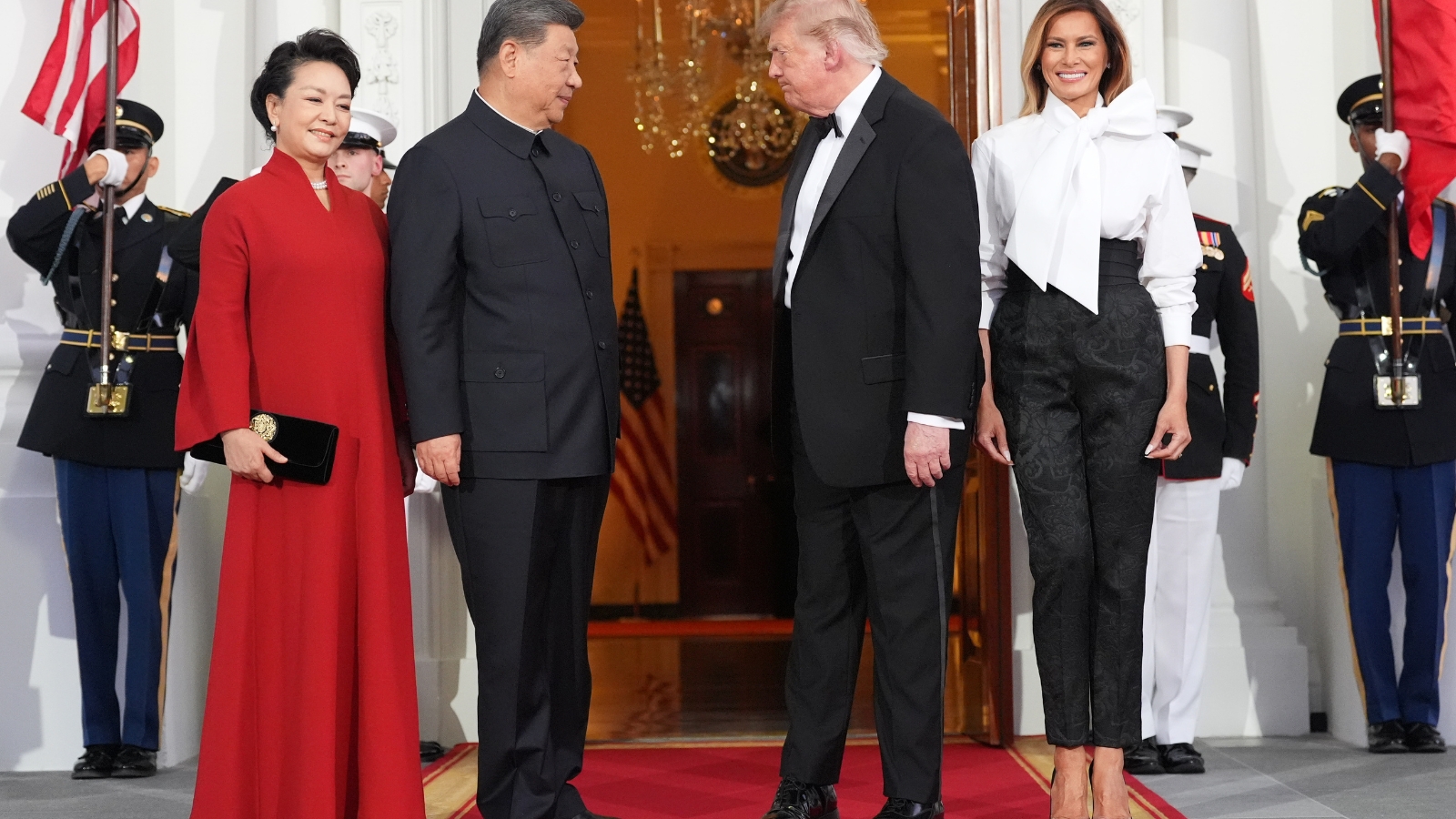
Peng Liyuan stepped onto American soil during her husband’s state visit carrying more than the quiet dignity expected of a head of state's spouse. She carried centuries of cultural weight, the fierce expectations of a billion people watching back home, and a hidden weapon that no translator could ever fully capture: the ability to speak directly, without a middleman.
Languages divide us. They build walls out of syntax and grammar, turning neighbors into strangers. When someone crosses that divide—not out of necessity, but out of deliberate, practiced respect—the atmosphere in the room shifts. Further reporting on this trend has been shared by NBC News.
The cameras caught it first. A momentary exchange. A sentence delivered in English. It was not the halting, heavily scripted greeting of a visitor reciting phonetic notes. It was smooth, considered, and disarming.
In that single moment, the mechanical machinery of global politics ground to a temporary halt. People stopped looking at briefing books. They looked at her.
We forget how rare true communication is in high places. Most political figures hide behind barricades of bureaucracy. They speak through megaphones or carefully sanitized press releases, insulated from the messy, beautiful vulnerability of direct human interaction. To speak another's language is to strip away a layer of armor. It is an act of hospitality performed on foreign ground.
Long before she stood on the steps of American reception halls, Peng was already a giant in her own right. To millions across China, she was not merely the wife of a rising political figure; she was a beloved cultural icon, a celebrated folk singer whose voice had graced living rooms for decades through the ubiquitous broadcasts of the Spring Festival Gala. She wore olive green proudly as a civilian soprano in the People's Liberation Army, rising through the ranks to become a major general of art and performance.
Imagine growing up in a household where her voice was the soundtrack to national holidays, a symbol of grace and tradition. Then imagine watching that same woman transition from the ethereal heights of performance art to the cold, unforgiving theater of international statecraft.
When a performer becomes a diplomat, the stakes change. Every note must be pitched perfectly, not to an audience seeking entertainment, but to rivals seeking vulnerability.
The American public, famously insular when it comes to foreign leaders, rarely looks past the headlines of trade disputes and geopolitical tension. Foreign dignitaries are often flattened into caricatures by cable news networks—either villains or props. But human curiosity is a stubborn thing. It roots for authenticity.
When Peng engaged in brief, unscripted moments of dialogue in English, she short-circuited the cynical narrative. She bypassed the interpreters. She showed that behind the protocol, there was an active, observing mind capable of bridging the gap independently.
The internet noticed. Social media platforms buzzed with clips of the interaction. Commentators who usually spent hours dissecting tariff rates and maritime boundaries suddenly found themselves debating pronunciation, cadence, and cultural grace.
Why did it matter so much?
Because softness is power in a room full of hammers.
Soft power is a buzzword thrown around by think tanks, but it rarely has a human face. Usually, it looks like a logo, a cultural center funded by a ministry, or a student exchange program buried in the fine print of a bilateral accord. But on that afternoon, soft power had cheekbones, a tailored silk coat, and a calm, measured voice.
It reminded observers of an old truth. People do not remember policies; they remember how someone made them feel in a room.
When a visiting dignitary makes the effort to bridge the linguistic chasm, it communicates something profound: I see you. I respect you enough to try.
That effort disarms suspicion. It creates a pocket of air in a room otherwise thick with strategic posturing. Even the most hardened political opponents find it difficult to maintain theatrical hostility when faced with genuine, human-scale competence.
We live in an era obsessed with division. We map the world into camps, tribes, and factions, convinced that everyone on the other side of the border is an existential threat. We consume news that profits from our collective anxiety, feeding us a diet of perpetual crisis.
Yet, progress often sneaks in through the back door. It arrives not in the form of a sweeping peace treaty, but in the small, quiet grace notes of daily human interaction. A smile. A well-chosen word. A refusal to retreat behind the safety of an interpreter's microphone.
Peng Liyuan’s brief venture into English during that high-stakes visit was not going to solve structural trade imbalances or rewrite global alliances. No one pretended it would. But it did something arguably more important for the immediate moment: it humanized the narrative. It cracked open the monolith of geopolitical rivalry and let a little light in.
And sometimes, a single ray of light is all it takes to make the darkness look a little less permanent.


