The ink on a property deed is never just ink.
To the person holding the pen, it is the sound of a key turning in a front door for the very first time. It is the smell of fresh paint in a nursery, or the quiet relief of a farmer passing acres of dark, rich soil down to a daughter who spent her childhood riding on the combine. Real estate is the largest financial transaction most people will ever make. It is an emotional anchor. Yet, the entire weight of that dream rests on something completely invisible to the naked eye: a massive, silent database.
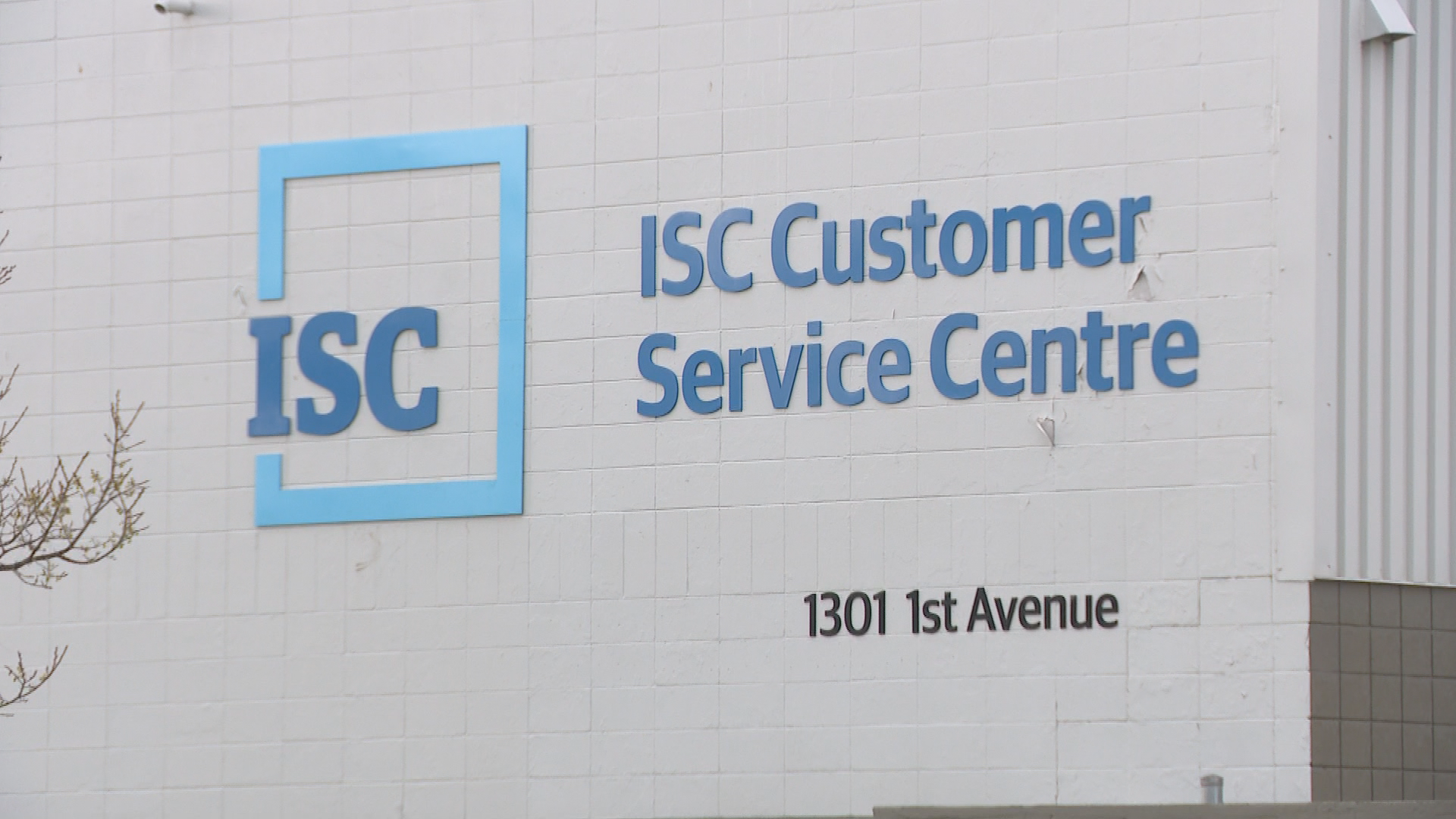
In Saskatchewan, that database is managed by Information Services Corporation, known simply as ISC. They hold the keys to the province’s land titles registry. It is the digital bedrock where every square inch of property ownership is recorded, verified, and protected.
For decades, this system worked with a quiet, boring predictability. In the world of property law, boring is a superpower. Predictability means safety. But recently, a tremor went through the province’s real estate market. An acquisition company made a move to buy ISC, sparking an immediate, tense conversation about who owns the data that proves you own your home.
When a private entity circles a vital public registry, people get nervous. Realtors get very nervous.
The Paper Fortress
To understand why a corporate acquisition in Regina or Toronto matters to a family buying a bungalow in Saskatoon, you have to look backward.
Land ownership used to be a matter of physical paper, leather-bound ledgers, and faith. If a courthouse burned down, a community's history vanished with the smoke. Fraud was as simple as a forged signature on a dusty piece of parchment. Saskatchewan changed that by embracing a system that treats land titles as absolute truth. If the registry says you own the plot, you own the plot. The government guarantees it.
When ISC was privatized years ago, it kept managing this sacred trust under a strict agreement. The relationship was built on a simple promise: the technology could modernize, but the rules of the game would remain unchanged.
Consider a hypothetical buyer named Sarah. Sarah is thirty-two, self-employed, and has spent seven years scraping together a down payment. When she finally signs her mortgage papers, she isn't thinking about registry software or corporate governance. She assumes, with complete confidence, that the fee she pays to register her title will be reasonable. She assumes the process will take days, not months. Most importantly, she assumes that no third-party corporation can suddenly hike the cost of verifying her ownership just to satisfy a quarterly earnings report for distant shareholders.
Sarah’s confidence is not an accident. It is the product of a delicate balance.
But balance is easily disrupted. When news broke that an acquisition was on the table for ISC, the immediate fear was not that the system would crash. The fear was creep. Corporate creep. It is the slow, agonizing process where public utilities are gradually squeezed for higher margins, resulting in death by a thousand small fee increases.
The Weight of the Status Quo
The Saskatchewan Realtors Association watched this development with a hawk’s eye. Realtors are often viewed merely as the people who show houses and plant "For Sale" signs in manicured lawns. In reality, they are the frontline defenders of market stability. They see firsthand how even a minor hiccup in registry access can derail a chain of home sales, leaving moving trucks stranded on curbs and families in legal limbo.
The association chose a path of pragmatic vigilance. They did not issue an outraged, blanket refusal of the acquisition. Instead, they drew a hard line in the dirt.
Their position was clear: change the ownership if you must, but do not touch the mechanics.
This stance is rooted in a deep understanding of market psychology. Real estate markets do not panic because of facts; they panic because of uncertainty. The moment a buyer or an investor suspects that the underlying registry system might become more expensive, less transparent, or slower, capital freezes.
The association’s backing of the deal was entirely conditional on maintaining the status quo. It was a calculated vote of confidence, wrapped in a warning. They demanded a guarantee that the predictable fee structures, the rigid security protocols, and the public accountability mechanisms remain completely untouched.
It is a strange paradox of progress. Sometimes, the most radical and protective action an organization can take is to fight fiercely for things to stay exactly the same.
When Data Becomes a Commodity
We live in an era where data is treated like oil. It is mined, refined, and sold to the highest bidder. The land registry of an entire province is a goldmine of demographic shifts, economic health indicators, and geographic trends.
If an acquiring company views ISC solely as a tech asset to be optimized for maximum yield, the human element risks being erased. An algorithm does not care if an extra hundred dollars added to a closing fee prices a young couple out of their dream home. A spreadsheet does not empathize with a local real estate brokerage trying to navigate a shifting economic climate.
That is why the provincial oversight built into the original ISC structure must remain a fortress.
The Saskatchewan Realtors Association’s conditional approval acts as a shield for the consumer. By insisting that the province retain its regulatory grip over how ISC operates, they are ensuring that the database remains a public service run by private expertise, rather than a private monopoly feeding on a captive public.
They know what happens when registries go wrong elsewhere. In jurisdictions where property data systems become bogged down by bureaucracy or hyper-monetized by private operators, transaction times skyrocket. Title insurance costs balloon. The simple act of buying a home transforms from a celebratory milestone into a bureaucratic nightmare.
Saskatchewan cannot afford that. The province's identity is tied to the land. It is in the horizon that stretches on forever, the fields that feed the country, and the growing urban centers attracting people from across the globe.
The Unbroken Line
The corporate acquisition will likely move forward, hidden behind press releases filled with financial jargon and boardroom handshakes. The lawyers will bill their hours. The tickers will update.
But out on the quiet streets of Moose Jaw, Prince Albert, and Regina, the real story will play out in the ordinary rhythms of moving days. It will be found in the cardboard boxes stacked high in garage entryways, the nervous laughter of first-time buyers meeting their lawyers, and the steady, uninterrupted flow of property transfers flashing across computer screens.
The true measure of this corporate transition’s success will not be found in a surging stock price or a streamlined balance sheet.
It will be measured by total silence.
If Sarah buys her home next month, or next year, and never once has to learn what ISC stands for, if she pays the expected fees and receives her title without a moment of friction, then the line has held. The machinery in the background did its job. The status quo, boring and beautiful, was preserved, keeping the ground beneath her feet entirely secure.