There is a specific weight to quiet rooms where maps are redrawn without ink. You never hear the sound of the border shifting. You only feel the draft under the door years later.
Step into a corner office in New Delhi, late afternoon. The light hits the tinted glass, catching the dust motes dancing in the hum of an air conditioner that has worked too many summers. Across a polished mahogany table sit two men whose calendars dictate the price of wheat, the stability of a currency, and the quiet safety of millions who will never know their names.
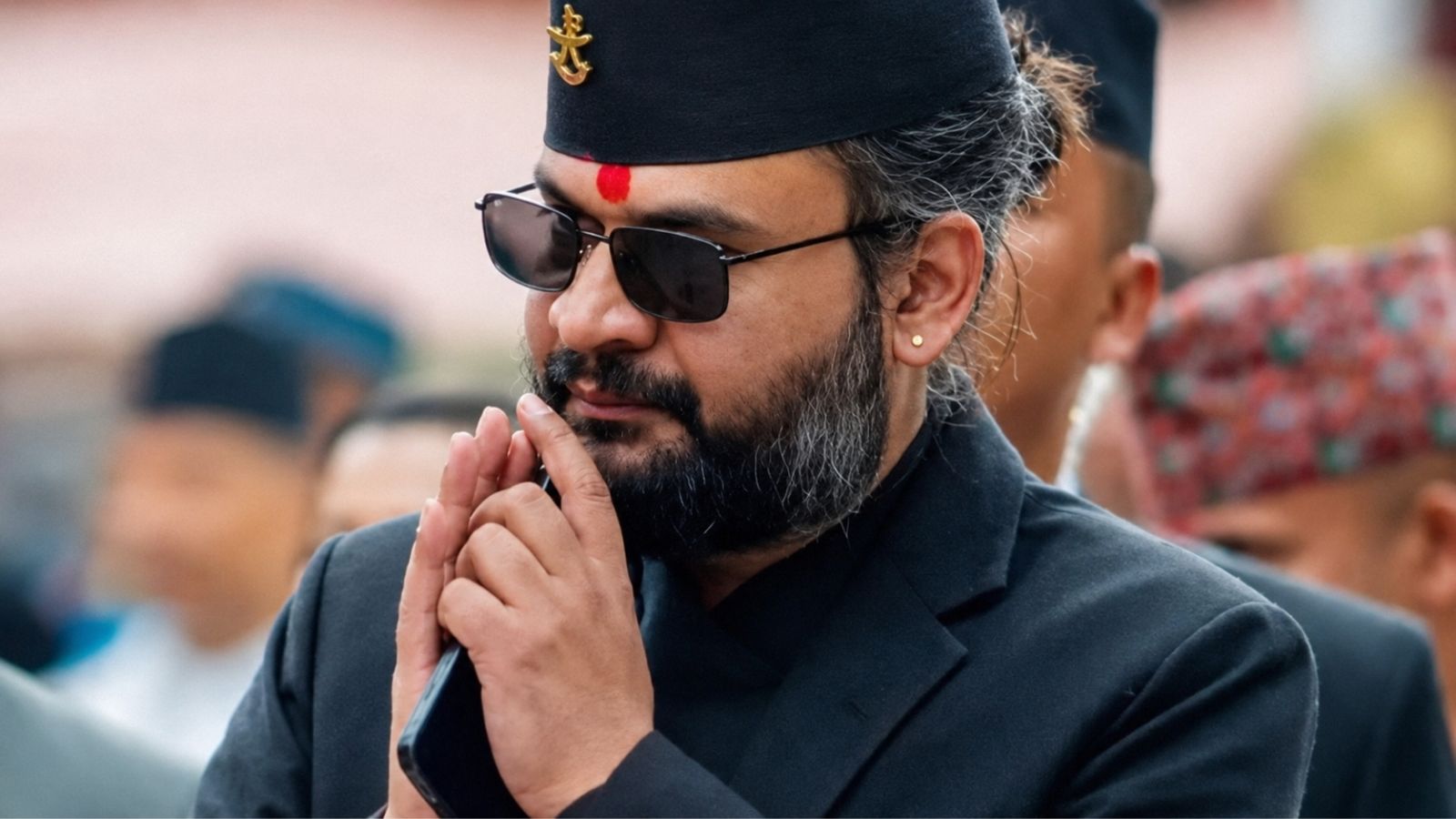
Denis Alipov, the Russian Ambassador, adjusts his cuffs. Across from him is Nitin Nabin, a key voice within the Bharatiya Janata Party, carrying the heavy political gravity of a ruling party that answers to over a billion stakeholders. There are no cameras flashing in this specific, imagined micro-moment of high diplomacy, but the air is dense with decades of institutional memory. They are not talking about weather. They are talking about survival, leverage, and the ancient art of keeping old friendships warm while the rest of the world turns glacial.
We tend to look at geopolitics like a sports match. We want a scoreboard. We want a winner and a loser. But true diplomacy is more like an old marriage. It is built on shared history, stubborn endurance, and the silent agreement to look the other way when habits annoy you. When Alipov and Nabin shake hands, they are pulling on a thread that stretches back to the cold steel mills of Bhilai in the 1950s and Soviet vetoes at the United Nations.
History is heavy. It drags behind nations like an anchor chain, sometimes slowing them down, sometimes keeping them steady in a storm.
Consider what happens next when these meetings adjourn. The press releases go out. They are scrubbed clean of nuance, reduced to dry bureaucratic parchment: Bilateral ties reaffirmed. Economic cooperation discussed. Mutual interests prioritized.
Boring. Sterilized. Safe.
And entirely missing the point.
Behind those twelve standardized words lies a web of strategic calculus that affects everything from the fuel in your car to the fertilizer that grew the tomatoes on your kitchen counter. Sanctions bite hard in European ports. Financial corridors close like iron maiden doors. Yet, energy flows, defense platforms find their spare parts, and diplomatic channels remain stubbornly, stubbornly open.
Why? Because nations do not survive on moral purity. They survive on interests. And right now, the interest of New Delhi and Moscow is to ensure that neither of them becomes entirely dependent on a single global superpower dictating the terms of the twenty-first century.
Imagine standing on a crowded railway platform in Patna or Varanasi. The train screeches to a halt. Thousands push forward. Amidst the chaos, a student checks his smartphone, reading a headline about international trade routes and sanctions waivers. He doesn't know Alipov. He doesn't care about Nabin. Yet his tuition fees, his father's medical imports, and the price of his morning tea are tethered to the outcome of meetings held behind closed doors in the capital.
That is the invisible bridge.
We often forget that diplomacy is deeply human. It is driven by exhaustion, ambition, vanity, and occasional flashes of genuine statesmanship. Ambassadors are professional listeners. They spend their careers reading the micro-expressions of politicians across tables, trying to determine if a hesitation means a policy shift or just a bad lunch.
When a ruling party official like Nabin sits down with a veteran envoy like Alipov, they are managing a delicate balancing act. India wants strategic autonomy—the sacred right to be friends with everyone while owing allegiance to no one. Russia needs reliable partners in the Global South to avoid complete economic isolation. It is a transactional embrace, yes. But sometimes, transactional embraces endure longer than passionate romances because both sides know precisely what they need from the other.
To understand why this matters today, look at the shifting tectonic plates of global commerce. For decades, the West held a monopoly on financial infrastructure, maritime insurance, and technological standards. That monopoly is fracturing. Alternative payment systems are being built in backrooms. Rupee-rouble mechanisms are tested, abandoned, tweaked, and tested again. Every time an ambassador meets a political leader, another small brick is laid in this alternative architectural reality.
It is messy. It is imperfect. It makes Western diplomats sweat through their tailored suits.
Yet, India's foreign policy has always possessed a stubborn independence that confounds foreign analysts who prefer simple categories. You are either with us or against us, they argue. New Delhi smiles, drinks the tea, buys the discounted crude, manufactures its own tech policies, and replies with a polite, unflinching smile that translates roughly to: We will do what is best for our people, thank you very much.
This stance is not born of arrogance. It is born of historical trauma. A nation that was partitioned and colonized remembers what it is like to have its destiny decided by men sitting in distant capitals. That memory is baked into the DNA of the political class, whether they sit on the left or the right of the aisle. When Nitin Nabin engages with foreign envoys, he carries that collective memory in his pocket like a smooth worry stone.
We look at the news and see fragments. A handshake here. A joint statement there. A protest on social media.
We miss the forest for the diplomatic twigs.
The real story of our era is the decentralization of power. It is the steady, unglamorous work of diplomats and politicians stitching together a multipolar world where no single empire gets to write all the rules. It happens quietly. In hotel suites. Over bad coffee. Through late-night phone calls that wake up aides in time zones halfway across the earth.
The next time you scroll past a headline about an ambassador meeting a political leader, do not skim past it as bureaucratic noise. Pause. Look past the dry corporate language of the press release. See the map shifting. Hear the quiet scrape of the heavy wooden chair being pushed back from the table.
The room empties. The doors close. The tea goes cold. But the world has changed just a fraction of a millimeter, and it will never quite snap back to where it was yesterday.