A cold wind whistles through the stone corridors of Westminster, carrying with it the weight of a thousand years of law, faith, and friction. It is a place where words are weapons and silence is a policy. Lately, the air has grown thick with a specific kind of tension. It isn't about budgets or trade deals. It is about the soul of the street—the question of who gets to claim the pavement beneath our feet and the sky above our heads when they turn to face the divine.
Nick Timothy, a man who once whispered into the ear of a Prime Minister, recently cast a stone into the quiet waters of British secularism. He looked at the sight of hundreds of men kneeling in unison on public tarmac, their foreheads touching the cold ground in Islamic prayer, and he saw a challenge. To Timothy, this isn't just a moment of faith. It is an assertion of territory. He argued that such displays are "not just a matter of religious freedom" but a "political statement" that threatens the commonality of the British public square.
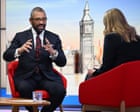
Then came James Cleverly.
Cleverly, a man whose career has been defined by the art of the pragmatic middle ground, stopped the stone from sinking. He didn't just disagree; he re-centered the conversation on the very nature of what it means to be free in a crowded, noisy, and often messy democracy.
The disagreement between these two men isn't a dry policy debate. It is a collision of two different fears and two different hopes for the future of the West.
The Geography of the Soul
Imagine a narrow street in an English town. On any given Tuesday, it is a vein of commerce. Delivery vans double-park. Commuters check their watches. But on a Friday, for a few brief minutes, the rhythm shifts. If the local mosque is overflowing—as many are, built in eras before the congregation swelled—the prayer spills out.
Suddenly, the commerce stops. The rushing halts.
For the person kneeling, the street has vanished. They are in a sacred space that transcends geography. But for the person trying to walk to the chemist or the mother pushing a pram, the street has become an obstacle. This is the friction point. It is where the abstract concept of "religious liberty" hits the concrete reality of a shared sidewalk.
Timothy’s argument rests on the idea that the public square belongs to everyone, and therefore, it should belong to no one’s specific ideology. He suggests that when one group occupies that space for a ritual, they are effectively "privatizing" it. He worries that by allowing the street to become a mosque, we are signaling a retreat of the secular state. To him, the sight of mass public prayer is a visual cue of a society that is fracturing into tribal enclaves rather than blending into a cohesive whole.
The Weight of the Law
James Cleverly looks at the same street and sees something else entirely. He sees a country that is strong enough to handle a little inconvenience.
Cleverly’s stance is rooted in a traditional, perhaps even old-fashioned, British liberalism. It is the belief that the state should stay out of the business of the soul unless there is a clear, present, and physical danger. During his recent interventions, he made it clear: he does not want to live in a country where the police are tasked with measuring the "political intent" of a man on his knees.
If we begin to ban prayer because it looks like a "political statement," where do we draw the line?
Does a silent vigil for a climate protest become illegal because it occupies the pavement? Does a Christmas carol service on a village green become a "territorial assertion" of Christianity? Cleverly understands the trap. Once the government starts policing the meaning of presence in a public space, the freedom of that space evaporates for everyone.
He argued that disagreement is the price of entry for a free society. We don't have to like seeing the street blocked. We don't even have to agree with the prayers being said. But the moment we use the power of the law to sweep people away simply because their presence makes us uncomfortable or because we interpret their piety as a power play, we have lost the very thing we were trying to protect.
The Invisible Stakes
There is a quiet irony in this debate. Both men are, in their own way, trying to save Britain.
Timothy is worried about the "slow-motion" disappearance of a shared culture. He sees the public square as a fragile thing that requires constant protection from those who would use it to signal their difference rather than their belonging. He fears that if we don't demand a certain level of secular conformity in our shared spaces, the "shared" part of the square will eventually vanish.
Cleverly is worried about the "fast-motion" disappearance of liberty. He knows that the tools used to suppress one group are always eventually turned on another. He sees the strength of Britain not in its ability to force everyone to pray (or not pray) in private, but in its ability to walk past something we don't understand—or even something we dislike—and keep walking.
True.
It is a messy, uncomfortable truth. It involves the sound of a call to prayer mixing with the rattle of a bus. It involves the sight of a hijab next to a punk rocker. It involves the friction of people who believe fundamentally different things about the universe having to share the same five feet of pavement.
The Quiet Room
In a world that feels increasingly like a series of shouting matches, the debate over public prayer is a reminder of the things we haven't settled. We like to pretend that "tolerance" is a soft, fluffy word. It isn't. Tolerance is hard. It is the gritting of teeth. It is the decision to let something exist that you find jarring.
Timothy asks us: "How much can we bend before we break?"
Cleverly asks us: "If we stop bending, aren't we already broken?"
The facts of the matter are simple. Nick Timothy wants a more muscular secularism that protects the public square from religious "encroachment." James Cleverly wants a more resilient liberalism that protects the individual from state "encroachment."
One man looks at the kneeling crowd and sees a threat to the nation. The other looks at the same crowd and sees a test of the nation's character.
The street remains. The wind continues to blow through Westminster. And somewhere, on a Friday afternoon, a man will lay down a small rug on a piece of cold, grey concrete. He will do so under the watchful eye of a society that hasn't yet decided if he is a citizen exercising a right, or a symbol of a world that is moving further and further apart.
The real test isn't what happens in the halls of Parliament. It is what happens when we meet that man on the sidewalk. Do we see a neighbor, or do we see a boundary line?
Our answer to that question will define the next hundred years of our lives together. The pavement is shared, but the ground beneath it is shifting. We are all just trying to find a place to stand.