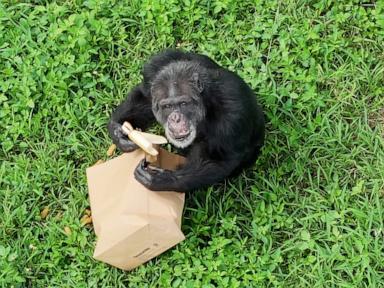
Flooding transforms captive wildlife sanctuaries from closed-loop ecological facilities into fragmented, inaccessible islands where standard ground logistics fail within hours. When severe tropical weather inundates low-lying terrain—such as the coastal plains of Florida—traditional ground-based supply chains experience total breakdown due to submerged access roads, electrical grid failure, and compromised perimeter fencing. Deploying unmanned aerial vehicles (UAVs) to deliver sustenance to isolated primates, such as chimpanzees, shifts wildlife crisis management from reactive physical labor to precision last-mile aerial logistics.
Standard disaster journalism frames these events as human-interest novelties rather than operational stress tests. In reality, utilizing commercial or enterprise drones to feed an isolated great ape during a flood represents a calculated exercise in supply chain resilience, behavioral biology, and risk mitigation. Sanctuary operators face a binary choice during extreme inundation: deploy personnel into hazardous, debris-filled floodwaters via watercraft—risking human life and animal escape—or utilize remote aerial payload delivery to maintain caloric and psychological stability until water levels recede.
The Failure Modes of Ground Logistics in Flooded Habitats
To understand why aerial delivery becomes necessary, one must examine the physical architecture of modern great ape sanctuaries. Facilities housing chimpanzees (Pan troglodytes) rely on expansive, multi-acre outdoor habitats separated from staff zones by water moats, reinforced mesh, or electrified perimeters. These designs optimize animal welfare under normal meteorological conditions, yet they introduce severe structural vulnerabilities during extreme precipitation events.
- Hydrological Isolation of Habitats: Low-elevation sanctuaries, particularly in Florida, sit atop high water tables with minimal drainage capacity once soil saturation reaches 100 percent. Heavy rainfall rapidly floods service corridors, turning access roads into impassable canals. Ground vehicles, including utility task vehicles (UTVs) and heavy trucks, lose traction or suffer engine hydrolock in standing water exceeding 18 inches.
- Compromised Perimeter Integrity: Rising water levels nullify traditional containment barriers. Dry moats fill, reducing the vertical drop required to deter primate crossings, while submerged electrical fencing shorts out upon contact with floodwater. Staff attempting to approach habitats on foot or by boat risk startling animals near compromised boundaries, creating acute escape hazards.
- Submerged Debris and Biohazards: Floodwaters carry downed power lines, displaced venomous wildlife, sharp structural debris, and agricultural or septic runoff. Sending human keepers into chest-deep water to hand-deliver rations introduces unacceptable occupational health and safety liabilities.
When ground access is severed, a supply chain bottleneck forms at the final 100 to 500 meters of delivery. The sanctuary possesses the necessary food inventory in centralized commissaries, yet the transport mechanism between the storage facility and the high-ground refuge within the habitat is broken.
Mechanics of Aerial Payload Delivery for Captive Primates
Deploying a drone to bridge this last-mile gap requires matching aircraft capabilities with payload requirements and environmental constraints. Unlike commercial package delivery, which relies on automated landing zones and standardized receptacles, wildlife crisis logistics must account for irregular terrain, canopy cover, and unpredictable animal behavior.
Payload Mass and Airframe Selection
An adult chimpanzee requires roughly 3 to 5 kilograms of food daily, consisting of high-moisture produce, primate chow, and forage items. Consumer-grade quadcopters lack the lift capacity to transport meaningful caloric loads, limiting operators to small, high-value enrichment items or critical medications. Effective sustenance delivery requires heavy-lift multi-rotor platforms—typically agricultural or industrial enterprise drones capable of carrying 10 to 40 kilograms—or mid-sized delivery units executing rapid, multi-sortie shuttle runs.
The payload release mechanism dictates operational safety. Landing an aircraft inside an active chimpanzee enclosure is operationally unfeasible; chimpanzees possess immense upper-body strength and investigative drive, meaning any grounded drone will be dismantled or destroyed within seconds, creating ingestion hazards from lithium-polymer batteries and carbon-fiber shards. Instead, operators utilize two distinct drop methodologies:
- Winch-Assisted Lowering: The drone hovers 15 to 20 meters above the ground, well out of reach of leaping primates, and lowers a biodegradable or durable canvas payload bag via an automated tether. Once the tension sensor registers ground contact, a mechanical latch releases the load, and the tether retracts.
- Servo-Actuated Drop Hooks: For lower-altitude passes over open clearing zones, a remote-triggered servo pin releases a strapped bundle from a height of 3 to 5 meters. This eliminates the risk of a primate grabbing a dangling tether and pulling the aircraft out of the sky.
Micro-Meteorological Constraints
Flood events rarely occur in isolation; they are accompanied by residual wind gusts, convective squalls, and high humidity. Drone flight controllers must compensate for wind shear while carrying shifting liquid or organic loads. Center-of-gravity shifts during flight degrade battery efficiency, often reducing standard 30-minute flight times to 12 or 15 minutes. Operators must calculate energy reserves conservatively, factoring in headwinds on the outbound leg and the aerodynamic drag of external cargo pods.
Behavioral Conditioning and Acoustic Desensitization
The primary point of failure in wildlife drone operations is not mechanical, but behavioral. Captive great apes exhibit high cognitive complexity and varied neophobic responses. Introducing a loud, hovering machine emitting high-frequency rotor noise (typically 65 to 80 decibels at 10 meters) above a stressed, flood-displaced animal can trigger panic, aggression, or self-directed anxiety behaviors.
If a chimpanzee flees from the drop zone due to acoustic stress, the food remains unconsumed, or the animal may retreat into flooded, hazardous sectors of the habitat. Successful execution relies on classical conditioning principles:
- Acoustic Signature Association: Sanctuary staff must pair the distinct auditory pitch of the drone rotors with immediate, high-value positive reinforcement (such as favored fruits or juice pouches) prior to or during initial low-altitude passes. The animal learns to categorize the mechanical sound not as an aerial predator or threat, but as a foraging cue.
- Spatial Drop Consistency: Delivering rations to the exact same elevated dry-ground coordinate—such as a concrete shelter roof or a raised wooden platform—reduces cognitive load. The chimpanzee anticipates the arrival vector, minimizes movement through surrounding floodwaters, and retrieves the payload efficiently.
- Visual Line-of-Sight Behavioral Monitoring: High-resolution optical and thermal cameras mounted on the drone serve a dual purpose. Beyond guiding the drop, the gimbal feed allows veterinary staff to conduct remote triage, assessing the animal's hydration, mobility, and respiratory rate without physical proximity.
Economic and Operational Trade-Offs
Integrating UAVs into disaster response protocols introduces specific cost functions and resource allocation challenges. For non-profit wildlife sanctuaries operating on constrained budgets, maintaining dedicated enterprise drone fleets solely for once-a-decade hurricane events yields poor capital efficiency.
Capital Expenditure vs. Operational Readiness
Acquiring an industrial heavy-lift drone, redundant battery banks, waterproof ground control stations, and certified pilot training requires an upfront capital outlay ranging from $15,000 to $45,000. Furthermore, lithium-polymer batteries degrade over time if stored improperly, requiring active maintenance cycles year-round.
To bypass prohibitive capital expenditure, sanctuaries increasingly rely on mutual-aid partnerships with local agricultural drone operators, university research departments, or municipal emergency management agencies. These external entities already possess the heavy-lift hardware and Federal Aviation Administration (FAA) Part 107 commercial certifications required to operate in restricted airspace.
Regulatory Friction During Disasters
Extreme weather triggers Temporary Flight Restrictions (TFRs) issued by the FAA to protect manned search-and-rescue helicopters and utility assessment aircraft. A sanctuary attempting to launch an uncoordinated drone flight during a declared state of emergency risks severe federal penalties and mid-air collision hazards.
Pre-disaster operational planning requires establishing Memoranda of Understanding (MOUs) with county emergency operations centers. Through the FAA's Special Governmental Interest (SGI) waiver process, authorized pilots can obtain rapid airspace clearance—often within hours—provided the mission is classified under critical infrastructure protection or animal welfare emergency response.
Limitations of Aerial Sustenance Systems
Aerial delivery is a tactical stopgap, not a comprehensive replacement for structural flood mitigation. Operators must recognize the hard boundaries of UAV capabilities in prolonged crisis scenarios:
- Water Volume Bottlenecks: While solid food is easily transported by air, potable water presents a severe mass penalty. Water weighs 1 kilogram per liter. Delivering adequate hydration for a troop of 20 chimpanzees (roughly 60 to 100 liters daily) requires dozens of continuous sorties, rapidly exhausting battery reserves and overheating motors.
- Canopy Occlusion: Many primate habitats feature dense tree cover for shade and enrichment. Heavy canopy blocks GPS satellite locks, interferes with downward-facing obstacle-avoidance sensors, and prevents clean vertical drop trajectories. If an animal refuses to leave dense cover due to storm trauma, aerial delivery cannot reach them.
- Zero Mechanical Intervention Capacity: A drone can deliver calories and capture telemetry, but it cannot repair a breached fence, administer injectable sedatives, or physically extract an injured animal from rising water. If a secondary medical emergency occurs, human watercraft extraction remains the only viable option.
Strategic Framework for Sanctuary Resilience
Wildlife facilities located in flood-prone regions must formalize aerial logistics within their standard operating procedures rather than relying on improvised solutions during active storms. Sanctuary directors and operations managers should execute a four-stage integration protocol prior to peak storm seasons:
- Map High-Ground Drop Zones: Survey every animal habitat to identify elevated, canopy-free coordinates accessible to animals during 100-year flood scenarios. Record precise GPS waypoints and clear overhead branches to establish permanent vertical drop corridors.
- Establish Pre-Negotiated Pilot Networks: Execute formal service agreements with local commercial drone operators who own heavy-lift agricultural or cargo platforms. Conduct annual joint drills to test payload release mechanisms and establish radio communication protocols that function when cellular networks fail.
- Implement Routine Acoustic Conditioning: Integrate non-emergency drone flights into monthly enrichment schedules. Dropping standard forage items via UAV during calm weather ensures animals remain calm and responsive when the same aircraft appears during a severe storm.
- Standardize High-Density Crisis Rations: Formulate dehydrated, calorie-dense primate biscuits and gel-based hydration packs specifically for aerial transport. Reducing payload water weight maximizes the caloric efficiency of every battery cycle, extending the operational endurance of the sanctuary until floodwaters recede.