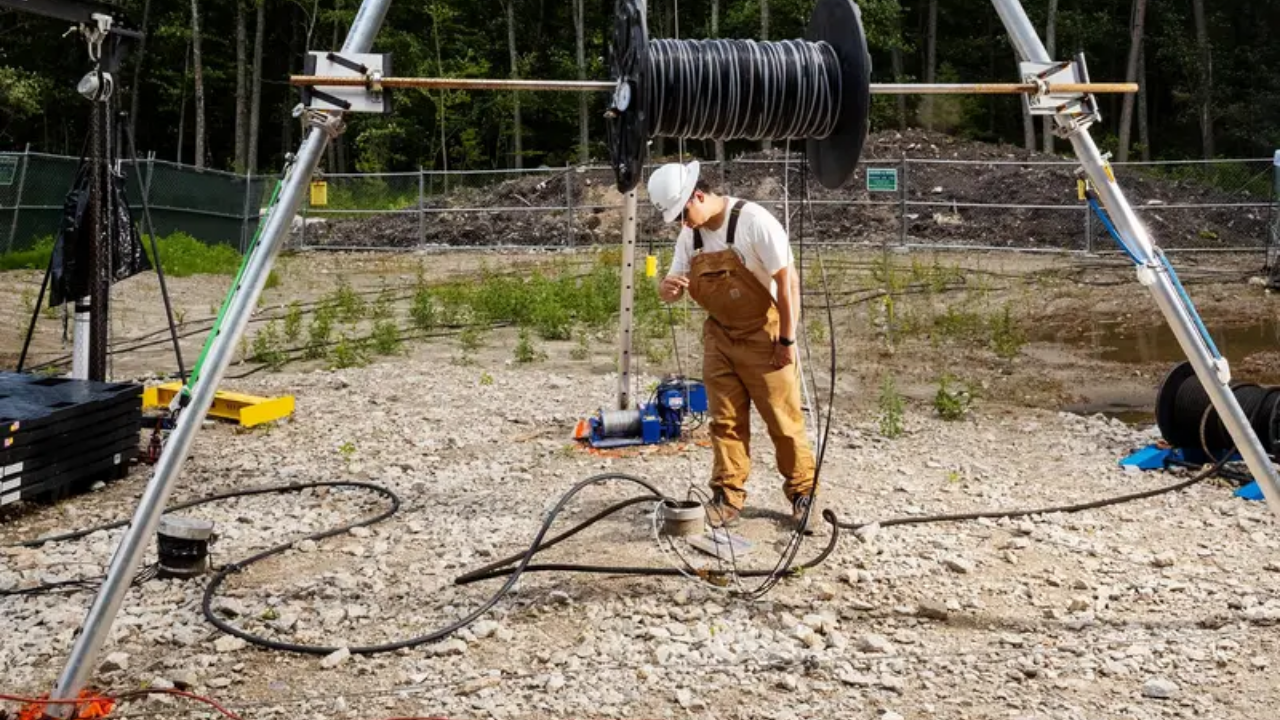
The energy press recently fell in love with a shiny narrative: a Boston startup sending high-voltage electrical pulses into solid bedrock, mimicking subterranean lightning to fracture stone and liberate trapped geologic hydrogen. The tech blogs breathlessly reported that blasting hard igneous rock with a device named Thor increased permeability tenfold.
It sounds like science fiction written by a clean-tech marketing firm. It also completely misses why most sub-surface energy plays implode before they ever hit commercial scale.
I have watched venture syndicates blow tens of millions of dollars chasing exotic downhole physics while ignoring basic chemical and economic realities. The lazy consensus is that if you can crack stubborn rock with high-voltage plasma discharges, you have solved the holy grail of clean fuel.
You haven't. You have only just begun the expensive part of the failure mode.
The Flawed Premise of Stimulated Geologic Hydrogen
The entire thesis behind engineered or stimulated geologic hydrogen rests on a straightforward chemical reaction. When water makes contact with iron-rich minerals deep underground, oxidation occurs, stripping oxygen atoms from water molecules and releasing free hydrogen gas. Proponents point out that roughly seventy percent of the continental crust contains the right geochemical ingredients.
The bottleneck has never been a shortage of iron-bearing rocks. The bottleneck is mass transfer, reaction kinetics, and subsurface biology.
When you fire high-voltage pulses down a borehole to create plasma channels, you generate an intricate network of micro-fractures. Proponents celebrate a tenfold increase in permeability inside a controlled test column. But laboratory conditions and abandoned mine tests do not translate cleanly to complex, multi-stress subterranean formations.
Real rock is heterogeneous, fractured by ancient tectonic shifts, and saturated with fluids that behave unpredictably under thermal and electrical stress. Pumping a hundred high-voltage pulses into a target zone might open fissures, but fluid flow in the earth does not follow neat engineering blueprints. Water follows the path of least resistance. It will channel through a few dominant fractures, bypass the vast majority of the newly created micro-pore network, and leave the surrounding iron-rich matrix completely untouched.
The Subsurface Reality Check
Let us look past the plasma glow and evaluate the structural hurdles that startup pitch decks conveniently gloss over.
- Microbial Parasites: Indigenous subsurface methanogenic microbes love eating free hydrogen. The moment you stimulate hydrogen production by introducing water to hot iron minerals, hungry underground bacteria consume the yield before it ever reaches the wellbore.
- Reaction Kinetics: Serpentinization and related water-rock reactions are agonizingly slow at ambient or moderately elevated temperatures. Simply getting water to the rock does not mean the chemical conversion happens at a commercial velocity.
- Capital Intensity at Depth: Operating Marx generators and high-voltage electrode strings in deep boreholes introduces massive operational expenditures. Labour, specialized completions, and continuous well maintenance scale exponentially with depth.
If you rely on electrical pulsing to fracture miles of dense basement rock, the electricity required to sustain the operation can easily outstrip the energy value of the gas you manage to liberate.
The Unconventional Path Forward
Stop trying to force brute-force electrical engineering onto ancient geochemistry. The companies that actually commercialize geologic hydrogen will not be the ones trying to turn every backyard horse farm into a plasma-arc laboratory. They will target naturally hyper-active zones where serpentinization is already occurring at elevated rates, bypassing artificial fracturing entirely.
Focus capital on real-time isotopic monitoring, microbial suppression, and localized extraction nodes that capture gas where it naturally vents—similar to industrial sites like Kidd Creek. If your extraction cost per kilogram requires a complete reinvention of high-voltage downhole physics just to get a trickle of flow, your business model is dead on arrival.
The earth does not care about your marketing narrative. Chemistry always wins.