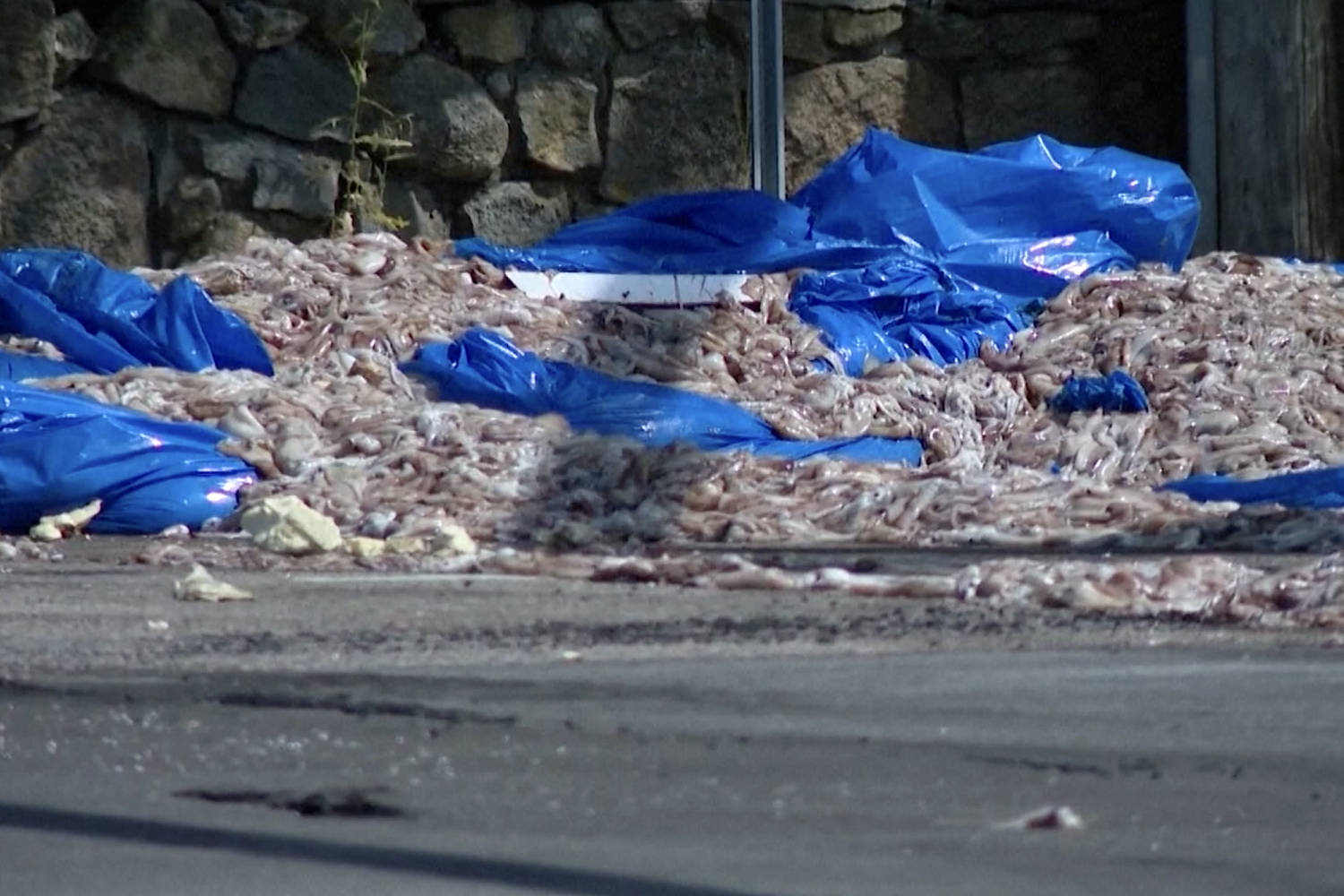
Two tons of squid sliding across a Rhode Island asphalt artery makes for easy morning headlines. Local news anchors chuckle about slippery conditions, marine puns fly through morning radio broadcasts, and the internet enjoys a day of cephalopod comedy. Everyone looks at the mess as a freak accident, a bizarre stroke of bad luck on a Tuesday morning commute.
That perspective is lazy, comforting, and completely wrong.
That pile of mollusks on the highway is not a quirky anomaly. It is a loud, stinking diagnostic test of an over-optimized, fragile supply chain that cracks the second a single tie-down strap snaps. I have spent two decades tearing apart broken distribution networks, and when I look at that highway, I do not see a seafood comedy. I see a glaring systemic failure in cargo containment, risk assessment, and last-mile cold chain execution.
The Myth of the Freak Accident
Standard commentary treats the spill as an act of God. A truck took a turn too fast, the doors gave way, and dinner spilled onto the tarmac.
Rubbish.
Cargo does not burst out of a properly secured transport vehicle because of a gentle curve or a minor bump. Physics demands a reason. When two tons of dead weight shift violently enough to breach the physical envelope of a commercial carrier, you are looking at gross negligence in load distribution or catastrophic failure in containment engineering.
Let us look at the baseline mechanics. Commercial freight hauling requires precise weight calculations, dynamic load shifting considerations, and rigorous barrier protocols. If you pack thousands of pounds of slick, thawing, moisture-heavy biomass into a standard trailer without internal bulkhead partitioning, you are pulling a loaded weapon down the turnpike. The moment that vehicle decelerates or takes an incline, the liquid-like sloshing of poorly secured weight creates massive G-force vectors against the doors.
The driver took the blame. The logistics broker collected insurance. But the root cause remains untouched: an industry-wide race to the bottom on containment standards, where speed trumps structural safety every single time.
Why Cold Chain Logistics is Holding Together with Duct Tape
We love to talk about modern supply chain resilience, artificial intelligence routing, and predictive inventory management. Yet, a basic dump of saltwater protein onto a public road brings local transit to a grinding halt for hours.
Here is the operational reality nobody wants to admit. The cold chain is brittle. Operators cut corners on secondary retention nets because margins are razor-thin. Shippers demand cheaper rates, carriers squeeze drivers on turnaround times, and safety checks get reduced to a quick signature on a digital clipboard.
When you haul perishable marine products, you are dealing with a shifting, dynamic mass that actively degrades en route. Temperature fluctuations cause cellular breakdown, rendering the cargo heavier, slicker, and harder to restrain. Standard pallets wrapped in shrink-wrap do not cut it when dealing with heavy animal proteins.
Imagine a scenario where every freight broker was legally required to publish their cargo containment failure rates alongside their on-time delivery metrics. The market would crash overnight. Shippers would scatter. The truth is that we trade safety margins for cost efficiency, and we only care when the failure smells like rotting calamari outside Providence.
The Cost of Cheap Moving Parts
People ask how something like this happens in an era of advanced telematics. They assume sensors and tracking apps should prevent it.
Sensors tell you where the truck is when it crashes. They do not stop a poorly trained handler from stacking a pallet incorrectly. They do not force a carrier to replace worn-out latch mechanisms on rusted trailer doors. Technology is being used as a substitute for basic competence, and it is failing.
The financial fallout of the Rhode Island spill goes far beyond the market price of two tons of seafood. You have cleanup crews hazardous-material handling organic waste, highway departments repairing asphalt damaged by marine oils and enzymes, and hours of lost productivity for thousands of commuters. Yet, the economic penalty levied on the responsible party is a slap on the wrist compared to the downstream chaos they caused.
Until we stop treating freight containment as an afterthought and start treating it as the critical engineering challenge it actually is, our roads will remain vulnerable to sliding seafood and worse.
Stop laughing at the slimy commute. Start asking why the doors flew open in the first place.