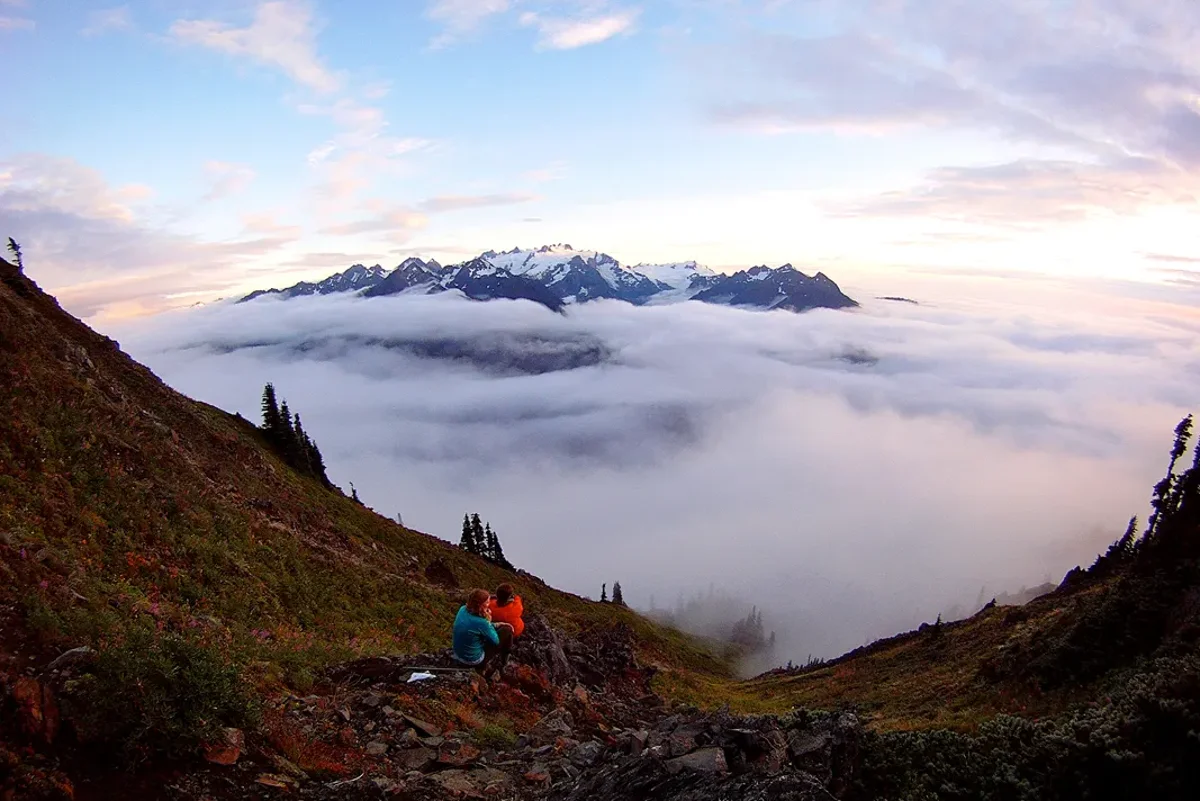
Dusk arrives in the high country with a deceptive softness. The last rays of light catch the granite peaks, turning them the color of old copper, while the valley floor surrenders to a deep, swallowing indigo. It is the hour when the mountain breathes out, when hikers usually zip up their fleece jackets, lean back against a boulder, and marvel at the raw, untamed silence of a National Park.
Then, the sky shatters.
Not with thunder. Not with the roar of a flash flood. But with a silent, erratic flutter—a shadow tearing through the twilight with a jerky, frantic desperation.
Park rangers have a message for you, and it is not about packing out your trash or keeping a safe distance from roaming bison. It is about the creatures that wait in the dark, and the sudden, breathless realization that the wilderness does not care how much money you spent on your lightweight camping gear.
Rabid bats are flying. And they are warning visitors to watch out.
The Silence Before the Drop
Imagine walking a narrow trail as the sun slips below the horizon. Your boots crunch softly on pine needles. The air smells of damp earth and cooling resin. You are thinking about dinner, about the dry tent waiting for you at the backcountry site, about the way your legs ache in a good, honest way.
You do not hear them coming.
Bats do not buzz like hornets or hum like beetles. They slide through the air on membranes of skin stretched thin as onion paper, navigating by bouncing echoes off the night. Most of the time, they are ghosts of the canopy, sweeping through the dark to vacuum up thousands of mosquitoes and moths. They are ecologically vital. They are miracles of mammalian flight.
Until the virus gets them.
Rabies is a master manipulator. It rewrites a creature's biological code, transforming a delicate, shy insectivore into a stumbling, disoriented vector of pure panic. A healthy bat avoids the sun, avoids the ground, and actively flees from human presence. A rabid bat loses its mind. It falls out of the roost during the day. It thrashes on the dirt trails. It snaps blindly at anything that moves, including a curious boot, an outstretched hand, or a weary traveler resting on a log.
Park officials did not issue this warning because they wanted to scare people away from the mountains. They issued it because the cost of ignorance is fatal.
The Anatomy of an Invisible Threat
Let us look at the numbers, cold and unforgiving.
Rabies is one of the most lethal viruses on Earth. Once clinical symptoms appear in humans, the fatality rate is effectively one hundred percent. There are only a handful of documented survivors in medical history. Yet, paradoxically, it is also one of the most preventable diseases known to science, provided you act before the virus crosses the threshold of your nervous system.
In National Parks across the country, wildlife biologists monitor bat populations with a mixture of reverence and dread. They know a simple statistical truth: while only a small percentage of wild bats actually carry rabies—typically less than one percent of the general population—the concentration of sick bats found on the ground or reported by visitors spikes during certain seasonal shifts.
When a rabid bat loses the ability to fly, it ends up exactly where humans walk.
Consider what happens next. A hiker spots a small, furry shape twitching near the base of a pine tree. Thinking it is injured, perhaps tangled in fishing line or stunned by a fall, the hiker reaches down with bare hands to help.
That is all it takes.
A bat's teeth are microscopic. They are like needles dipped in anesthetic. You might feel nothing more than a tiny prick, a fleeting scratch you mistake for a thorn or a rough twig. You brush it off, wash your hands in the creek, and forget about it entirely. Meanwhile, microscopic viral particles have slipped into your muscle tissue, beginning a slow, silent, relentless climb up your peripheral nerves toward your brain.
It can take weeks. Sometimes months. And by the time you realize something is wrong, it is too late to write a new ending.
When the Wild Refuses to Play Nice
We go to National Parks to heal. We carry our modern anxieties into the woods, hoping the ancient trees will absorb our stress, hoping the clean air will scour our lungs clean of city grime. We project our romantic notions onto nature. We want every animal to be a character in a gentle children's book.
The park ranger standing at the trailhead kiosk does not have time for romantic notions.
He has seen the results of a late-night encounter with a disoriented mammal. He knows the protocol. If a visitor reports physical contact with a bat—or even wakes up in a tent to find a bat fluttering inside without knowing if contact occurred—the response must be immediate.
That means capturing the animal, if possible, without damaging its head, so the brain tissue can be tested for the virus. It means a terrifying series of post-exposure prophylaxis injections. It means uncertainty, fear, and a ruined trip.
Rangers are not telling you this to ruin your vacation. They are telling you because they have looked into the eyes of tourists who thought a little furry ball on the dirt path was just waiting for a friend.
The rules of the trail are changing, and they require a shift in how we perceive danger.
Never touch a bat. Ever. Even if it is dead. Especially if it is dead. A dead bat on a trail can still harbor active virus in its saliva and claws. If you see a bat flying awkwardly during daylight hours—dipping erratically, crashing into brush, or crawling on the ground—give it a wide berth. Report its exact location to the nearest ranger station.
And if you are sleeping in a tent or an open shelter, keep your mesh zipped tight. A resting bat exploring a warm, dark nylon enclosure is an invitation to disaster.
The Shadow on the Trail
The sun has fully dipped below the horizon now. The stars are punching through the velvet black of the high altitude sky, brilliant and indifferent.
If you sit very still on a rock in a National Park after dark, you can hear the rustle of the wind through the pines. You can feel the chill settling into your bones. It is a humbling place, a reminder of how small we are in the grand architecture of the planet.
Nature is not malicious. It is simply operating on laws that predate our language, our laws, and our fragile sense of safety. The bat swooping overhead in the dark is not hunting you out of spite; it is simply chasing a beetle, driven by an ancient hunger under the pale light of the moon.
Yet the danger is real. It hides in the shadows, waiting for a careless moment, a misplaced hand, a momentary lapse in caution.
Listen to the rangers. Watch the ground where you step as the light fades. Respect the wild not just for its breathtaking beauty, but for its unyielding, uncompromising edge.
The mountains will still be there tomorrow. Make sure you are too.