Two hundred and forty pairs of winter boots.
That is the number that stuck in my throat three winters ago when I was volunteering at a regional food and clothing bank on the edge of Kansas City, staring at a cardboard pallet that was supposed to last until March. We had forty-two pairs left. Outside, sleet was turning the parking lot into grey glass, and a line of cars stretched past the frontage road with their heaters idling, burning gas they could barely afford just to keep their kids warm while waiting for a box of canned beans and a winter coat.
When you stand on concrete that cold for six hours, money stops being an abstract concept. You stop thinking in zeros. You start thinking in pallets, in square footage of warehouse space, in the exact cost of a refrigerated delivery truck whose transmission just died on Interstate 70.
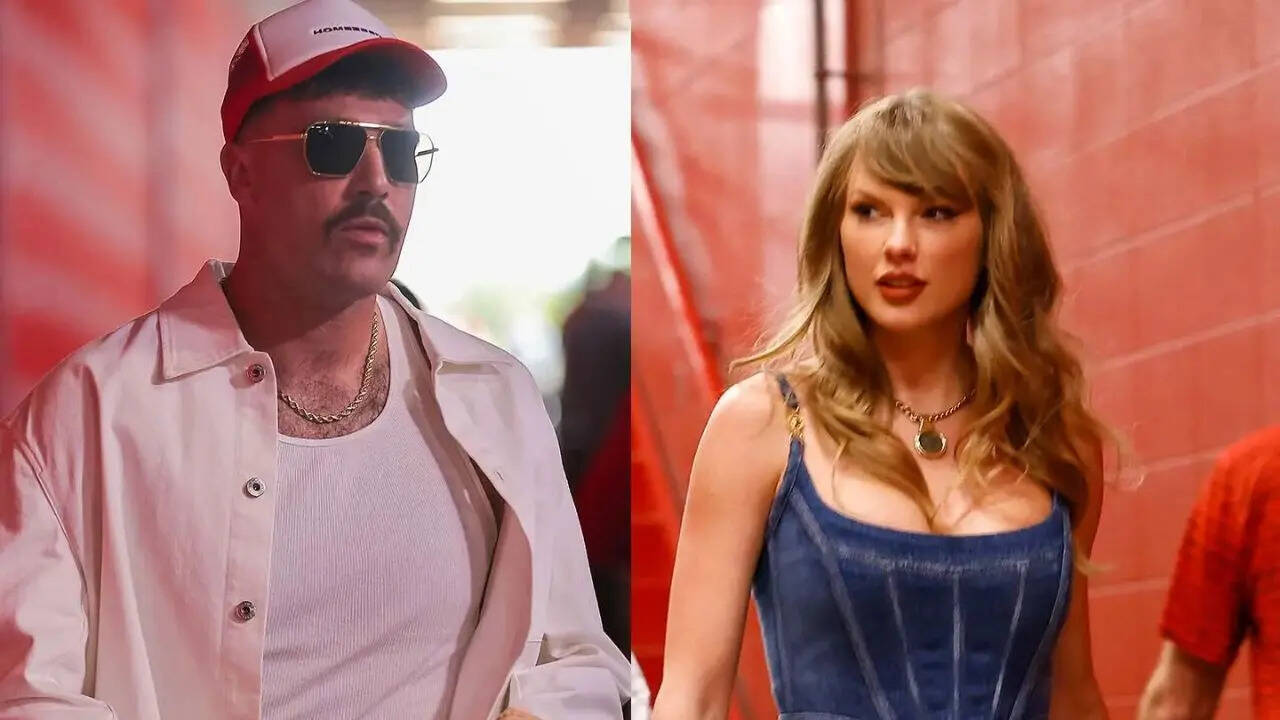
So when the headline broke this year that Taylor Swift and Travis Kelce had donated $26 million across 20 US charities in 2026, I watched the internet do what the internet always does.
First came the confetti. Then came the calculators.
People immediately started dividing their combined net worths by twenty-six million, arguing in comment sections about percentages, tax write-offs, public relations timing, and whether a billionaire and a three-time Super Bowl champion ought to have given forty million instead. It is a familiar, exhausting ritual. We treat celebrity philanthropy like a sporting event where the spectators get to critique the form of the jump without ever stepping up to the ledge.
But if you have ever worked inside a non-profit organization—or relied on one to keep your lights on—you know that twenty-six million dollars is not a press release.
It is oxygen.
The Architecture of Quiet Rescue
Let’s look at the raw mechanics of what happened, stripped of the stadium lights and the red-carpet flashbulbs.
In 2026, Taylor Swift and Travis Kelce directed $26 million to twenty distinct charitable organizations across the United States. Unlike the splashy, single-event checks that often dominate entertainment news—where a giant piece of foam board is held up for thirty seconds before everyone goes back to their VIP booths—this distribution was spread across twenty separate entities, averaging more than a million dollars per organization if split evenly, though private philanthropic allocations rarely divide in neat fractions.
To understand why splitting twenty-six million across twenty groups matters so deeply, you have to understand how American charities actually survive.
Most grassroots and mid-sized non-profits live in a state of perpetual cardiac arrest. They rely on restricted grants—money that comes with strict handcuffs attached. A foundation might give a youth center fifty thousand dollars, but stipulate that every penny must go toward buying new computers, even if the roof above those computers is leaking rainwater onto the carpet and the director hasn't been paid in three weeks.
Imagine trying to run a household where someone hands you a gift card exclusively for luxury candles while your refrigerator is broken and your water is shut off. That is the daily reality of non-profit management.
When unrestricted or broadly allocated capital arrives at the scale of twenty-six million dollars across twenty organizations, those handcuffs unlock. Suddenly, a food bank doesn't just buy groceries; it pays the overtime for the drivers who haul the food into rural counties where the grocery stores closed five years ago. An after-school music and arts program doesn't just buy violins; it pays the property insurance that keeps the building open until eight o'clock at night so kids have somewhere safe to go while their parents work second shifts.
Meet the People Behind the Ledger
Because the full, itemized roster of all twenty recipients hasn't been turned into a glossy promotional tour, let us construct a hypothetical composite—clearly labeled as such—based on the exact types of organizations both Swift and Kelce have historically championed throughout their careers.
Consider a woman named Elena. She isn't real in the biographical sense, yet she exists in dozens of brick-and-mortar offices from Nashville to Cleveland to Kansas City.
Elena runs a mid-sized youth literacy and mentorship center in an industrial neighborhood where the factories left in the nineties and never came back. Her annual operating budget is $850,000. Every October, Elena sits at a scratched laminate desk with a yellow legal pad, trying to figure out which program she has to cut in January. Does she drop the hot-meal service after tutoring, or does she lay off the part-time counselor who speaks Spanish to the parents?
Now, trace what happens on a Tuesday morning when a wire transfer—or a confirmed pledge letter from a donor-advised fund—lands on Elena’s desk for $1.3 million.
She doesn't throw a party. She cries in her car during her lunch break because for the first time in eleven years, she doesn't have to lay anyone off in January.
That single check represents more than a year and a half of her entire operating budget. It means she can sign a three-year lease instead of begging a landlord for month-to-month mercy. It means she can hire two full-time reading specialists with actual health insurance.
Multiply Elena by twenty.
Twenty directors sitting at twenty scratched desks across the country. Twenty boards of trustees suddenly shifting their emergency meetings from how do we survive the spring to how many more families can we reach by autumn.
Why This Partnership Works Differently
We have seen celebrity power couples pledge money before, and frankly, we have every right to be skeptical. History is littered with foundations that spent eighty cents of every dollar on administrative galas, consultants, and overhead, leaving crumbs for the people whose faces were printed on the brochures.
I admit that when I first started covering and working alongside community organizations, I carried a heavy dose of cynicism toward famous donors. You watch a movie star fly into a disaster zone in a private jet, hand out three bottles of water for a photographer, and vanish before the mud dries. It leaves a sour taste that takes years to wash out.
Yet looking closely at the trajectory that led to this 2026 commitment, a different pattern emerges. Neither Swift nor Kelce arrived at this moment as novices to quiet giving.
Long before their lives intersected in the public eye, Swift had built a reputation across the music industry for direct, unannounced financial intervention—quietly clearing medical debts for fans, dropping six-figure checks into local food banks in every single city along the Eras Tour route without demanding a single stage announcement, and handing out life-altering bonuses to the truck drivers, riggers, and caterers who hauled her staging across continents. Those food bank directors in Tampa, Detroit, and Seattle didn't find out because Swift held a press conference; they found out because they suddenly had enough money to feed tens of thousands of people for months, and only later mentioned it to local reporters out of sheer gratitude.
Kelce’s track record follows a remarkably parallel blueprint, rooted in the soil of the Midwest. Through his Eighty-Seven & Running foundation in Kansas City, he didn't simply slap his jersey number on a billboard. He poured capital into Operation Breakthrough, helping fund the Ignition Lab—a physical, humming workspace where underserved teenagers learn robotics, culinary arts, and digital media, complete with mentors and actual career pathways. He bought a dilapidated building near the facility just so older teens would have a dedicated place to build businesses and learn trades.
When two people with those specific, ground-level instincts pool $26 million across twenty charities, the result isn't an accident. It is a deliberate strategy.
The Invisible Stakes of 2026
Why does a $26 million injection matter so acutely right now?
To answer that, you have to look at the economic weather surrounding American charities in 2026. Over the past several years, inflation in food costs, commercial rent, and utility rates has squeezed non-profits from both ends. At the exact moment when more working families are walking through the doors of food pantries and emergency housing clinics, small-dollar donations from everyday middle-class households have tightened. People who used to give fifty dollars a month to their local shelter are now keeping that fifty dollars to cover their own grocery bills and insurance premiums.
Charities are caught in a vise. Demand is up; small-donor volume is down.
In that environment, mega-gifts from ultra-high-net-worth individuals are no longer just nice bonuses—they have become the structural load-bearing walls keeping the social safety net from buckling in mid-sized American cities.
Of course, this brings us to an uncomfortable truth, one we shouldn't sweep under the rug just because the headline feels good.
There is something deeply unsettling about a society where the survival of twenty vital charities depends on the generosity of a pop icon and a football star. Think about that for a second. We should be able to hold two conflicting thoughts in our heads at the exact same time: we can be profoundly grateful that $26 million is reaching twenty organizations that desperately need it, and we can still ask why basic human needs—food, youth mentorship, disaster relief, medical support—are so heavily reliant on the goodwill of celebrities rather than a functioning baseline of civic support.
Acknowledging that tension doesn't diminish the gift. It makes the gift honest.
The Ripple Effect Nobody Measures
There is another mechanism at play when figures of this magnitude move twenty-six million dollars into the charitable ecosystem, and fundraisers call it the anchor effect.
If you are trying to raise five million dollars to build a new community health clinic, the hardest dollar to raise is always the first one. Wealthy local donors—the car dealership owners, the regional bank executives, the family trusts—are notoriously cautious. Nobody wants to be the first person to put money into a project that might stall out halfway through construction.
When Swift and Kelce put their names and $26 million behind twenty organizations, they act as the ultimate anchor tenants.
Suddenly, a regional foundation in Ohio or Tennessee looks at one of those twenty charities and thinks: If their books were clean enough and their impact was proven enough to pass the vetting of two of the most scrutinized public figures on earth, our board can safely write a check too.
In professional fundraising, a major celebrity endorsement backed by real capital routinely unlocks two to three times its face value in secondary matching donations from local businesses and hesitant foundations. That $26 million doesn't just sit in a bank account; it acts like a magnet, pulling quieter, local money out of the woodwork that would have otherwise stayed parked in low-risk index funds.
Beyond the Noise
Scroll through social media on any given afternoon and you will be convinced that our culture is entirely broken—that every human interaction is transactional, every public gesture is cynical, and every headline is engineered solely to make us angry.
It is easy to live inside that fog. It is easy to become numb to numbers so large they feel like monopoly money.
Twenty-six million dollars.
Say it slowly. Strip away the tour stadiums, the Sunday afternoon broadcasts, the paparazzi lenses outside restaurants in New York, and the endless noise of the algorithm.
Picture instead a warehouse dock at five-thirty in the morning. The overhead fluorescent lights flicker on with a low electrical hum. A forklift backs up, its warning beep echoing off cinderblock walls, carrying three pallets of fresh produce, winter coats, and school backpacks paid for by a wire transfer that cleared earlier that week.
Somewhere down the street, a kid who didn't have a winter coat yesterday is about to zip one up before walking to the bus stop. They don't know who signed the check. They don't care about album charts or fourth-quarter touchdowns.
They are just warm.