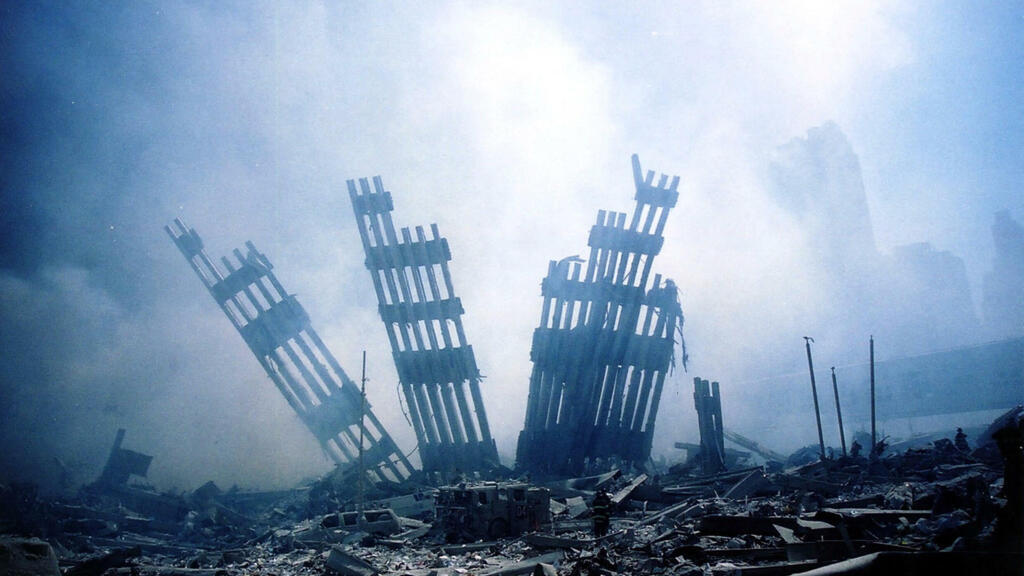
Twenty-five years is a strange span of time. It is a quarter of a century. Children born on the morning of September 11, 2001, are now adults navigating careers, voting in elections, and living lives in a world fundamentally shaped by that single catastrophic morning. For the thousands of firefighters, police officers, paramedics, transit workers, and civilian volunteers who rushed toward the collapsing towers, that day isn't a historical footnote found in a textbook. It's a permanent, unyielding anchor in their minds.
When you talk to a surviving 9/11 first responder today, you quickly realize that the narrative presented in patriotic speeches rarely matches reality. Heroes don't float above ordinary human grief, physical decay, and bureaucratic exhaustion. They bleed. They cough. They wake up in the middle of the night wondering why they made it out when their captain, partner, or rookie didn't.
We need to talk honestly about what a quarter-century of survival actually looks like for these men and women. Because the smoke cleared months after the towers fell, but the invisible fallout has been burning away at their bodies and minds ever since.
The Reality Behind the Uniform on That Tuesday Morning
Most people forget the sheer sensory overload of downtown Manhattan on that Tuesday. The noise wasn't just deafening; it was disorienting. The air turned into a thick, swirling gray soup of pulverized concrete, pulverized glass, jet fuel, asbestos, and human remains.
Responders didn't arrive with a manual for a disaster of that magnitude. They arrived because their pagers went off, their stations rolled out, or they saw the smoke from the highway and turned their cars around.
When you ask veterans of that day why they kept walking deeper into the debris zone despite falling masonry and secondary collapses, you don't get grandiose movie speeches. You get simple, blunt honesty. They say things like, "We did what we had to do." It sounds understated, almost casual. But underneath that sentence lies a terrifying weight. There was a job in front of them, people trapped under tons of steel, and nobody else was coming to save them.
Training prepares you for fires, car crashes, and urban crime. Nothing prepares you for a downtown skyline disappearing into the earth. Firefighters lugged heavy gear up pitch-black stairwells with no power, knowing the building above them was groaning under unimaginable heat. Paramedics set up triage stations in the open air, watching the sky for the next falling body. Police officers established perimeters that dissolved the moment a tower pancaked downward.
They didn't think about legacy. They thought about the next block, the next alleyway, the next cry for help.
Why Duty Overrode Survival Instincts
Human beings are hardwired for self-preservation. When your brain registers mortal danger, your nervous system floods with adrenaline, screaming at you to run away. First responders override that biological imperative through hundreds of hours of repetition and an absolute commitment to their oath.
On that Tuesday, the override button was pressed to its absolute limit.
Veterans often describe a strange kind of tunnel vision. The chaos around them narrows down to a few feet of visibility through a smoke-stained mask. Every decision carries a binary weight: step forward or step back. Step forward meant exposing yourself to toxic air and structural instability. Step back meant abandoning someone who might still be breathing beneath the rubble.
Nobody chose to step back.
That collective refusal to retreat is what saved thousands of lives that day. But it also locked those men and women into a psychological contract from which they could never truly walk away. When you survive a disaster where hundreds of your colleagues perish, survival itself becomes complicated. It breeds a heavy, persistent strain of survivor's guilt. Why did the beam miss me? Why did my rig get blocked in traffic while my crew went inside? Those questions don't fade with time. If anything, they grow sharper as the years accumulate.
The Invisible War Decades Later
The most brutal aspect of the 9/11 response wasn't confined to September 11 itself. It played out over the next ten, fifteen, and twenty-five years inside human lungs, bloodstreams, and neurological pathways.
The toxic cloud that enveloped lower Manhattan was a chemical cocktail unlike anything modern medicine had cataloged. Millions of tons of pulverized construction materials hung in the air for weeks. Responders worked day after day without proper respiratory protection because masks were scarce, cumbersome, or destroyed in the collapses. They breathed in crystalline silica, benzene, lead, mercury, and fiberglass.
Years later, the bill came due.
The World Trade Center Health Program and independent medical studies have tracked staggering rates of chronic illness among survivors and responders. Cancers—ranging from multiple myeloma and thyroid cancer to aggressive forms of prostate and lung cancer—began appearing at rates far above the national average. Pulmonary fibrosis, severe asthma, chronic obstructive pulmonary disease, and autoimmune disorders became standard medical diagnoses for people who were in peak physical condition twenty-five years ago.
Getting medical treatment hasn't always been straightforward. For years, responders had to fight bureaucratic red tape just to prove their illnesses were connected to their time at Ground Zero. The passage of the James Zadroga 9/11 Health and Compensation Act was a monumental victory, but securing funding and ongoing care remains an exhausting annual battle in Washington.
Imagine spending the best years of your life running into a burning collapse to save strangers, only to spend your retirement fighting government agencies for chemotherapy coverage. That's the reality for an alarming number of veterans from that era.
How Families Carried the Weight at Home
You cannot survive a trauma of that magnitude without it rippling outward into every corner of your domestic life. First responders didn't carry the burden alone; their spouses, children, and parents absorbed the shockwaves.
Post-traumatic stress disorder doesn't announce itself with dramatic movie scenes. It shows up as sudden silence at the dinner table. It looks like a retired firefighter refusing to sit with his back to a restaurant door. It manifests as a husband waking up drenched in sweat from a dream about falling steel, or a mother snapping at her kids because a siren wailed outside on a quiet suburban street.
Families became amateur caretakers, emotional shock absorbers, and advocates. Spouses learned how to navigate complex insurance policies, manage medication schedules, and comfort children who feared their father or mother might not survive the next medical procedure.
Children of first responders grew up fast. Many absorbed the anxieties of their parents before they were old enough to understand why their household felt different from their friends' homes. They learned to read the subtle shifts in mood, knowing when dad was having a "bad day" or when mom was hiding medical test results.
Despite all of this, family units remained the primary safety net. When the state and federal systems failed to provide adequate psychological or financial support during the lean years, it was the kitchen table conferences, the quiet shared coffees, and the unwavering loyalty of spouses that kept people anchored.
What Society Still Fails to Understand
A quarter of a century gives us enough distance to analyze our cultural memory, and honestly, our memory of 9/11 is often lazy.
We love the clean, cinematic version of heroism. We like the flags waving, the anthems playing, and the neat, tidy commemorations every September. We treat first responders like monuments—solid, stoic, and unchanging.
Real life doesn't work that way.
First responders are human beings who were asked to perform an inhuman task under impossible conditions. When the annual anniversary passes and the cameras turn off, they return to living with chronic pain, failing lungs, and the ghosts of friends who didn't come home. They don't need another hollow speech from a politician standing on a podium. They need reliable, permanent healthcare funding, genuine mental health infrastructure that doesn't carry departmental stigma, and public understanding that trauma doesn't have an expiration date.
When a retired paramedic tells you, "We just did what we had to do," don't let that humility fool you into thinking it was easy, normal, or without cost. It cost them their physical health. It cost them peace of mind. It cost them friends, sleep, and years of their lives.
Twenty-five years later, the dust has finally settled on the streets of downtown Manhattan. But inside the homes and bodies of the people who walked into that gray fog, the work of surviving continues every single day.