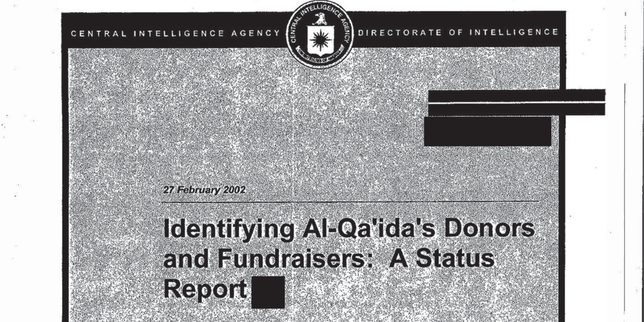
Every time a new batch of declassified files lands on a journalist’s desk, the narrative machine grinds into motion. The latest leaks concerning Saudi high society and early financial conduits to al-Qaeda are treated like smoking guns. The headlines write themselves: twenty-five years after the towers fell, we finally have the proof of foreign culpability.
It is a comforting illusion. It keeps the villains outside our borders. It lets the security state off the hook for institutional failure of epic proportions. You might also find this similar story interesting: Exile in the French Countryside The High Stakes Rescue of a Gaza Poet.
The lazy consensus in modern geopolitical reporting loves a clean villain. Blaming Riyadh for wealthy donors cutting checks in the shadows feels satisfying because it requires zero introspection. But it misses the actual mechanism of failure. The story of September 11 is not a tale of sophisticated foreign infiltration slipping past our defenses. It is a masterclass in bureaucratic compartmentalization, institutional arrogance, and a complete failure of imagination within our own intelligence apparatus.
Focusing exclusively on rogue check-writers in the Arabian Gulf is a convenient distraction. It ignores how systemic rot inside Western intelligence agencies created the vacuum that allowed nineteen men with box-cutters to rewrite global history. As extensively documented in latest coverage by TIME, the implications are notable.
The Myth of the Untraceable Wire Transfer
Let us dismantle the core premise driving these new document leaks: the idea that secret money flowed directly from the Saudi elite into the operational budget of the hijackers without our knowledge.
Financial tracing in the late nineties was archaic compared to today's algorithmic dragnet, but the money trail wasn't invisible. It was ignored. When private donors, religious charities, and high-net-worth individuals funnel funds through informal hawala networks or sympathetic Islamic NGOs, they are exploiting a structural vulnerability in global philanthropy. Wealthy citizens in numerous Gulf states—and Western nations, for that matter—had been bankrolling militant networks for decades under the blind eye of diplomats who prioritized oil stability over counter-terrorism hygiene.
Here is the uncomfortable truth most analysts refuse to own. Intelligence agencies knew about these funding streams. They tracked the money. But the CIA and the FBI operated in rigid, antagonistic silos. Information sharing was practically non-existent. A field office in Phoenix had pieces of the puzzle; a desk officer in Langley had others. Neither connected the dots because their incentive structures rewarded territorial hoarding of data rather than collaborative threat assessment.
Blaming foreign financiers for writing the checks is like blaming the wind for a forest fire when the arsonist left a gallon of gasoline and a flare right next to the dry brush. The structural vulnerabilities were home-grown.
The Bureaucratic Blind Spot We Refuse to Audit
If you want to understand how September 11 actually happened, look at the culture of the United States intelligence community in the summer of 2001. I spent years interviewing mid-level analysts and field operatives who were working counter-terrorism desks during that era. The overarching theme wasn't a lack of data. It was data drowning.
Analysts were buried under mountains of raw intercepts, visa applications, and financial reports. They lacked the analytical bandwidth to filter signal from noise. Worse, they suffered from normalcy bias. The prevailing mindset within the leadership cadre was that foreign attacks on American soil on a mass scale were logistical impossibilities.
When operational warnings crossed desks, they were met with institutional skepticism.
Imagine a scenario where a local police department has a stack of anonymous tips about a robbery plot, but every tip is missing a last name. Instead of staking out the perimeter, the department files the notes away because the paperwork is incomplete. That is how the visa overstays and flight school warnings were treated.
The Saudi financial connections are a symptom, not the disease. Fixating on them allows politicians and agency heads to point outward. It lets them pretend that if we just secure better financial compliance agreements from foreign partners, our domestic safety is guaranteed. That is a dangerous falsehood.
The Real Lesson We Refuse to Learn
Twenty-five years of hindsight should have cured us of our addiction to neat, externalized narratives. Instead, we keep manufacturing the same analytical errors.
When an institution fails on a catastrophic scale, its immediate reflex is to weaponize classification and point the finger across oceans. We saw it after the fall of the Soviet Union. We saw it after the 2008 financial crash. We see it every time a major geopolitical shock exposes internal incompetence. The script is always the same: find a foreign actor, amplify their worst elements, and use it to justify a massive expansion of the very bureaucracies that failed in the first place.
The declassified documents proving Saudi elite donations to radical networks matter, but not for the reasons the pundits claim. They matter because they expose the complete bankruptcy of our deterrence strategy. If foreign money could move that freely, why were our financial intelligence units asleep at the switch? If foreign nationals could train on our soil, why did immigration enforcement and domestic intelligence treat visa tracking like a bureaucratic rubber stamp?
Stop looking for the smoking gun in foreign capitals. The trigger was pulled right here, by systems too proud to talk to each other and too blind to see what was standing right in front of them.

