Fluorescent lights hum over a linoleum floor that never quite dries. It smells like bleach, copper, and the quiet terror of a room where two lives are hanging by a thread that nobody outside the building can see.
If you have ever stood beside a hospital bed watching someone you love breathe in shallow, ragged intervals, you already know the geography of a crisis. Time stretches. A minute becomes a corridor. Every sound from a monitor—a beep, a hiss, a soft rustle of paper—feels like a verdict. Now imagine that same room without the monitors. Imagine it with a single dim bulb swinging from a cord, a midwife whose gloves are already counted out for the shift, and a supply closet where the life-saving oxytocic medicine is rationing itself one vial at a time.
That is the unvarnished reality behind a headline that reads like a dry ledger entry: a one-year United States agreement to fund maternal and newborn health donations in the poorest countries.
On paper, a twelve-month pledge looks small. Temporary. Almost tentative. Policy analysts will dissect the budget lines, debate the diplomatic timing, and ask what happens on day three hundred and sixty-six. Those are fair questions. They deserve straight answers. Yet when you strip away the diplomatic shorthand, a one-year commitment is not an abstract line item in Washington. It is a bridge built over a rushing river while people are already trying to cross.
To see what that bridge actually carries, we have to step past the press release and look at the moments where global health policy meets human skin.
When a Policy Memo Becomes a Pulse
Let’s use a hypothetical scenario here, clearly labeled as one, to make the mechanics of a supply chain tangible without pretending to speak for any single real family. Picture a rural clinic in a low-income country—let’s call the midwife Amina and the expecting mother Salma. Neither of them will ever read a trade agreement or attend a donor summit. What they know is simpler and far more urgent: Salma’s blood pressure is climbing, her feet are swollen, and the nearest regional referral hospital is hours away over rutted dirt roads that turn to mud when the rains hit.
In a well-resourced city, Salma’s condition has a clear playbook. Magnesium sulfate is on hand to prevent seizures. Skilled attendants watch her chart continuously. If labor stalls or bleeding begins after delivery, intervention happens in minutes.
In clinics starved of donated medical supplies, technical assistance, and basic commodities, the margin between routine birth and catastrophe is razor-thin. Postpartum hemorrhage can take a healthy woman’s life in under two hours. A newborn struggling to take a first breath needs warmth, resuscitation equipment, and clean cord care immediately—not tomorrow morning, and not after a shipment clears port customs three weeks late.
I have sat in waiting rooms in South Asia where families whispered in the dark, passing a single plastic bottle of water from hand to hand while doctors worked miracles with whatever was left on the shelf. You don’t forget the sound of a mother’s relief when a baby cries—that sharp, ragged, triumphant intake of air that turns dread into noise. Nor do you forget how quickly a clinic’s calm turns to panic when a routine delivery hits an unexpected complication and the shelf where a medication should sit is empty.
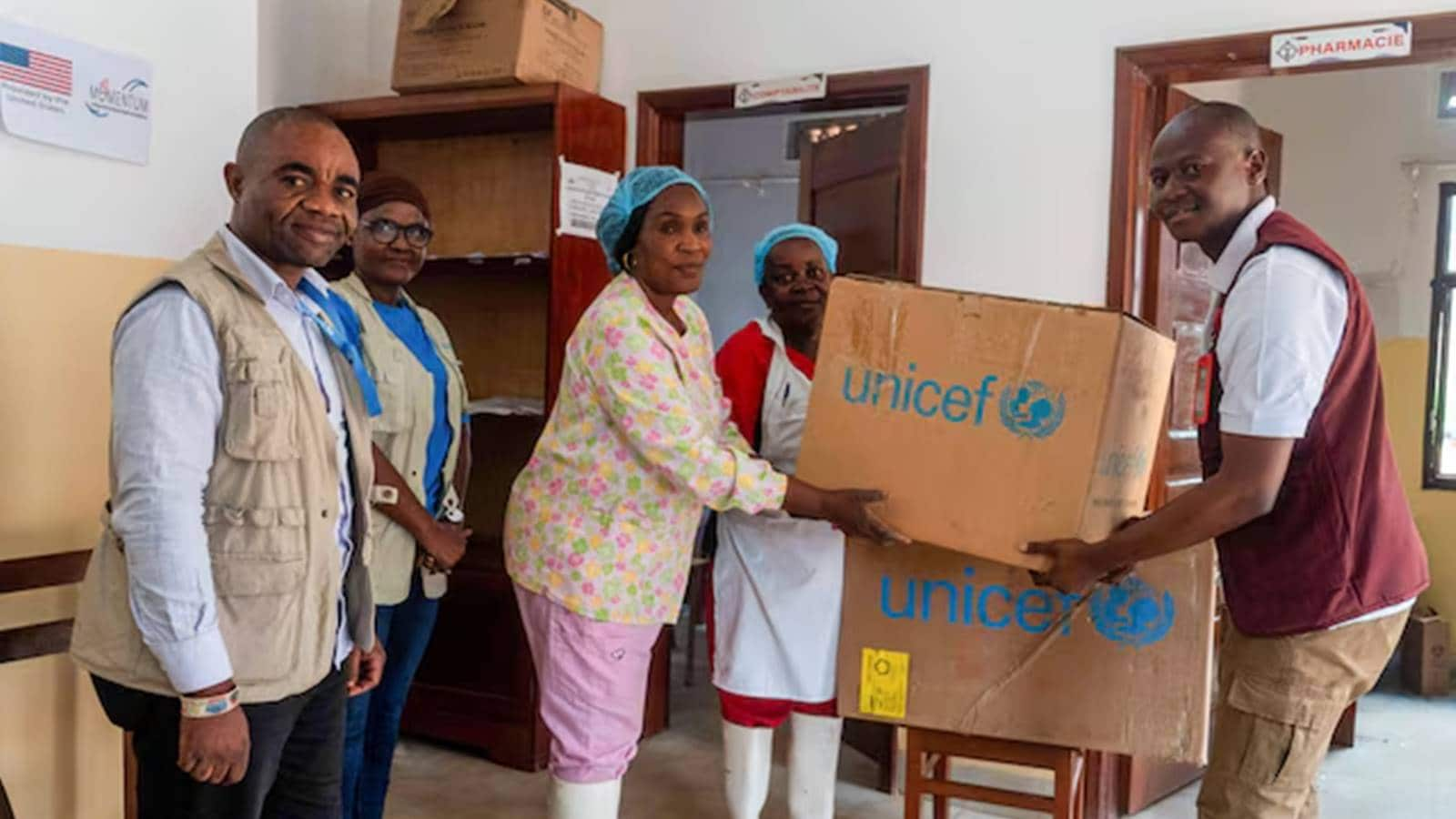
A donation agreement sounds clinical until you trace it to that shelf. A box of sterile delivery kits. A cold-chain supply of essential medicines. Training that teaches a health worker how to spot preeclampsia before a seizure strikes. When those pieces arrive on time, they don’t look like foreign aid. They look like a steady hand. They look like a baby wrapping tiny fingers around a thumb.
Why Twelve Months Feels Both Urgent and Fragile
Skepticism is healthy here. Whenever a major donor announces a one-year deal rather than a multi-year overhaul, reasonable people push back. One year is short. Health systems aren’t built in twelve months. Clinics need sustained staffing, reliable roads, electricity that doesn’t flicker out mid-procedure, and long-term national ownership so they aren’t perpetually waiting on charity from abroad.
I share that unease. There is something unsettling about tying survival to a calendar that resets every autumn. Funding cycles can create whiplash: a surge of supplies and momentum for a year, followed by anxiety as renewal negotiations drag on. If you are a program director trying to order stock months in advance because shipping takes half a year, a short window forces impossible planning choices.
Think of it like keeping a lantern lit in a drafty hallway. A one-year fund is a fresh supply of oil. It keeps the flame bright right now, illuminating the stairs so nobody falls in the dark. It does not, by itself, replace the drafty windows or rewire the house.
Still, dismissing a one-year lifeline because it isn’t a permanent monument misses how emergencies work. When budgets tighten or global priorities shift, maternal and newborn programs are often the first to feel the squeeze—precisely because mothers and babies don’t have a powerful lobbying arm in foreign capitals. Securing a defined twelve-month commitment locks in immediate support for vulnerable populations at a moment when continuity itself is under threat.
Historians of public health have seen this pattern for decades. Progress in lowering maternal and infant mortality rarely moves in a neat straight line. It advances through hard-won coalitions, targeted commodity donations, frontline training, and stubborn consistency—and it stalls whenever funding gaps force clinics to improvise with less. A single year of guaranteed donations buys time. And in medicine, time is often the scarcest resource of all.
The Invisible Stakes Behind Every Statistic
Numbers can numb us. Mention maternal mortality ratios or neonatal survival rates in a report, and eyes glaze over. They become percentages rather than people.
Yet every number represents a household rearranged overnight. When a mother dies in childbirth in a low-income setting, the shockwave ripples outward in ways cold data barely captures. Older children—sometimes barely out of childhood themselves—are pulled from school to care for younger siblings or earn money. Families slide deeper into debt paying for emergency transport or private care. A newborn who loses a mother starts life with a profound disadvantage, facing higher risks of illness and malnutrition in those fragile first months.
And when a newborn dies, grief settles into a room with a heavy, hollow quiet. There are no shared memories yet, only preparations undone—a folded blanket, a name spoken softly, a family trying to make sense of an ending at the exact moment they expected a beginning.
That is why maternal and newborn health sits at the center of human development, even when policy debates treat it as a niche corner of aid. You cannot talk seriously about economic stability, educational opportunity, or community resilience while ignoring whether mothers survive giving birth and newborns survive their first twenty-eight days.
Consider what happens next when a one-year donation deal is executed well:
- Frontline clinics receive predictable deliveries of essential drugs, diagnostic tools, and clean birth supplies rather than piecemeal scraps.
- Community health workers and birth attendants get refresher training and practical protocols that cut delays when complications arise.
- National health ministries gain breathing room to coordinate distribution with local needs instead of scrambling to plug sudden holes.
None of that happens automatically because a document is signed. Logistics matter. Quality control matters. Local leadership matters more than any outside signature. A donation only saves lives if it reaches the bedside before the crisis peaks, matches what clinicians actually need, and respects the dignity of the women receiving care.
Doubt, Accountability, and What Readers Should Watch
Should we celebrate a one-year agreement with blind applause? No. Applause is cheap, and accountability is what keeps promises honest.
If you are reading this wondering whether pledges like this actually translate into healthier babies and safer deliveries, you are asking the right question. Aid history is littered with good intentions that got tangled in bureaucracy, mismatched equipment, or short-sighted timelines. Admitting that doesn’t weaken the case for maternal health; it strengthens it. Real trust comes from looking clearly at what works and refusing to look away from what fails.
Watch for three concrete signals over the coming year. First, speed and predictability: are supplies reaching underserved clinics early in the cycle, or arriving late with months of shelf life already burned away? Second, alignment with local priorities: are the donated commodities and technical support tailored to real bottlenecks on the ground, such as postpartum bleeding, infection prevention, and newborn resuscitation? Third, continuity planning: are governments, multilateral partners, and donors using this twelve-month window to build sturdier domestic supply chains rather than treating the year as a standalone band-aid?
Those questions cut straight through political spin. They keep the focus where it belongs: not on diplomatic optics, but on whether a midwife has what she needs at two in the morning when a delivery turns complicated.
The Quiet Measure of a Promise
A one-year deal will never look dramatic on a television screen. There are no explosions, no summit handshakes that feel historic in hindsight, no sweeping slogans that fit neatly on a bumper sticker.
Instead, its real measure happens in quiet places. In a rural clinic where the blood pressure cuff works and the medicine is in stock. In a delivery room where the lights stay on and a trained attendant knows the exact sequence of steps when a baby comes out limp and silent. In the small, ordinary miracle of a mother holding a warm, breathing child and closing her eyes for the first time in hours, knowing both of them made it through the night.
A year is short.
A breath is shorter—and every single one of them counts.