The sea does not keep records of who crosses it. It takes the fiberglass hull, the salt-crusted engine, the trembling hands of a mother clutching a dry bundle of clothes, and it deposits them all alike upon the shingle. To the water, there is no difference between a refugee and a statistic. To the shore, however, every arrival is a fracture.
Dawn on the coast rarely arrives with cinematic drama. It bleeds in through a low, grey smear across the channel, turning the whitecaps to the color of wet tin. On a morning much like any other, twelve people stood on a strip of cold stone where they did not belong, or where the law said they did not belong, which in the geometry of modern borders is often the exact same thing.
They had just stepped off a rubber boat that was already defusing its tension against the rocks, hissing like a dying animal. Within minutes, the blue lights arrived. Not to throw wool blankets over shivering shoulders, not yet, but to secure the perimeter. Twelve arrests after a protest over a migrant boat arrival. That was the dry wire service sentence that flashed across news tickers later that day. Twelve sets of handcuffs clicking shut against the salt air. Twelve ordinary citizens who looked at a grey horizon, saw human beings stepping onto the wet sand, and decided that their government's response was a moral failure worth standing in front of.
To understand why twelve people chose to block a police van that morning, you have to look past the breaking news alert and step back into the long, exhausting anatomy of a coastal town that has become a recurring footnote in a global crisis.
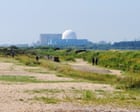
Consider the geography. A stretch of pebble beach. A cluster of weathered Victorian guesthouses turned into rental properties. A community that used to measure its rhythm by the fishing fleet and the summer holiday trade now measures it by Coast Guard cutters and police sirens. When you live here, the news isn't something you read on a glowing screen over morning coffee. You hear the helicopter chopping overhead at three in the morning. You see the yellow police tape fluttering against the gorse bushes. You watch the ambulances idle by the slipway.
Familiarity breeds either profound empathy or profound fatigue. Often, it breeds both at the exact same time, twisting inside a person until they don't know whether to weep or scream.
On one side of the barricade stand the defenders of order. They are local law enforcement officers, most of them born within thirty miles of the spot where they now stand. They are tired, too. They have pulled double shifts for months, managing crowds, processing arrivals, keeping the peace between competing political factions that descend on their quiet town like migratory birds every time a dinghy touches bottom. When they make an arrest, they are not acting out of malice. They are acting out of institutional necessity. The road must be cleared. The van must pass. The law must be upheld.
On the other side stood the twelve.
Let us be clear: they were not professional revolutionaries. They were accountants, retired teachers, a local carpenter with calloused thumbs, a woman who ran the organic bakery down by the harbor. They had never been arrested in their lives. They possessed no grand master plan to overthrow the state. But they had reached a private, quiet threshold where sitting at home watching the evening broadcast felt like an active form of complicity.
When the rubber boat hit the shore, the coast guard moved in to intercept the passengers—a routine processing operation designed to move newcomers into detention facilities miles inland. But as the vans prepared to pull away, the twelve simply walked out into the road. They linked arms. They did not shout slogans with megaphones; their voices were too small for that against the roar of the wind. Instead, they sang an old, tuneless folk song about fishermen lost at sea, their breath pluming white in the freezing air.
The confrontation was brief. Protest in the twenty-first century is rarely a pitched battle; it is usually an administrative inconvenience resolved with zip-ties and fiberglass vans.
Twelve pairs of wrists bound. Twelve people led away to the local precinct. Twelve brief entries in a police logbook that will eventually be filed away under public disturbance.
Yet the questions they left behind on that tarmac do not wash away with the tide.
What does a society owe to the stranger who arrives at its doorstep uninvited? And what does it owe to the citizens who look at that same stranger and see not a threat, but a mirror?
For years, the political discourse surrounding maritime arrivals has been trapped in a binary of false choices. We are told we must choose between absolute, borderless empathy that ignores the logistical realities of sovereignty, and a hardened, militarized defense of the coastline that treats human beings as an invasive species. Both extremes rely on abstraction. Both require us to ignore the messy, complicated reality of human suffering on one hand, and the administrative necessity of the rule of law on the other.
When we reduce migration to a political football, we strip away the individual gravity of the moment. We forget that every person in that rubber boat had a mother, a kitchen table they left behind, a language they spoke when they were unafraid. We also forget that the people standing on the shore—both the police officers enforcing the cordon and the protestors sitting in the mud—are acting out of deeply held, if violently conflicting, visions of what their community should represent.
The twelve who were arrested did not stop the boat. They did not rewrite immigration policy. They did not solve the deep geopolitical fractures in the Middle East and East Africa that push desperate families onto unseaworthy vessels in the dead of night.
What they did was much smaller, and perhaps much more important. They interrupted the routine.
They forced their neighbors to look up from their smartphones and ask a very simple, uncomfortable question: What would I have done if I were standing right there on the pebbles?
Most people would have walked past. Most people do walk past. We have built modern life on the art of looking away. We scroll through horror on our screens, click a heart icon, and order takeout. We accept the friction of the world as the background noise of existence.
To sit in the freezing mud and block a van is to reject that background noise. It is an assertion that physical presence still matters, that proximity to injustice demands a physical response, even if that response is entirely symbolic.
The police vans have long since cleared the road. The protestors have been processed, bailed, and sent home to cold kitchens and worried spouses. The local magistrate will hand down minor fines or conditional discharges in the coming weeks, routine justice for a routine misdemeanor.
The pebble beach is quiet again, save for the wheeling gulls and the rhythmic, indifferent crash of the grey water against the shore.
Down by the slipway, a stray piece of orange plastic from a deflated life vest is wedged between two stones, fluttering faintly in the afternoon breeze. It looks like a scrap of trash until the light catches it just right, glowing like a ember in the ash.