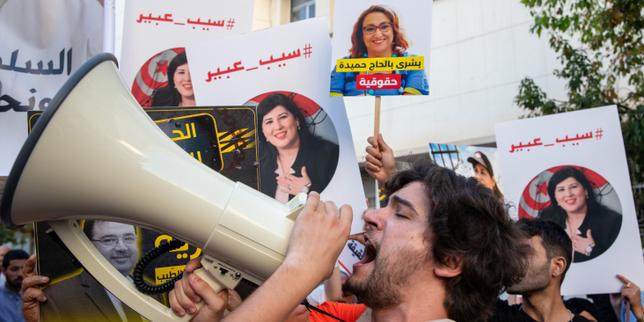
The standard international narrative on Tunisia has officially solidified into a rigid script. Open any major European or American publication, and you will read some variation of the same lament: President Kaïs Saïed is systematically strangling the country’s vibrant civil society, crushing independent NGOs, and choking off the last remnants of the 2011 Arab Spring.
It is a comfortable, morally tidy story. It is also fundamentally wrong. You might also find this related article interesting: Inside the Persian Gulf Crisis Nobody is Talking About.
The lazy consensus among foreign observers treats "civil society" as an inherently noble, organic entity that mirrors the desires of the average Tunisian citizen. It assumes that more NGOs automatically equals more freedom. But if you talk to people on the ground outside the expatriate bubble of Tunis, a completely different reality emerges. To the vast majority of Tunisians, the sprawling network of heavily funded non-governmental organizations is not a shield against tyranny. It is an unregulated, parallel economy driven by foreign agendas, unaccountable to the local population, and completely detached from the grinding economic realities of the country.
Saïed’s crackdown on foreign funding is not merely a mad grab for total power. It is a cynical, yet highly calculated response to a profound crisis of domestic sovereignty. The conventional wisdom treats the defense of these organizations as a matter of universal human rights. In reality, it is a battle over who controls the political and economic destiny of Tunisia: its elected government, or an insulated class of technocrats funded by Paris, Brussels, and Washington. As discussed in latest coverage by TIME, the results are notable.
The Sovereign Wealth Illusion
To understand why the mainstream media gets Tunisia so wrong, you have to look at the money. Following the 2011 revolution, Tunisia became the darling of Western development agencies. Hundreds of millions of dollars poured into the country. New associations and human rights groups materialized overnight.
Western analysts looked at this explosion of organizations and celebrated the birth of a democratic culture. They ignored the distortion it created.
When a foreign government injects massive capital into a fragile economy specifically to fund political advocacy, it does not build democracy. It creates a skewed labor market. It pulls the brightest young Tunisian lawyers, researchers, and organizers away from building local political parties or starting domestic businesses, funneling them instead into writing grant proposals that match the shifting funding priorities of foreign donors.
Consider the sheer mechanics of dependency. If an NGO relies entirely on a European foundation to pay its rent and salaries, who is its true constituency? It is not the unemployed youth in Kasserine or Gafsa. It is the program officer in Brussels. The organization’s survival depends on satisfying external benchmarks, not solving local problems.
I have watched international development funds warp local priorities across the region for over a decade. The result is always the same: an echo chamber where localized elites speak fluent English and French, adopt the latest international jargon, and remain completely incapable of mobilizing the domestic working class. Saïed did not create the division between the NGO class and the Tunisian public; he merely exploited a gap that was already wide enough to drive a tank through.
The Fatal Flaw of the Democratic Transition
The central premise of the critique against Saïed is that the decade between 2011 and 2021 was a golden era of democratic progress that must be protected. This is a delusion born of pure political privilege.
While Tunis-based advocacy groups spent ten years debating electoral laws and constitutional nuances, the actual living standards of Tunisians collapsed. Inflation soared, youth unemployment remained stubbornly high, and public services disintegrated. The political class, immobilized by endless infighting and paralyzed by a bizarre system of shared executive powers, offered zero solutions.
The standard "People Also Ask" query regarding Tunisia usually revolves around whether the country can return to its democratic path. The question itself is flawed because it assumes the population wants to return to a path that brought them economic ruin.
When Saïed suspended parliament in July 2021, thousands of Tunisians took to the streets to celebrate. They were not cheering for autocracy; they were cheering for the destruction of a dysfunctional political theater that cared more about foreign approval than domestic survival. The international community viewed the suspension as a coup. The street viewed it as an eviction notice for a corrupt political elite.
Why Foreign Funding Is a National Security Issue
No country on earth tolerates unrestricted foreign political spending inside its borders. The United States enforces the Foreign Agents Registration Act (FARA) with absolute severity. The European Union is constantly tightening rules on foreign influence and lobbying. Yet, when a developing nation like Tunisia attempts to regulate the millions of euros flowing into domestic political groups, it is met with immediate international outrage.
This double standard is untenable. Under the old Tunisian law governing associations—specifically Decree 88 passed in the chaotic aftermath of the revolution—NGOs enjoyed unprecedented freedom to receive foreign funds with minimal government oversight. This loophole turned the country into a playground for external influence operations. Money flowed not just to human rights watchdogs, but to religious organizations, political front groups, and shady networks with zero financial transparency.
Sovereignty is not a theoretical concept; it is practical. A state that cannot track or regulate the capital entering its political ecosystem is not a fully sovereign state. Saïed’s insistence on monitoring foreign bank accounts and restricting external financing is a brutal, heavy-handed correction, but the underlying logic is entirely consistent with standard statecraft.
The downside of this approach is obvious, and we must be honest about it. By squeezing foreign funding, Saïed is also suffocating the few genuine, hyper-local organizations providing actual social services where the state has failed. He is burning down the house to kill the termites. But pretending that the previous system was a transparent, unblemished paradise of civic engagement is pure fiction.
The Myth of the Neutral Witness
The competitor article, like so many others, frames the tension as a clear-cut battle between an authoritarian state and neutral, objective defenders of civil liberties. This framing deliberately ignores how deeply politicized the Tunisian NGO sector became during the transition years.
Many prominent organizations did not act as neutral observers; they functioned as political actors without the accountability of running for office. They used foreign backing to pressure state institutions, dictate policy directions, and veto legislation, all while representing a tiny fraction of the electorate. This created a profound democratic deficit. If an unelected advocacy group can block a government policy using the leverage of international financial aid conditions, the vote of the citizen becomes meaningless.
Saïed understood this dynamic perfectly. His rhetoric pits the "will of the people" against "foreign agents," and it resonates precisely because Tunisians have spent years watching international actors dictate their country’s economic reforms, structural adjustments, and political compromises.
The Hard Reality for Western Observers
Stop looking at Tunisia through the lens of a Western liberal textbook. The country is not experiencing a sudden detour from a thriving democratic trajectory. It is experiencing the predictable collapse of a top-down, foreign-subsidized political model that never took root in the local soil.
The international community cannot save Tunisian civil society because the international community’s money is exactly what compromised its legitimacy in the eyes of the public. If Tunisian civic organizations want to survive, they must stop looking North for survival. They must do the hard, unglamorous work of building a domestic funding base and articulating an economic vision that matters to the millions of citizens living outside the capital.
Until they do, Saïed will continue to dismantle their networks with the quiet, indifferent consent of a population that is tired of eating promises of abstract liberty while the price of bread doubles. The era of the foreign-funded democratic laboratory is over. Sovereignty has reasserted itself, and it is a cold, unforgiving master.