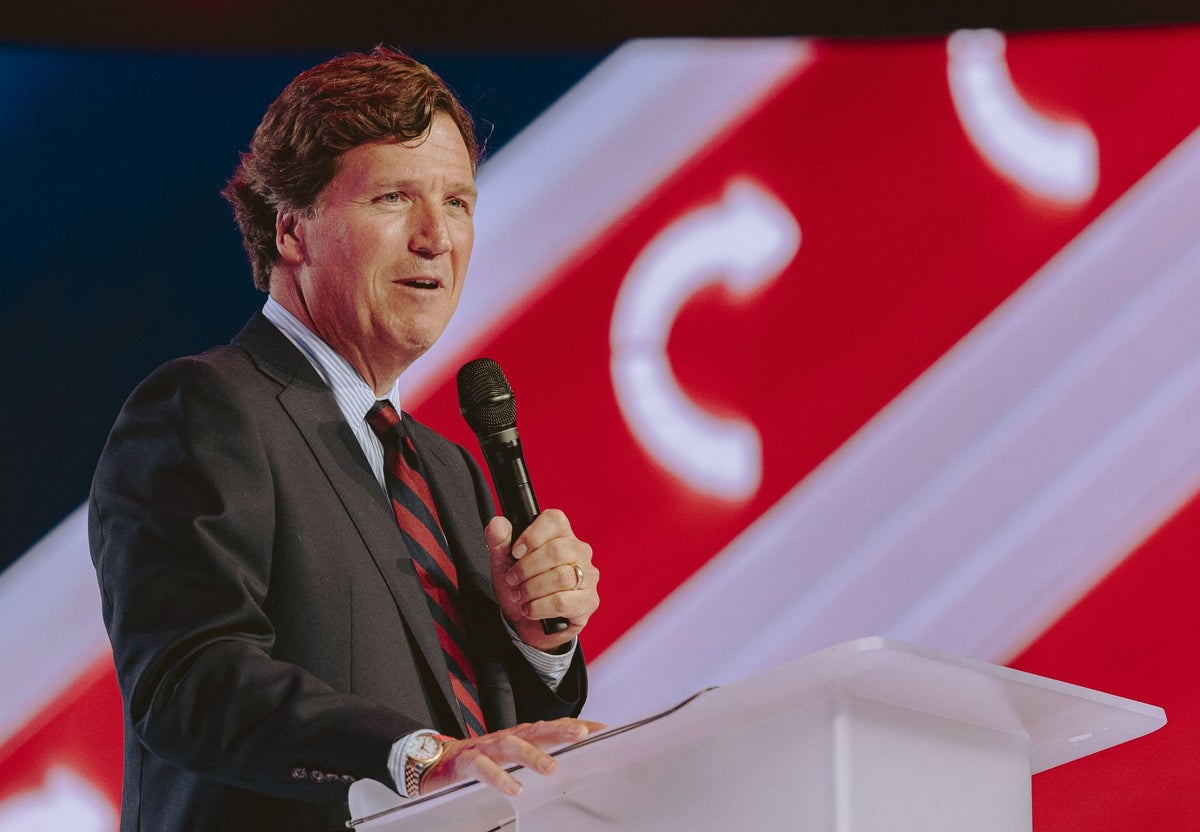
Tucker Carlson doesn't just want a microphone anymore. He wants the printing press. After his exit from Fox News, most people thought he'd just stick to his video platform on X. They were wrong. Carlson is now moving into the book world with a new publishing line specifically designed for figures the mainstream media won't touch. He’s taking the "canceled" and giving them a hardcover spine.
It isn’t just about making money. It's about infrastructure. When you get kicked off YouTube or dropped by a major publisher like Simon & Schuster, you lose your voice. Carlson sees a massive hole in the market where traditional New York publishing has retreated. He’s filling it with a roster that includes names like Russell Brand and Milo Yiannopoulos. Don't forget to check out our earlier coverage on this related article.
Why the Canceled Author Market is Exploding
The logic is simple. If you have a massive audience but no way to sell them a product, you’re leaving millions on the table. Legacy publishers are increasingly risk-averse. They’re terrified of staff revolts. We saw this when Hachette employees protested Woody Allen’s memoir. We saw it with Mike Pence’s book deal. Carlson knows these authors come with built-in marketing machines. They don't need a PR firm; they have millions of followers ready to click "buy" the moment a link drops.
Russell Brand is the perfect example. He’s been hit with serious allegations and found himself largely persona non grata in traditional UK and US media. But his digital footprint is still huge. By bringing someone like Brand into his publishing fold, Carlson isn't just selling books. He's building a fortress for the "outsider" brand. It’s a direct middle finger to the gatekeepers who think they can end a career with a single press release. If you want more about the history of this, The New York Times provides an informative breakdown.
Milo Yiannopoulos and the Return of the Provocateur
The inclusion of Milo Yiannopoulos tells you exactly how far Carlson is willing to go. Milo was the poster child for deplatforming years ago. He went from being the most talked-about man in media to almost complete silence after losing his book deal and social media accounts.
Carlson’s move to publish him is a signal. It says that no one is too radioactive if they have a story that people want to read. You don't have to like Milo to see the business strategy here. Carlson is betting that the "forbidden fruit" aspect of these books will drive sales more effectively than any glossy New York Times ad. People want to read what they're told they shouldn't. It’s basic human nature.
The Problem With Traditional Publishing
The big houses in New York are basically run by committee now. Everything has to be vetted by legal, then PR, then "sensitivity readers." It’s a slow, agonizing process that kills the spirit of a book before it even hits the shelves. Carlson’s outfit is leaner. It’s rogue. He can move fast. If a controversy breaks on Monday, he can have a book deal signed by Wednesday and a digital preorder up by Friday.
I’ve seen how these traditional contracts work. They’re often predatory. They take a massive cut of the royalties and keep the rights forever. Carlson is likely offering a different kind of deal. For a guy like Russell Brand, who already has his own production team, a partnership with Carlson is probably way more lucrative than a standard 10% royalty deal at a legacy house.
Building a Parallel Economy
This isn't just a side project. It’s a piece of what many are calling the "parallel economy." Think about it. You have Rumble for video. You have PublicSquare for shopping. You have X for news. Now you have a Tucker-backed house for books.
The goal is to create a world where a conservative or "anti-establishment" figure can exist entirely outside the reach of mainstream corporate control. If you can’t be fired because you own the company, and you can’t be deplatformed because you own the platform, you’re effectively invincible. Carlson is trying to hand that invincibility to others.
Does the Content Actually Matter
Critics say these books will just be grievance-filled manifestos. They might be right. But from a business perspective, it doesn't matter. If 500,000 people buy a book because they love the author and hate the people trying to silence them, that’s a massive success. The quality of the prose is secondary to the cultural weight of the object itself. Buying the book becomes an act of political defiance.
The Logistics of Going Rogue
Distribution is the real hurdle. Getting a book into Barnes & Noble is one thing. Getting it into independent bookstores that might despise your politics is another. But we live in the age of Amazon. You don't need a physical shelf to have a bestseller. You just need a direct-to-consumer pipeline.
Carlson has the most powerful pipeline in independent media. Every time he mentions a book on his show, it’ll rocket to the top of the charts. He’s essentially his own Oprah’s Book Club for the populist right. That’s a level of power that most editors in Manhattan would kill for.
What This Means for Future Authors
Expect more "canceled" celebrities to follow this path. If you’re an actor, a journalist, or a scientist who said the wrong thing and got the boot, you now have a destination. You don't have to go on an apology tour. You can just go to Tucker.
This creates a new career path for the controversial. Instead of a dead end, a "cancellation" becomes a rebrand. It becomes the first chapter of your new book. It’s a complete shift in the power dynamics of the culture war.
The Risks of the Rogue Model
It’s not all easy money. Running a publishing house is a logistical nightmare. Shipping, printing costs, and legal battles over libel are constant threats. If Milo or Brand writes something that results in a massive lawsuit, Carlson is the one on the hook.
There's also the risk of the "echo chamber" effect. If you only publish people who think like you, you eventually lose the ability to influence the broader culture. You’re just talking to the same group of people over and over. But Carlson doesn't seem to care about the "broader culture" anymore. He’s focused on his base. And that base is loyal, angry, and has a lot of credit card debt they’re willing to add to for the right cause.
How to Track This Shift
If you want to see if this is actually working, don't look at the New York Times Bestseller list. They’ve been accused of manipulating their rankings to exclude books they don't like. Look at the Amazon charts. Look at the BookScan numbers. Those are harder to fake.
Watch the release dates for Brand and Yiannopoulos. If those books drop and immediately dominate the conversation, the legacy houses are going to have a serious problem. They’ll be forced to choose between their internal politics and their bottom line.
You should also keep an eye on who else signs up. If we see more mainstream figures—people who haven't even been "canceled" yet—moving to Carlson’s line, it means the prestige of New York publishing is officially dead. It means writers care more about reach and freedom than a fancy logo on the spine.
Start looking for these titles on alternative platforms first. Don't expect a big rollout in your local library. This is a digital-first, community-driven movement. If you're an author with a controversial take, your next move isn't finding an agent in Manhattan. It's getting an audience on X and waiting for the call from Tucker's team.