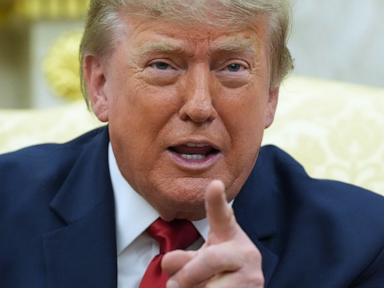
Federal immigration policy has dissolved into open confusion. Just hours after top officials at the Department of Homeland Security quietly ordered Immigration and Customs Enforcement to pause most vehicle stops, President Donald Trump took to social media to completely blow up the directive.
Trump did not just disagree with his own administration. He essentially told agents to ignore the new safety rules and keep pulling cars over.
It is a stunning, public breakdown in the chain of command. On one side, you have Department of Homeland Security Secretary Markwayne Mullin and career law enforcement managers trying to manage the political and physical fallout of multiple fatal officer-involved shootings. On the other, you have a president who views any step back from aggressive deportation tactics as a sign of weakness.
To understand why this fight is happening right now, you have to look at what has been happening on American roads over the last several months.
Inside the Chaos of the Federal Halt
The decision to pause vehicle stops did not happen in a vacuum. It was a panicked reaction to three high-profile deaths in a single week.
The Fatal Spark in Maine and Texas
On Monday in Biddeford, Maine, an ICE officer shot and killed Johan Sebastián Durán Guerrero, a 25-year-old Colombian national. Authorities claimed Durán Guerrero tried to flee in his vehicle, putting officers in danger. But local witnesses and video footage painted a much messier picture. One nearby resident reported hearing the young driver shout that he had tried to stop before he died.
Just days before that, an ICE officer in Houston shot and killed Lorenzo Salgado Araujo. Federal agents in unmarked vehicles chased Salgado Araujo while he was driving to a construction job. Once again, the official line was that the driver tried to run over an officer.
The day after the Maine shooting, a 28-year-old Mexican citizen died in Florida. He was hit by a tractor-trailer while fleeing federal officers on foot.
Three deaths. One week. The internal pressure within DHS became too intense to ignore. Under pressure from lawmakers like Maine Senator Susan Collins, Secretary Mullin ordered an immediate, temporary halt to most vehicle stops to prevent more bloodshed and protect vulnerable Republicans ahead of the upcoming elections.
Then Trump posted on Truth Social.
The president argued that giving up traffic stops plays directly into the hands of criminals. He told ICE agents to be "judicious, fair and smart" but ordered them to "go back and do your very important job."
The Lethal Pattern of Vehicle Interventions
This is not a new problem. This is a structural feature of how modern immigration enforcement is designed to work.
Policing experts have warned for decades that shooting into moving vehicles is incredibly dangerous. It rarely stops the car, it often causes the vehicle to crash uncontrollably, and it regularly results in fatal outcomes for drivers who might not actually pose a lethal threat. Most municipal police departments strictly ban officers from firing at moving cars unless someone inside is actively shooting at them.
ICE operates under different rules, and the results have been devastating.
Since the administration began its massive deportation push, at least 17 shootings involving motorists and federal immigration officers have occurred. Critics point back to the winter killings of Alex Pretti and Renee Good in Minnesota as proof that these aggressive tactics are out of control.
You have to ask yourself why ICE relies so heavily on traffic stops in the first place.
The answer is simple. Immigrant advocacy groups have done an effective job of teaching people their constitutional rights. Most immigrants now know they do not have to open their front door to ICE agents unless those agents present a warrant signed by a criminal court judge. Because ICE almost exclusively uses administrative warrants signed by their own officers, agents frequently find themselves locked out of homes.
So, they wait. They watch. And when the target gets into a car and drives away, they strike.
A traffic stop bypasses the sanctuary of the home. It forces a confrontation on the open road where agents have the upper hand.
Why This Policy Crackdown Is Tearing DHS Apart
This public fight exposes a deep rift between political ideology and the practical realities of federal law enforcement.
The White House wants big numbers. They want the public to see a hardline, uncompromising approach to deportation. But the people actually running the operations know that running high-speed chases and shooting at cars in quiet residential neighborhoods is a public relations nightmare.
When innocent bystanders or cooperative workers end up dead, the political backlash is swift. Senator Susan Collins is currently fighting a brutal re-election campaign in Maine. Having ICE officers shoot a young father in a quiet Maine town is the absolute last thing local Republicans wanted.
Yet, Trump's base demands action. They see any pause, even one meant to prevent accidental deaths, as a surrender to the political left. By publicly overriding his own DHS officials, Trump has signaled that the optics of being tough on crime matter far more than administrative safety protocols.
For the agents on the ground, this leaves them in an impossible position. Do they follow the written policy handed down by their agency directors, or do they follow the public commands of their commander-in-chief?
If you are an ICE field agent, you now have to choose between administrative discipline and political loyalty.
Expect more confusion on the streets. Without clear, unified direction from the top, field offices will likely make up their own rules as they go, leading to more inconsistent enforcement, more legal challenges, and inevitably, more tragedies.
If you want to track how this policy war actually plays out in your community, look closely at local sheriff departments. Many local agencies are already quietly backing away from joint operations with ICE to avoid being dragged into the political and legal fallout of the next fatal vehicle stop. Keep a close eye on your local county commission meetings to see if your local law enforcement is quietly changing its cooperation policies.