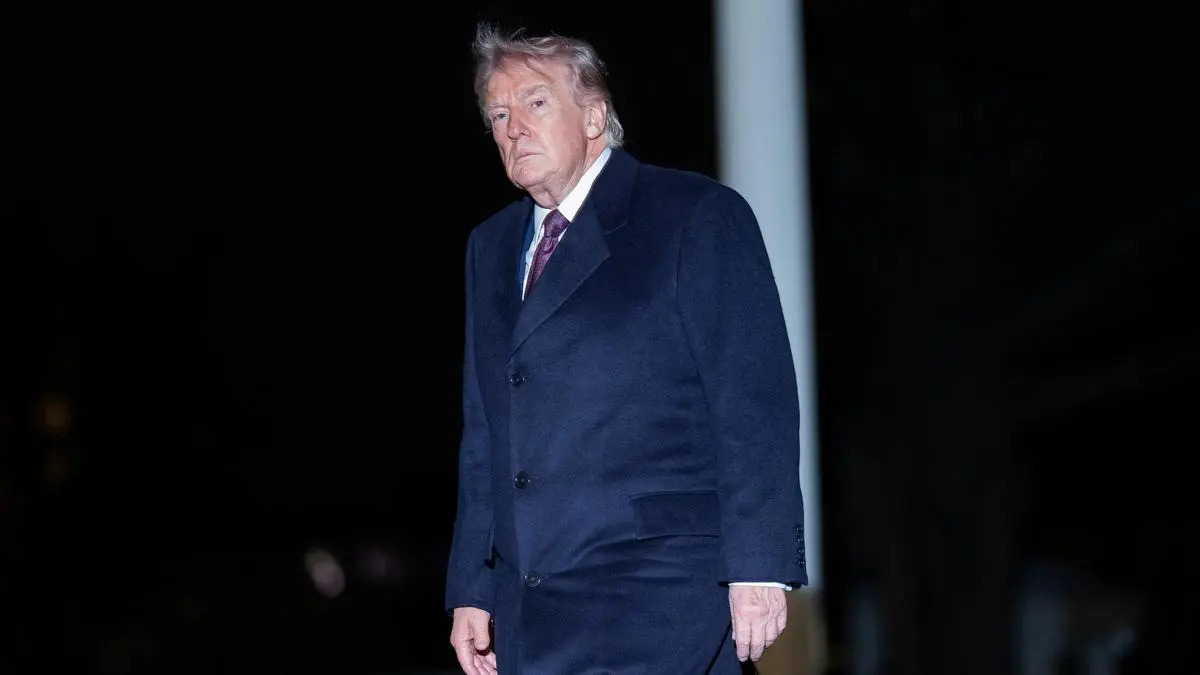
Donald Trump isn't interested in being the world's sole security guard anymore. Speaking to reporters on Air Force One this Sunday, he made it clear that if the world wants its oil to keep flowing through the Strait of Hormuz, they're going to have to send their own warships to do the heavy lifting. He's reportedly asked "about seven" countries to join a new coalition to police the waterway, a move that signals a massive shift in how the U.S. handles Middle Eastern maritime security during the current war with Iran.
The timing is anything but accidental. With gas prices at home jumping 70 cents a gallon and the 2026 elections loooming, the administration is feeling the heat. Trump’s logic is blunt: why should American taxpayers and sailors take all the risk for oil that's mostly destined for China, Japan, and Europe?
The Seven Country Demand
While Trump hasn't released a formal list of the seven nations, his recent rhetoric and historical patterns point to a specific group of "oil-dependent" powers. He specifically called out China, noting they get nearly 90% of their oil through that narrow passage. He's also leaned on the UK, France, Japan, and South Korea. These aren't just random suggestions. These are the countries whose economies would literally seize up if the Strait remained closed for a month.
It's a "pay to play" model of international relations. Trump argued that the Strait is "their own territory" in an economic sense, even if it's thousands of miles from their shores. He’s essentially told these leaders that the U.S. has already "decimated" Iran's main military infrastructure, but the remaining "nuisance" threats—sea mines and suicide drones—are now a global problem to solve.
Why the U.S. is Stepping Back
The U.S. energy landscape has changed. Decades ago, a blockage in the Persian Gulf meant lines at every gas station from Maine to California. Today, the U.S. is a net exporter of energy. Trump highlighted this, stating the U.S. gets only about 1% of its oil from the region.
But there's a catch. Oil is a global commodity. Even if the U.S. doesn't use Iranian or Saudi crude, a global shortage spikes the price for everyone. The political risk is domestic, but the operational burden is what Trump wants to offload. By demanding seven allies send their own frigates and destroyers, he’s trying to lower the "American footprint" while still keeping the global economy on life support.
The Successor to Operation Sentinel
This isn't the first time we've seen this play. Back in 2019, the administration launched the International Maritime Security Construct (IMSC), also known as Operation Sentinel. That coalition eventually pulled in the UK, Saudi Arabia, and the UAE.
The 2026 version looks much more aggressive. It’s no longer just about "surveillance" or "maritime domain awareness." This is about active policing in a hot war zone. Iran has already warned that any country joining this "American-led" fleet becomes a legitimate target for their remaining missile batteries and drone swarms.
The Logistics of a Volatile Chokepoint
The Strait of Hormuz is tiny. At its narrowest, it’s only 21 miles wide. That means ships are essentially sitting ducks for shore-based batteries.
- The Mine Threat: Iran uses "smart" mines that can be anchored to the seafloor and triggered by the specific acoustic signature of a tanker.
- The Swarm Threat: Small, fast boats equipped with rockets can overwhelm a single destroyer’s defensive systems.
- The Drone Threat: Low-cost suicide drones are harder to track than traditional fighter jets.
Will the Allies Bite?
So far, the response has been chilly. France has already signaled they aren't interested in an escalation. South Korea and Japan are in a tough spot—they need the oil, but they don't want to get dragged into a direct shooting war with Tehran.
Trump’s gamble is that these countries will eventually realize they have no choice. If the U.S. pulls its carriers back and the Strait stays closed, the economic fallout in Seoul, Tokyo, and Beijing will be catastrophic. He’s betting that their fear of a total economic collapse will outweigh their fear of Iranian retaliation.
What Happens Next
Watch the oil markets. If prices stay above $100 a barrel, expect the pressure from the White House to intensify. This isn't just about security; it's a test of the "America First" doctrine in a moment of global crisis.
If you're watching this as an investor or just a concerned driver, keep an eye on these specific moves over the next 48 hours:
- Official Navy Deployments: Look for announcements from the UK Royal Navy or the Japanese Maritime Self-Defense Force. If they move, the coalition is real.
- China's Response: If Beijing actually sends ships to work alongside the U.S., it would be a historic shift in maritime policy.
- Iranian Retaliation: Any move by the "Seven" will likely be met with a fresh round of drone tests from the Iranian coastline.
The era of the U.S. acting as the world's free maritime insurance policy is ending. Whether the rest of the world is ready to pay the premium remains to be seen.