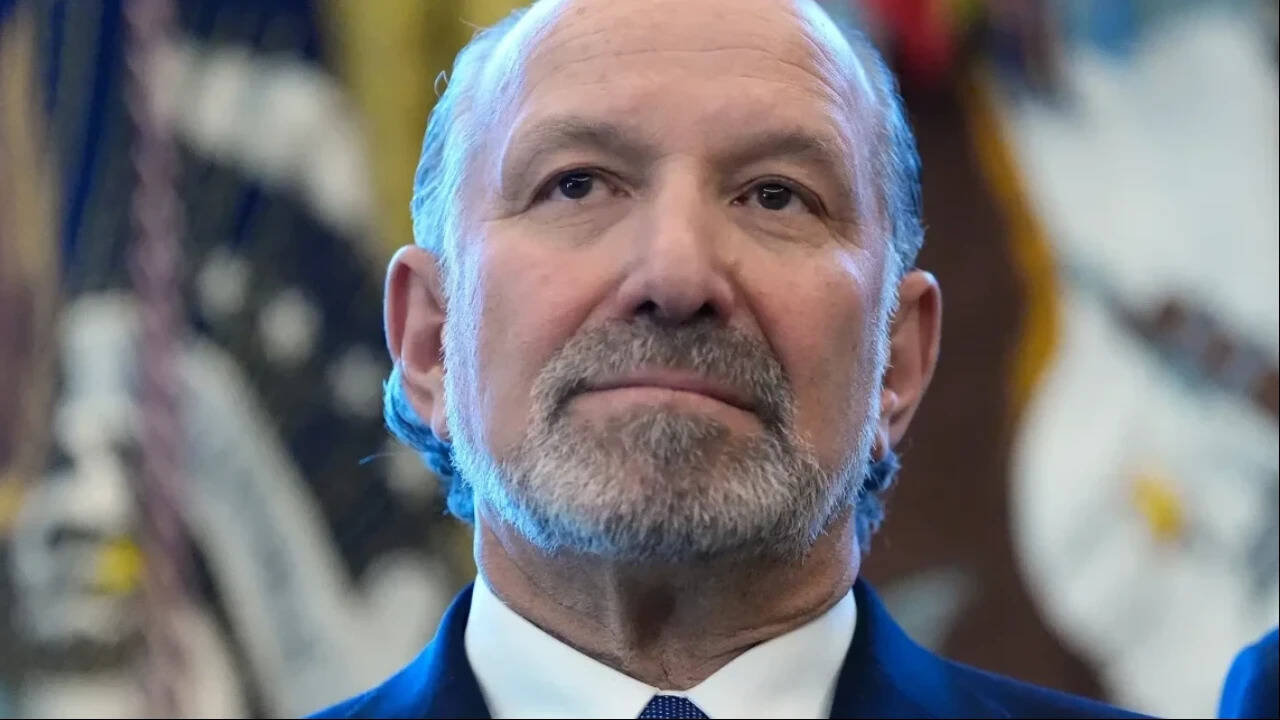
President Donald Trump has publicly backed Commerce Secretary Howard Lutnick, calling him a "natural businessman" doing a "very good job" even as bipartisan fury mounts over the Nvidia espionage scandal. Most Washington insiders expected Lutnick to take the fall after revelations that Nvidia CEO Jensen Huang had an affair with an alleged Chinese intelligence asset, while federal investigators uncovered suspected AI chip smuggling into China.
Instead of firing his longtime Wall Street ally, Trump doubled down. That move tells you everything about how this administration weighs national security intelligence against loyalty, deregulation, and stock market momentum.
What Actually Happened in the Nvidia Spy Scandal
To understand why Lutnick is in the crosshairs, you have to separate the tabloid headlines from the national security failures. The scandal exploded in November 2026 after reports revealed that Jensen Huang had a personal relationship with Alice Huang, a former executive at Singapore-based data center operator Megaspeed. U.S. intelligence agencies suspect Alice Huang of acting as a Chinese intelligence operative.
The personal affair wasn't the real problem for Washington. The real issue was Megaspeed itself.
Intelligence officials suspected Megaspeed of functioning as a cutout to smuggle advanced, export-restricted Nvidia artificial intelligence chips into mainland China. Despite receiving classified intelligence briefings about the relationship and the chip diversion risks, Lutnick's Commerce Department repeatedly delayed placing Megaspeed on the federal Entity List—a trade blacklist that blocks foreign firms from buying sensitive American technology.
Jensen Huang briefly stepped down from Nvidia amid the fallout before the company's board reinstated him days later, citing input from senior U.S. government officials. Meanwhile, the Commerce Department finally added Megaspeed to the trade blacklist on November 23, 2026, and rolled out new rules banning remote access to advanced AI chips through third-country data centers.
By then, the political damage was done. Both Democrats and Republicans wanted to know why the Commerce Department sat on its hands for months while high-end silicon allegedly flowed toward Beijing.
Why Trump Refuses to Cut Lutnick Loose
When reporters pressed Trump at the White House following his November trip to Asia, he brushed off calls for Lutnick's resignation. He praised Lutnick's business instincts and insisted he hadn't lost confidence in him.
If you've followed Trump's cabinet dynamics, this loyalty makes total sense. Several factors are keeping Lutnick in his seat right now.
Decades of Personal Loyalty
Lutnick isn't a policy wonk brought in from a think tank. He has been in Trump's orbit for decades, acting as a major fundraiser, transition co-chair, and vocal defender of Trump's tariff and trade agenda. Trump rarely abandons inner-circle loyalists under media or congressional pressure unless they publicly cross him.
Protecting the AI Bull Market
Nvidia isn't just another tech company; it's the backbone of the U.S. stock market's AI boom. After Nvidia crossed a $4 trillion market cap in 2025, any aggressive federal crackdown on the chipmaker threatened to trigger a massive sell-off. Lutnick openly treated Nvidia as a "national treasure" and maintained an open-door policy for Jensen Huang whenever the CEO wanted to push back against strict export controls. Firing Lutnick over his pro-industry stance would signal to Wall Street that regulatory hawks are taking over.
Distrust of the Intelligence Community
Trump has a long history of viewing intelligence assessments with skepticism, especially when they complicate his economic or diplomatic goals. He publicly vouched for Jensen Huang, stating the CEO "did nothing wrong". Backing Lutnick aligns with Trump's broader view that bureaucrats shouldn't kneecap American tech giants over intelligence warnings.
The Cantor Fitzgerald Conflict of Interest Nobody Can Ignore
Here is where the story moves from bad optics to serious legal exposure. Before taking the Commerce job, Lutnick led Wall Street brokerage giant Cantor Fitzgerald. Upon confirmation, he transferred ownership of the firm to trusts benefiting his adult children, including his son Brandon Lutnick, who now serves as chairman.
House Democrats—including Representatives Gregory Meeks, Jamie Raskin, and Sydney Kamlager-Dove—launched an investigation into whether Cantor Fitzgerald's financial stake in Nvidia influenced Lutnick's reluctance to penalize Megaspeed or tighten chip export rules.
Look at the numbers congressional investigators are examining:
- Before Lutnick became Commerce Secretary, Cantor Fitzgerald disclosed holding more than 3.5 million Nvidia shares.
- Over a six-month stretch while U.S. officials were debating restrictions on Megaspeed, Cantor Fitzgerald slashed its reported Nvidia holdings by nearly half, down to 1.78 million shares worth roughly $310 million at the end of March 2026.
- Critics argue that delaying enforcement actions kept Nvidia's stock buoyant while Lutnick's family firm unwound a massive position.
Both the Commerce Department and Cantor Fitzgerald have pushed back hard against these allegations. A Commerce spokesperson stated that Lutnick fully complied with his ethics agreement and divested all personal financial interests in Cantor Fitzgerald, Newmark, and BGC. Cantor Fitzgerald also told reporters that its Nvidia shareholdings primarily stemmed from client-driven equity swaps rather than proprietary bets, denying any role in federal export control decisions.
Even if Lutnick followed the letter of his ethics agreement, the timing looks terrible. In Washington, perception often drives oversight hearings just as much as hard proof.
Rare Bipartisan Anger on Capitol Hill
Usually, a Trump cabinet scandal splits Congress neatly down party lines. Not this time. China hawks in the Republican Party are just as furious as Democratic oversight leaders.
Treasury Secretary Scott Bessent publicly distanced himself from Lutnick's department, confirming in television interviews that multiple federal agencies had pushed to blacklist Megaspeed while pointing reporters toward Commerce to explain its internal delays. When your own cabinet colleagues start pointing fingers on cable news, you're in trouble.
Republican senators haven't held back either:
- Senator John Kennedy (R-La.) mocked the scandal on NBC News, calling Huang's affair "the most expensive sex since Helen of Troy," while stating he was far more interested in questioning Howard Lutnick and Scott Bessent than Nvidia's CEO.
- Senator Katie Britt (R-Ala.) demanded answers and accountability from both Huang and Lutnick over the national security implications of Nvidia's board decision and federal oversight.
- Senate Minority Leader Chuck Schumer (D-N.Y.) accused the administration of prioritizing Nvidia's business interests over national security and called for passing the AI Oversight Act and the Chip Security Act.
Reports also indicate that the Commerce Department halted an earlier inquiry into Megaspeed in August 2025 after Nvidia's general counsel contacted Commerce officials, eventually handing the matter off to the Justice Department. Lawmakers want every email, call log, and memo explaining why an active national security investigation got paused.
What Happens When Congress Calls Lutnick to Testify
Trump's public endorsement buys Lutnick time, but it won't shield him from sworn testimony. Both Lutnick and Jensen Huang are slated to face intense questioning on Capitol Hill, including a high-stakes Senate Banking Committee hearing focused on U.S. export control oversight.
And Lutnick faces a shifting political reality in January 2027. With incoming House Speaker Hakeem Jeffries pledging a sweeping investigation into both Nvidia and the Commerce Department, subpoena power is about to change hands. Once congressional committees start pulling internal Commerce Department communications and Cantor Fitzgerald trading records, Trump's vocal support could evaporate overnight—just as it has for past cabinet officials who became political liabilities.
If you're tracking how this affects tech policy, trade compliance, or semiconductor investments, watch three concrete indicators over the next few weeks:
- The December 3 Senate Banking Committee hearing: Watch how aggressively Republican committee members press Lutnick on the August 2025 Megaspeed pause. If GOP senators break ranks publicly during the hearing, Lutnick's days in the cabinet are numbered.
- Department of Justice enforcement actions: The Commerce Department transferred parts of the Megaspeed investigation to the DOJ. Any criminal indictments for export control violations will prove that intelligence warnings were valid—undercutting Lutnick's slow-walk defense.
- Bipartisan export control legislation: Keep an eye on the Chip Security Act and the AI Oversight Act. If Congress passes mandatory hardware-tracking rules or strips the Commerce Department of discretionary licensing waivers, semiconductor companies will face immediate compliance costs regardless of who runs Commerce.