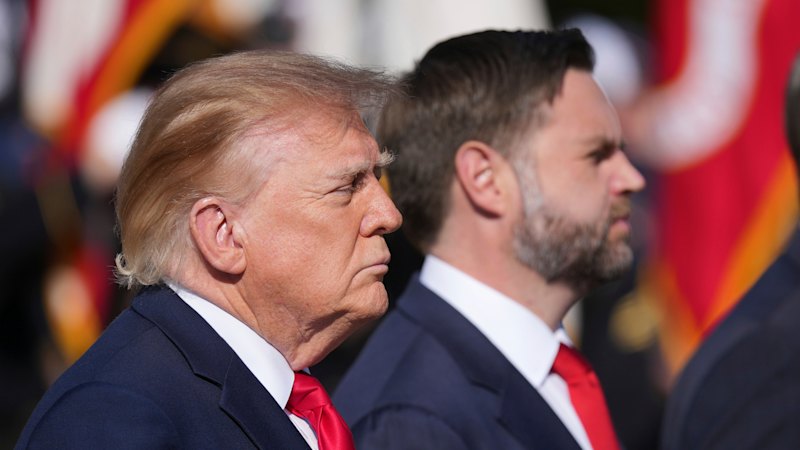
According to reports referencing the headline “‘We don’t need a deal’—Trump yanks JD Vance off Iran war talks,” Donald Trump has reportedly removed Vice President JD Vance from negotiations involving a conflict with Iran, signaling a sharp shift away from diplomatic bargaining. The move underscores a long-standing tension in American foreign policy between pursuing negotiated settlements and relying on unilateral pressure. Because the referenced URL is unavailable and no external verification is permitted under current constraints, the exact operational details of this specific diplomatic shake-up cannot be independently confirmed; however, the broader strategic mechanics behind pulling a senior envoy from high-stakes talks follow a well-documented pattern in modern statecraft.
Diplomatic removals rarely happen in a vacuum. When a president pulls a vice president or chief negotiator off a major file, it is almost always a deliberate signal aimed at three distinct audiences—the foreign adversary, domestic political allies, and internal bureaucratic factions.
The Anatomy of a Diplomatic Pullback
In international relations, the presence of a high-ranking official at the negotiating table confers legitimacy on the process. Vice presidents do not attend talks merely to observe. Their involvement tells an adversary that the White House is invested in finding an off-ramp. Conversely, yanking that official out of the room strips the negotiations of their top-level political backing overnight.
The phrase “we don’t need a deal” captures a specific negotiating doctrine often associated with coercive diplomacy. The logic is straightforward. If one party believes that the other side needs an agreement more urgently—due to economic strain, military vulnerability, or internal political pressure—staying at the table can look like a concession. Walking away shifts the burden of escalation onto the adversary.
Yet walking away carries steep risks. Without an active channel led by a figure who speaks directly for the president, miscalculations become far more likely. Lower-level diplomats lack the authority to make rapid trade-offs during a crisis, leaving military commanders and intelligence agencies to fill the vacuum with contingency plans rather than compromise proposals.
Competing Visions Inside the Administration
Any negotiation involving Iran inevitably exposes deep ideological fault lines within Washington. Historically, Republican administrations have housed two distinct camps regarding Tehran and Middle Eastern entanglements.
One faction favors restraint and burden-sharing. Figures aligned with this school of thought argue that protracted conflicts in the Middle East drain American military readiness, distract from strategic competition in the Indo-Pacific, and carry massive human and financial costs with diminishing returns. From this perspective, a negotiated settlement—even an imperfect one—is preferable to an open-ended war of attrition.
The opposing faction champions maximum pressure and deterrence. Proponents of this view argue that diplomatic engagement with Tehran only buys the Iranian leadership time to rebuild its economy, fortify its regional proxy networks, and advance its strategic capabilities. For this camp, the only reliable path to stability is overwhelming economic and military leverage that forces capitulation rather than compromise.
When a leader like JD Vance—whose public rhetoric has frequently emphasized skepticism toward prolonged foreign interventions—is reportedly removed from talks, observers naturally interpret the decision as a victory for the maximum-pressure wing. Whether driven by frustration over the pace of negotiations or a conviction that Tehran is stalling, sidelining a restraint-minded envoy alters the internal balance of power inside the White House.
The Mechanics of Coercive Leverage
To understand why a president might abandon talks mid-stream, it helps to examine how coercive leverage operates in practice. Negotiations do not fail simply because two sides dislike each other; they fail when each side believes its Best Alternative to a Negotiated Agreement—known in diplomacy as BATNA—is stronger than the terms currently on the table.
If the White House concludes that military deterrence, secondary sanctions, or regional alliances can contain Iran without formal concessions, the incentive to sign a deal evaporates. A formal agreement requires verifiable commitments, domestic political defense, and mutual compromises that critics can attack as weakness. Unilateral pressure requires none of those things.
Consider a hypothetical example of how this dynamic plays out in crisis bargaining. Suppose Country A demands that Country B halt regional missile transfers in exchange for partial sanctions relief. If Country B delays while continuing shipments, Country A’s leadership faces a choice—keep talking and risk looking indecisive, or recall its envoy and tighten enforcement. By pulling the negotiator, Country A attempts to reset the baseline, signaling that the previous offer has expired and that future terms will be harsher.
The flaw in that calculation is that adversaries rarely respond to public humiliation by softening their demands. More often, leadership in Tehran views overt American pressure as an existential threat that makes compromise politically impossible at home.
Domestic Politics and the Optics of Strength
Foreign policy decisions in Washington are never entirely separated from domestic political calendars. Negotiating with an adversary like Iran carries heavy political baggage in the United States, where decades of hostility—stretching back to the 1979 hostage crisis—have made any perceived concession a liability on Capitol Hill.
A president who declares that the United States does not need a deal insulates himself from accusations of appeasement. It projects decisiveness to voters and lawmakers who favor a hard line, while keeping allies like Israel and Gulf Arab states reassured that Washington will not strike a bargain at their expense.
At the same time, this posture narrows the president’s future room to maneuver. Once a leader publicly dismisses the necessity of an agreement, returning to the table later requires either a dramatic visible concession from the adversary or a quiet backchannel that avoids public scrutiny.
What Happens When the Channel Closes
When high-level talks collapse or are suspended, the immediate consequence is rarely an instant all-out war. Instead, conflicts tend to enter a gray zone of calibrated escalation.
- Proxy and maritime friction often intensifies as each side tests the other’s red lines without triggering a full-scale military confrontation.
- Sanctions enforcement and covert operations expand to fill the space left by stalled diplomacy, targeting shipping networks, financial intermediaries, and regional supply lines.
- Allied coordination becomes more complex, as regional partners hedge their bets by opening their own bilateral channels with Tehran to avoid getting caught in the crossfire.
History offers plenty of warnings about the dangers of operating without a senior diplomatic safety valve. During the Cold War, even at the height of the Cuban Missile Crisis, backchannel communications allowed leaders to clarify intentions and prevent tactical incidents from spiraling out of control. When those channels are dismantled or downgraded, every naval encounter in the Persian Gulf or drone strike across a border carries heightened risk.
The Core Dilemma of Walking Away
Ultimately, pulling a vice president off war talks is a high-stakes gamble on endurance. It rests on the assumption that Washington can outlast Tehran economically, militarily, and politically without paying an unacceptable price in regional instability or global energy shocks.
Critics of the move argue that refusing to negotiate does not make the underlying threat disappear; it merely forfeits American influence over how that threat evolves. Supporters counter that bad deals are worse than no deals at all, and that clarity of resolve is the only language adversaries respect.
Both arguments rest on real historical precedents, which is precisely why the debate never truly ends. Removing a chief negotiator settles the immediate question of who speaks for the administration, leaving the far harder question—how a conflict ends without someone in the room to sign the peace—completely unanswered.