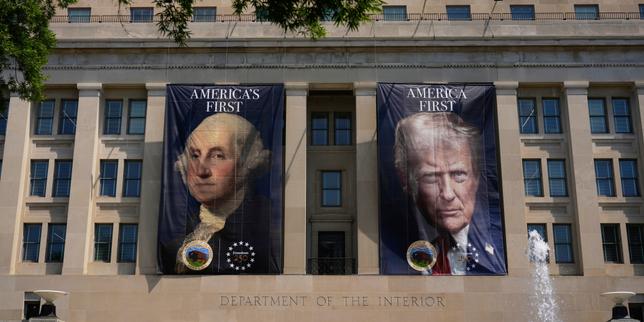
Alexander Hamilton was a brilliant architect of statecraft, but he was a terrible judge of human nature. If you read Federalist No. 68, you can feel his absolute confidence radiating off the page. He wrote that the American system guaranteed a "moral certainty" that the office of the president would never fall to anyone who wasn't preeminent for ability and virtue. Talent for low intrigue and the little arts of popularity might buy you a governorship, Hamilton scoffed, but it would never be enough to win the whole country.
He was dead wrong.
Donald Trump didn't just break the system. He exposed a foundational flaw in how the United States was built. The American republic was constructed on a gamble that structural checks and balances could handle structural problems, while the culture of the office would handle the rest. The Founders assumed that the social pressure of honor, dignity, and a shared desire for a good legacy would keep the executive branch within respectable boundaries. Trump proved that when a leader simply does not care about those unwritten rules, the entire concept of presidential exemplariness dissolves.
The Flawed Bet on Honor
We talk a lot about the Constitution as a rigid legal document. Honestly, it's more like an operating system that relies on the user not trying to smash the screen. When George Washington stepped down after two terms, he wasn't following a law. He was setting a precedent based on civic virtue. He believed, as did his peers, that a republic could only survive if its leaders possessed what they called "disinterestedness"—the ability to put the public good above personal gain.
The system was never built to survive a populist demagogue who treats the presidency as a personal shield and a family business. The Founders were terrified of monarchs, yet they accidentally built an executive office with vast, vague powers, assuming only gentlemen would ever hold the keys. They feared "factionalism" but couldn't imagine a political party completely subordinating its constitutional duties to shield a single individual from the legal consequences of his actions.
When Trump used his platform to question election results, traffic in personal abuse, and openly monetize his office through his properties, he didn't just break political norms. He shattered the exact illusion Hamilton used to sell the Constitution to a skeptical public.
When Checks and Balances Break
The standard defense of the American system is that the institutions held. People point to the courts, the legislative blockades, and the electoral process as evidence that the machine works.
But look closer. The structural guardrails didn't reform the presidency; they barely managed to contain the fallout. The House of Representatives impeached Trump twice. The Senate acquitted him twice. Why? Because the Founders assumed senators would act as independent guardians of the republic, not as loyal partisan soldiers terrified of a primary challenger.
James Madison famously wrote in Federalist No. 51 that "ambition must be made to counteract ambition." The interest of the man was supposed to be connected with the constitutional rights of the place. It sounds great in a political science textbook. In reality, modern tribal politics means the interest of the politician is connected entirely to the approval of the party boss. If the boss flouts virtue, the party follows.
The structural design failed because it relied on an internal sense of shame that no longer exists in American political life. The Founders built a cage for a rational beast, only to find that the lock could be picked from the inside by anyone willing to ignore the concept of public shame.
The Reality of Executive Power
You can't fix a cultural collapse with a legal amendment. The presidency is now an office defined by the individual, not the institution. The myth of the office transforming the man to make him more dignified is officially dead. Trump showed that the man transforms the office.
If you want to see where American democracy goes from here, stop looking at ancient parchment for salvation. The guardrails are only as strong as the people holding them.
- Accept the reality of a hyper-partisan executive. The era of the consensus president who represents the entire nation is over. Expect future leaders to mimic the aggressive, norm-busting tactics that proved successful.
- Watch the courts, not Congress. Since the legislature has largely abandoned its role as a check on executive power, the judiciary is the only real speed bump left, though its own independence remains highly vulnerable to political packing.
- Vote based on character, not just policy. The biggest lesson of the last decade is that a leader's psychological boundaries matter more than their platform. If a candidate shows you they don't respect the rules of the game, believe them the first time.
The wager made in 1787 is officially lost. The survival of the republic doesn't depend on the genius of a bunch of 18th-century lawyers who couldn't foresee the modern media environment or the depth of tribal polarization. It depends entirely on whether voters decide that virtue still matters, or if they are content to let the presidency remain a playground for low intrigue.