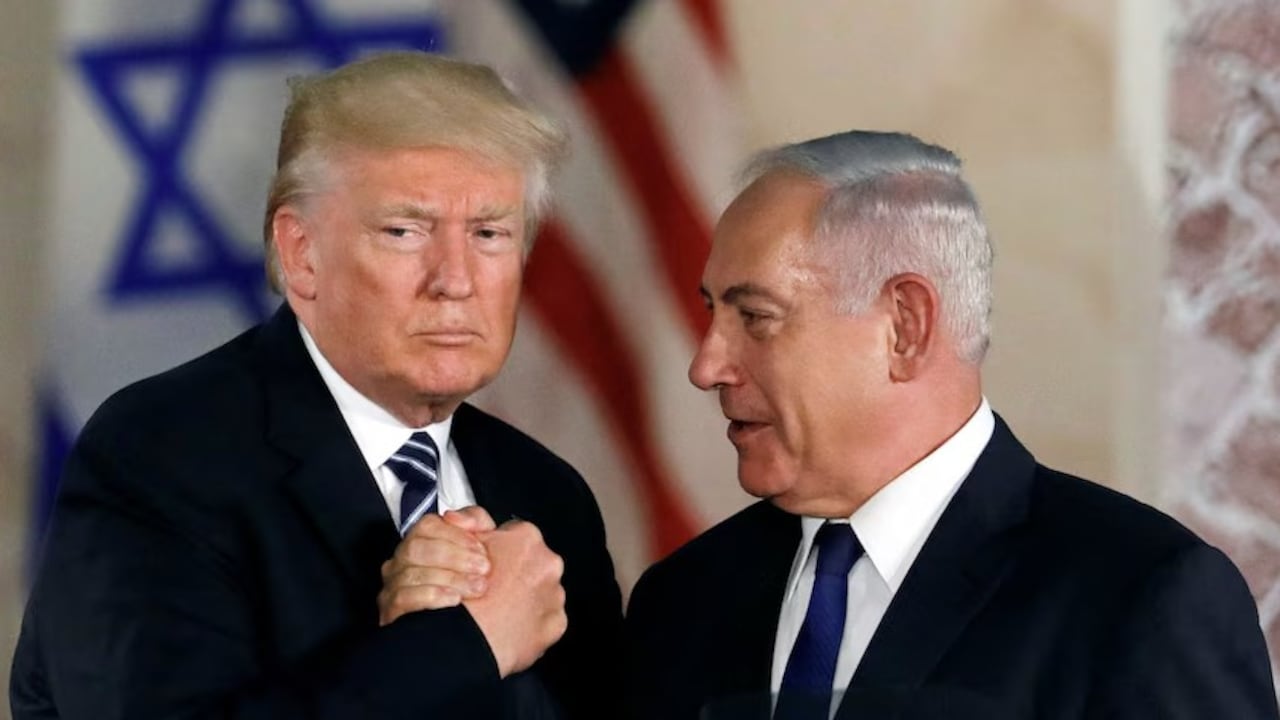
When Donald Trump and Benjamin Netanyahu launched a joint military assault on Iran on February 28, they looked like the ultimate united front. They promised a swift, crushing blow to Tehran. Trump celebrated the death of Iran's supreme leader in the opening barrage. Netanyahu boldly claimed the operation would erase Iran’s nuclear capabilities, dismantle its ballistic missiles, and spark regime change. It was supposed to be a quick, definitive victory.
Fast forward a few months, and that unified front has collapsed into a bitter, profane political standoff. The war didn't end quickly. Iran survived the initial shocks, dug in, and shut down the Strait of Hormuz. Now, the two leaders are trapped in an escalating blame game because their domestic political survival requires completely opposite outcomes. Trump needs an immediate off-ramp to fix a souring American economy before the upcoming midterm elections. Netanyahu needs an endless war to avoid a domestic political reckoning and a potential prison sentence.
The Battle of the Off-Ramp
Trump didn't sign up for a grinding war of attrition. He wanted a rapid foreign policy win, much like his previous moves in Venezuela. Instead, the prolonged closure of the Strait of Hormuz has sent global energy markets into a tailspin.
The American public has soured on the conflict. According to data published by the Brookings Institution, roughly 60% of Americans now oppose the war. Voters are feeling the pain directly at the gas pump, and Trump knows it. If gas prices stay high, the Republican party faces brutal losses in the November midterms. A Democratic victory in the House or Senate would kill Trump's domestic agenda and unleash relentless congressional oversight on his administration.
To save his party's electoral chances, Trump tasked Vice President JD Vance with leading intense negotiations for a US-Iran peace deal. The proposed framework includes an Iranian pledge to halt nuclear enrichment and negotiate terms for exporting its uranium. In exchange, Iran gets sanctions relief and a release of frozen assets. For Trump, it's a pragmatic exit strategy. He can claim he stopped a nuclear threat, reopened global shipping lanes, and brought down inflation.
Netanyahu sees that exact same deal as an absolute disaster. For over thirty years, the Israeli Prime Minister has built his entire political brand on being the only leader capable of destroying the Iranian threat. If he accepts a deal that leaves Iran's political structure intact and its proxy networks active, his political career is over.
The Lebanon Fissure and the Secret Phone Calls
The friction between Washington and Jerusalem isn't just theoretical. It is playing out in real-time through violent military escalations and explosive private arguments. The biggest flashpoint right now is Lebanon.
Iran made a total ceasefire in Lebanon a non-negotiable requirement for any peace deal with the US. Trump accepted that condition to secure his exit. Netanyahu completely rejects it. The Israeli military has occupied large swaths of southern Lebanon, determined to fight until Hezbollah is entirely eliminated.
When Israel launched a heavy strike on a Hezbollah stronghold in Beirut, it directly disrupted Trump's delicate diplomatic talks. Iran retaliated by firing a massive salvo of ballistic missiles into Israel, hitting targets near Arad and Dimona, wounding nearly 200 people. Trump was furious that Netanyahu's actions shattered a fragile ceasefire and endangered American negotiations.
The anger boiled over into the open when details leaked from a blistering phone call between the two leaders. Trump didn't hold back. Reports confirmed he called Netanyahu "crazy" and bluntly told him, "You'd be in prison if it weren't for me. Everybody hates you now."
Publicly, Trump has shifted from a supportive ally to a dominant supervisor. In a recent interview with the Financial Times, Trump made the power dynamic crystal clear. He stated that Netanyahu will have no choice but to accept whatever deal the US finalizes. "I call the shots," Trump said. "He doesn't call the shots."
Netanyahu’s Local Trap
Netanyahu is cornered, and a cornered politician is dangerous. His reputation as "Mr. Security" was already severely damaged by the catastrophic failure of the October 7, 2023, Hamas attacks. More than two years later, Hamas still controls parts of Gaza, Hezbollah continues to fire rockets, and Iran's leadership remains functional despite heavy losses.
Political analyst Akiva Eldar described the situation on Al Jazeera as an "abyss" between Netanyahu’s promises and reality. Netanyahu told the Israeli public that this war would bring total victory and regime change. Instead, Israelis are dealing with constant missile threats, economic displacement, and growing international isolation.
Netanyahu faces mandatory national elections by October. He trails heavily in the polls. If his government falls, his judicial immunity disappears, leaving him fully exposed to ongoing corruption trials that could land him behind bars. He cannot afford peace because peace means an election, and an election means political ruin.
To survive domestically, Netanyahu has to project absolute defiance. He released a statement insisting that as long as he is prime minister, Iran will never get nuclear weapons, trying to frame the potential US deal as an Israeli achievement. But his core base is growing restless. Right-wing factions in Israel are furious that their military strategy is being micromanaged by a foreign power. They feel Netanyahu has turned Israel into an American vassal state.
The Broken Alliance
The original plan relied on a shared illusion: that a massive display of military force would cause the Iranian government to fold instantly. It didn't. Now that the war requires deep economic sacrifices and long-term strategic patience, the fundamental differences between American and Israeli national interests are exposed.
Trump wants to insulate the US economy, protect his poll numbers, and stick to his "no new wars" brand. Netanyahu wants to prolong the fighting to delay his political demise. This isn't a minor tactical disagreement. It is a fundamental clash of survival strategies. Trump is holding the financial and military keys, and he has shown he is entirely willing to leave Netanyahu isolated if the Israeli leader keeps disrupting the path to a deal.
To protect your investments and understand where this conflict goes next, watch the global energy markets and shipping data rather than the political speeches. Watch the status of the Strait of Hormuz. If oil tankers begin moving freely through the strait, it means Trump’s pressure has worked, a US-Iran deal is locked in, and Netanyahu will be forced to face his electorate—and his judges—alone.
This detailed breakdown of the geopolitical rift explains how the private clash between Trump and Netanyahu is actively reshaping the military landscape of the Middle East.


