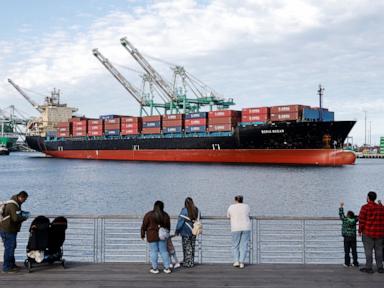
Don't expect the global trade war to cool down anytime soon. Just when businesses thought they had a breather after the Supreme Court threw out the White House's initial sweeping trade duties, the administration pivoted. Late Tuesday, U.S. Trade Representative Jamieson Greer rolled out a massive new proposal. It hits 60 different trading partners with fresh import taxes ranging from 10% to 12.5%.
The legal hook this time isn't a broad national emergency. Instead, Washington is targeting a specific vulnerability: forced labor.
If you run a business relying on global supply chains, you need to understand that this isn't just political theater. It's a calculated legal workaround designed to resurrect a sweeping border tax wall that the courts recently tore down. The administration claims these countries aren't doing enough to stop forced labor imports, which allegedly forces American workers to compete on an unfair playing field.
The Forced Labor Pivot Explained Simply
This new trade strategy is highly tactical. Back in February 2026, the U.S. Supreme Court delivered a major blow to the administration. In a 6-3 decision, the court ruled that the International Emergency Economic Powers Act didn't give the president the blanket authority to levy universal border taxes. That decision forced the government to prepare billions of dollars in refunds for hundreds of thousands of businesses.
To patch the hole, the administration temporarily used Section 122 of the Trade Act of 1974 to keep a 10% tax in place. But that measure carries a strict 150-day expiration date, meaning it's set to lapse this July.
Enter Section 301 of the same 1974 trade law.
By launching a massive investigation into 60 economies and linking the issue to human rights and forced labor enforcement, the administration found a slower but legally sturdier path. They aren't relying on temporary emergency powers anymore. They're building a case based on unfair trade practices.
The targeted nations are split into two distinct penalty tiers.
The 10% Penalty Tier
A 10% import duty applies to 16 trading partners that Washington admits are taking some steps or making real commitments to combat forced labor, even if they're falling short on actual enforcement. This group includes:
- The United Kingdom
- Canada
- Mexico
- The European Union
- Taiwan
- Argentina
The 12.5% Penalty Tier
A steeper 12.5% rate hits the remaining 44 economies. The trade office explicitly states these nations have completely failed to implement effective import prohibitions against forced labor. This heavier tax hits massive global supply hubs:
- China
- India
- Japan
- South Korea
- Brazil
- Australia
What Actually Gets Hit and What Escapes
A common mistake is assuming every single item crossing the border gets taxed the same way. The administration carved out specific exemptions to prevent immediate price spikes on daily essentials like groceries and fuel.
The list of goods safe from these new Section 301 taxes includes beef, tomatoes, coffee, petroleum products, and critical pharmaceuticals.
But everything else is fair game. Industrial machinery, electronics, consumer electronics, and auto parts face the new duties. Apparel and textiles get a bizarrely specific workaround. The trade office is floating a quota system where clothing can enter the U.S. at a reduced rate, but only if the exporting country imports an equivalent amount of American-made textiles.
European officials are furious. Bernd Lange, chair of the European Parliament’s Committee on International Trade, openly called the findings absurd. He argued that Washington is simply desperate for a new legal justification to keep its protectionist agenda alive. The EU pointed out that its own forced labor import ban is already written into law, though it doesn't formally kick in until late 2027.
Practical Action Steps for Supply Chains
The public comment period is opening up immediately. Businesses can't afford to sit back and wait to see if these proposals stick. If your profit margins depend on goods from any of the 60 targeted nations, take these steps now.
- Audit Your Supplier Documentation: You need ironclad proof of compliance regarding labor standards. Even if these taxes take months to formalize, the administrative burden on tracking supply origins will skyrocket.
- Calculate the Tier Differential: Map out how a 10% or 12.5% cost spike changes your unit economics. If you shift sourcing from a 12.5% country like India to a 10% country like Mexico, does the math still work after factoring in shipping costs?
- File Public Comments: Work through industry trade groups to file formal complaints during the upcoming comment window. Highlighting specific product shortages or severe economic harm can sometimes force the trade office to grant temporary exclusions.
This isn't a minor policy hiccup. It's the new blueprint for American trade enforcement, and the legal battle lines are officially redrawn.