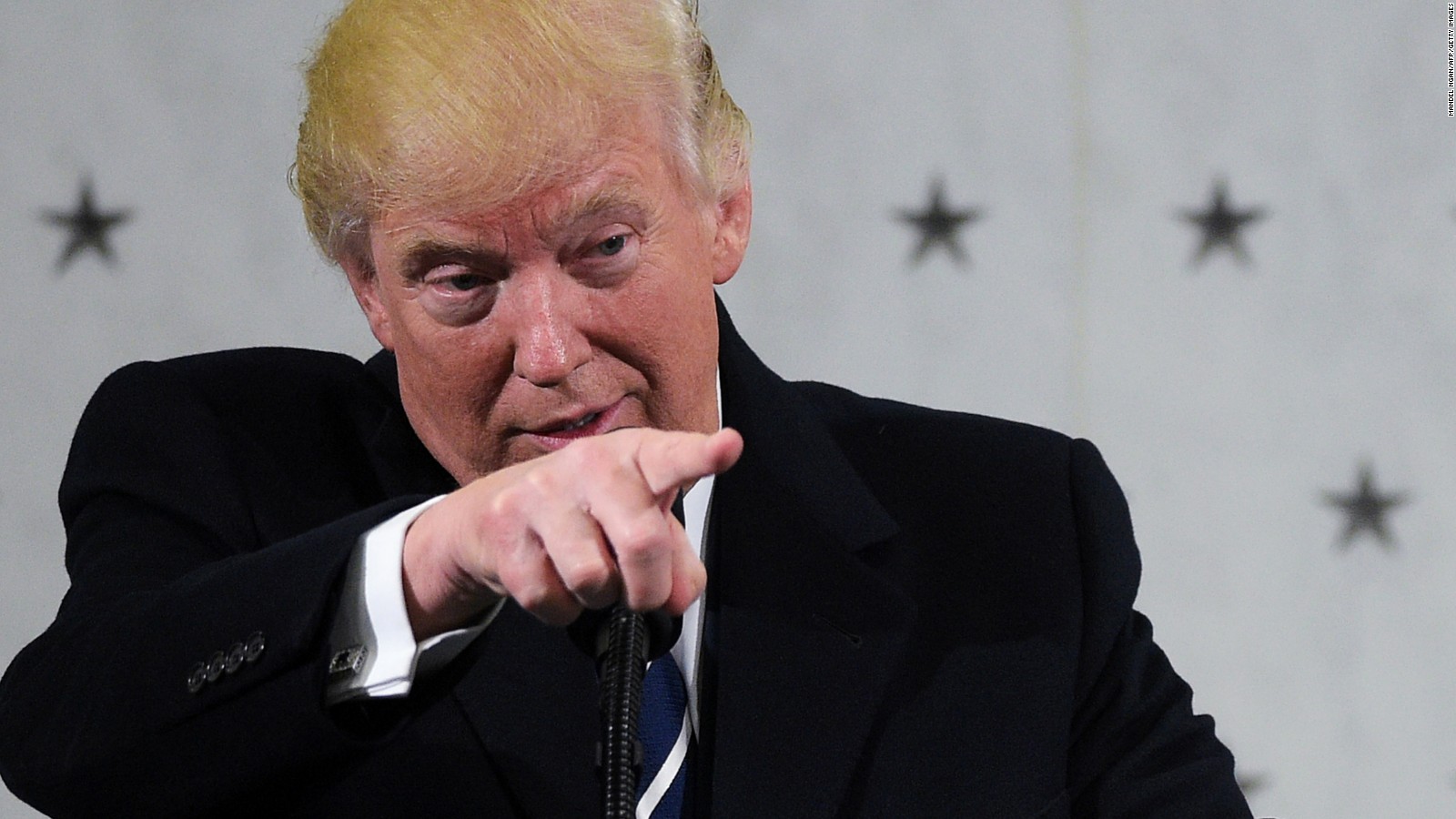
Donald Trump just dropped a claim that feels like it belongs in a spy thriller rather than a diplomatic briefing. He says the CIA told him Iran’s new Supreme Leader is gay. It sounds wild. It sounds like classic Trump. But when the former president and current candidate starts talking about intelligence briefings involving the personal lives of Middle Eastern heads of state, the world stops to listen. Whether you believe the intel or think it’s a calculated jab, the implications for U.S.-Iran relations are massive.
We need to look at what was actually said. During a recent interview, Trump didn't just hint at this. He was blunt. He recounted a supposed briefing where intelligence officials laid out the private life of the man now leading the Islamic Republic. "They did say that," Trump remarked when pushed on the specific detail about the leader's sexuality. It’s the kind of statement that triggers a firestorm in Tehran and a collective forehead-rub in Langley.
Why This Isn't Just Typical Campaign Rhetoric
You might think this is just another example of Trump being Trump. But there’s a deeper layer here. In the context of Iranian politics, an accusation like this isn't just an insult. It’s a direct attack on the theological legitimacy of the regime. The Islamic Republic of Iran operates under a strict, fundamentalist interpretation of Sharia law. They've historically been brutal toward the LGBTQ+ community. By claiming the man at the top doesn't follow the very laws he enforces, Trump is attempting to stir internal dissent.
It’s a move straight out of the psychological warfare playbook. If the Iranian public—or more importantly, the hardline military factions—start doubting the moral "purity" of their leader, the entire power structure begins to wobble. Trump knows this. He’s spent years trying to squeeze the Iranian regime through "maximum pressure" campaigns. This latest claim is just a different kind of pressure. It’s personal. It’s messy. And it’s incredibly volatile.
The CIA Intelligence Gap
We have to ask if the CIA actually told him this. Intelligence agencies collect all sorts of "human interest" data on foreign leaders. They look for leverage. They look for blackmail material. They look for anything that can predict how a leader will act under stress. Is it possible the CIA has a file on the Supreme Leader’s private life? Absolutely. Is it likely they would want a former president talking about it on a podcast? Probably not.
The CIA generally keeps "Source and Methods" under lock and key. When a politician reveals specific details from a briefing, it can put informants at risk. If there’s a mole in Tehran providing this kind of intimate data, they're likely looking over their shoulder right now. This is why the intelligence community usually reacts to these outbursts with a mix of silence and sheer panic. They don't want the world knowing what they know, or how they know it.
A Regime Built on Irony and Secrecy
The Iranian leadership is notoriously opaque. We rarely get a glimpse behind the curtain of the Assembly of Experts or the inner circle of the Supreme Leader. When someone like Trump claims to have the "inside scoop," it fills a vacuum. People are hungry for information about a regime that remains one of the most closed-off societies on earth.
Iran’s response was predictably furious. They view these comments as "Western decadence" trying to soil the reputation of their holy leaders. But the irony is thick. For a government that spends so much energy policing the private lives of its citizens, the mere suggestion that their leader might have a secret life is terrifying to them. It forces them on the defensive. They have to spend time and political capital refuting rumors instead of planning their next geopolitical move.
How This Changes the 2026 Diplomatic Map
We’re in 2026. The Middle East is a powder keg. Every word from a major U.S. political figure carries the weight of a potential drone strike or a new set of sanctions. If Trump returns to the White House, this isn't just locker room talk. It becomes the baseline for how the U.S. interacts with Iran.
Think about the "Art of the Deal" applied to nuclear physics. If Trump believes he has "dirt" on the Supreme Leader, he’ll use it as a bargaining chip. He doesn't care about traditional diplomacy. He cares about results. If he thinks he can bully the Iranian leadership by threatening to expose their secrets, he’ll do it. It’s a high-stakes game of chicken where the prize is regional stability and the penalty is potential war.
The Reality of Intelligence Briefings
I’ve looked at how these briefings work. They aren't always dry reports about centrifuge counts. They include "leadership profiles." These profiles cover health, mental state, and personal habits. If an intel officer mentioned a rumor about the Leader's sexuality, it was likely buried in a 50-page document. Trump has a habit of picking out the most sensational detail and running with it.
That doesn’t mean the detail is false. It just means it’s been weaponized. In the world of high-level espionage, truth is often less important than perception. If the world perceives the Supreme Leader as vulnerable or "compromised," his power diminishes. Trump is betting that by saying the quiet part out loud, he’s already won the first round of the psychological fight.
What Happens When the Cameras Turn Off
The fallout from these comments will last longer than the news cycle. Hardliners in Iran will likely use this to justify even harsher crackdowns on their own people. They’ll frame any internal opposition as "Western-backed agents" trying to spread lies. Meanwhile, back in Washington, the intelligence community will be busy trying to figure out how much damage has been done to their networks in the Middle East.
You have to wonder if this was a slip of the tongue or a calculated strike. With Trump, it’s usually a bit of both. He knows what gets headlines. He knows what gets under the skin of his enemies. By dropping this "bombshell," he’s ensured that every time the new Supreme Leader makes a public appearance, a segment of the audience—both in the West and in Iran—will be thinking about what Trump said.
The Strategy of Chaos
This isn't just about one man’s personal life. It’s about the strategy of chaos. By injecting personal scandals into the highest levels of international relations, Trump changes the rules. He moves the goalposts. Suddenly, we aren't talking about the Joint Comprehensive Plan of Action (JCPOA) or enrichment levels. We're talking about the private life of a cleric.
It’s messy. It’s unprofessional by traditional standards. But it’s effective at dominating the conversation. The Iranian regime thrives on a certain aura of invincibility and holiness. Trump just threw a bucket of mud at that image. You don’t have to like the man to see that he’s playing a very specific, very aggressive game of geopolitical chess.
Moving Forward in a World of Leaks
If you're trying to keep up with U.S.-Iran relations, you can't just look at the official State Department cables anymore. You have to watch the interviews. You have to follow the leaks. The line between "classified intel" and "campaign trail gossip" has blurred into nonexistence.
The next step for anyone watching this space is to monitor the internal reactions within Iran. Look for shifts in the Islamic Revolutionary Guard Corps (IRGC) rhetoric. Watch for any unusual movements within the Iranian clergy. If this "intel" has any legs, the cracks will start to show in the regime’s support base. If it’s just a rumor, the regime will still be forced to tighten its grip, which often leads to the very instability they’re trying to avoid.
Pay attention to the CIA’s non-denials. In the world of intelligence, what they don't say is often more important than what they do. If they don't move to aggressively debunk the claim, it suggests there might be a kernel of truth—or at least a very interesting file—sitting in a basement in Virginia. Keep your eyes on the official Iranian state media. Their level of outrage is usually a pretty good barometer for how close to the bone a comment actually cut. The more they scream, the more likely it is that someone, somewhere, is worried about the truth.