The press corps is hyperventilating over a soundbite again.
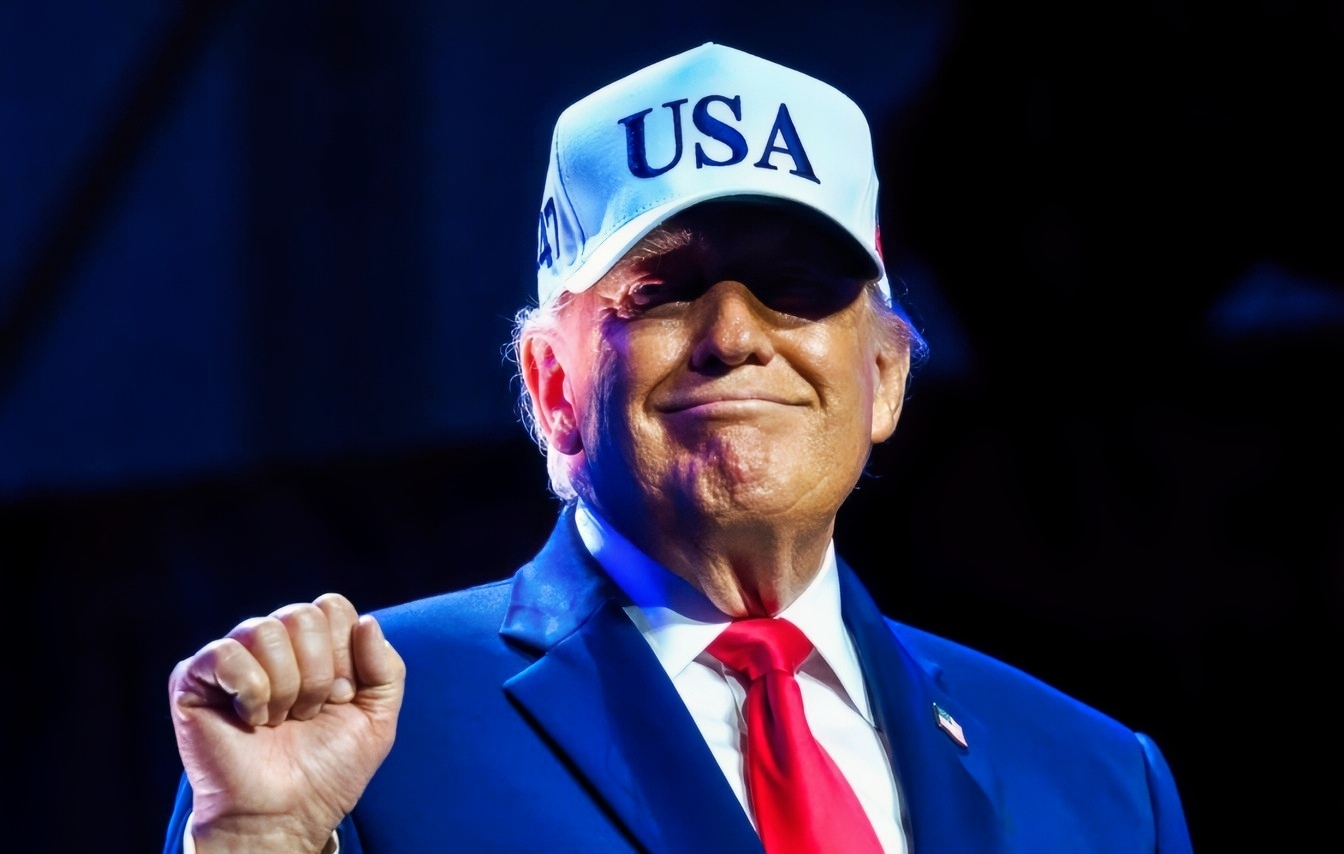
Donald Trump snaps at a reporter, tells him to "put yourself in shape, you look like hell," and announces he is scrapping traditional midterm rallies. Immediately, the predictable echo chamber fires up. Pundits from New York to New Delhi push the exact same lazy consensus: Trump is exhausted, his campaign is flailing, and he is lashing out at the press to distract from a dying ground game. Meanwhile, you can read similar stories here: Inside Beijing's Slow-Motion Squeeze on the South China Sea.
They are completely wrong.
They are looking at a 2026 media ecosystem through a 2016 lens. By obsessing over a viral insult and mourning the death of the airport hangar rally, mainstream outlets are missing the ruthless, cold-blooded math driving the decision. Trump is not retreating. He is reallocating capital. To understand the full picture, we recommend the recent report by NPR.
The Myth of the Mega-Rally ROI
I have spent years watching political campaigns and major brands torch tens of millions of dollars on vanity metrics. The massive arena rally is the ultimate political vanity metric.
To an outsider, a crowd of 20,000 screaming supporters looks like unstoppable momentum. To anyone who actually understands voter acquisition and campaign finance, it is a logistical money pit. Securing a venue, paying for local law enforcement overtime, flying in advance teams, setting up staging, and managing liability costs a fortune. Worse, it requires days of travel and physical recovery for the principal.
And who shows up to these events?
The exact same people who were already going to vote for him.
In political science, this is known as the mobilization versus persuasion problem. As campaign strategists and researchers like Lynn Vavreck and John Sides have documented across multiple election cycles, large-scale campaign events overwhelmingly attract high-propensity partisans. You are preaching to the choir, renting an expensive cathedral to do it, and burning through your candidate's most finite resource: time.
When News18 and other outlets frame the cancellation of midterm rallies as a sign of weakness, they reveal their own bias. The press loves rallies because rallies make their jobs easy. They get a predetermined time, a press pen, free catering, and a guaranteed two-hour monologue to clip for the evening broadcast. Take away the circus, and the reporters actually have to work for a story.
Weaponizing the Press Pen
Look closer at the exchange that triggered the headlines. Trump did not just randomly insult a journalist out of thin air. He turned a routine press interaction into a high-efficiency distribution engine.
Let's break down the mechanics of modern attention economics:
- Zero Production Cost: A tarmac gaggle or a brief press availability costs nothing to stage.
- Algorithmic Velocity: Social media platforms—particularly X, TikTok, and YouTube Shorts—do not reward two-hour policy speeches. They reward friction. A sharp, personal jab at a member of the press generates immediate outrage from critics and immediate glee from supporters.
- Earned Media Multiplication: Every outlet that runs a pearl-clutching headline about Trump's "cruelty" or "erratic behavior" is actively distributing his face and his framing to millions of eyeballs for free.
Think about the asymmetry here. If Trump holds a rally in Ohio, maybe three local stations cover it live and one cable network cuts in for ten minutes. If Trump tells a reporter he "looks like hell" while announcing a strategic pivot, global news organizations write entire articles dissecting every syllable.
He got ten times the reach for one-hundredth of the effort. That is not a candidate losing his touch. That is an operator who understands that outrage is the cheapest fuel on the internet.
Why Midterm Rallies Always Fail
Even if you ignore the financial and algorithmic realities, historical data proves that presidential midterm rallies are notoriously ineffective at transferring coattails to down-ballot candidates.
Look at the track record. Barack Obama drew historic crowds in 2008, yet his aggressive campaigning in 2010 could not stop a historic wave that cost Democrats 63 House seats. Trump himself held dozens of frantic rallies in the final weeks of the 2018 midterms, and Republicans still lost the House by 41 seats. Joe Biden tried targeted appearances in 2022, and his party still surrendered the lower chamber.
The reason is simple. Midterm elections are referendums, not choices.
Voters who show up in non-presidential years are older, wealthier, and significantly more informed than the general electorate. They are not swayed by fireworks, loud music, or a two-hour greatest-hits speech from a president whose name is not even on the ballot. In fact, high-profile presidential rallies in swing districts often backfire. They nationalize local races, energizing opposition voters who might otherwise have stayed home on a Tuesday in November.
By pulling the plug on the midterm rally circuit, Trump is avoiding a trap that has swallowed nearly every modern president. Instead of dragging his polarizing brand into vulnerable suburban districts where swing voters are exhausted by national drama, he is stepping back and letting local candidates run localized races.
The Real Playbook Behind the Curtain
If he is not doing rallies, what is the actual strategy? If you follow the money and the media bookings, the pivot becomes obvious.
- Long-Form Podcast Saturation: Why stand on a stage for two hours talking to 15,000 people in Pennsylvania when you can sit in a leather chair for three hours on a top podcast and reach 15 million young men across every swing state simultaneously? Long-form audio builds parasocial trust that a stadium speech can never replicate.
- Hyper-Targeted Micro-Events: Smaller, invitation-only roundtables with business owners, union leaders, or specific demographic groups allow for controlled visuals and direct local press hits without the massive security footprint.
- Digital Direct-to-Voter Infrastructure: Campaign funds saved from aviation fuel and arena rentals can be poured directly into peer-to-peer texting, relational organizing apps, and targeted digital ad buys aimed strictly at low-propensity voters who actually need a nudge to return a mail-in ballot.
Let's be honest about the risks of this approach. There is a very real downside to abandoning the big stage.
Rallies serve as a vital data-harvesting operation. Every person who registers for a free ticket hands over their name, phone number, email address, and zip code. Campaigns use that intake funnel to build voter files and recruit local volunteers. Without rallies, the campaign has to work much harder—and pay much higher customer acquisition costs online—to capture that first-party data. Furthermore, depriving the core base of live, communal spectacles risks dampening enthusiasm among the hardcore loyalists who usually knock on doors.
It is a calculated gamble. You trade base enthusiasm and easy data capture for message discipline, physical preservation, and massive digital reach.
Stop Asking the Wrong Question
Whenever a political figure breaks a long-standing tradition, the media asks, "What is wrong with them?"
That is the wrong question. The right question is, "What changed in the environment that made the old tradition obsolete?"
The traditional political rally was built for an era of three television networks and regional newspapers. You needed a physical spectacle to force local reporters to show up with heavy cameras and beam your message into living rooms at six o'clock.
That world is dead. We live in a fragmented, hyper-personalized media environment where a five-second clip filmed on an iPhone from ten feet away carries more cultural weight than a multimillion-dollar convention speech.
Reporters hate this shift because it renders their gatekeeping power irrelevant. They want Trump back behind a podium, reading off a teleprompter in a rented arena, playing by the old rules so they can write the same tired stories they have written for a decade.
When a reporter pushes that outdated narrative and gets told to "put yourself in shape," it is not just a personal insult. It is a blunt reminder that the old rules of political coverage are out of shape, overweight, and completely unfit for the modern fight.
The rallies are gone because the math stopped working. The press just hasn't caught up to the spreadsheet yet.