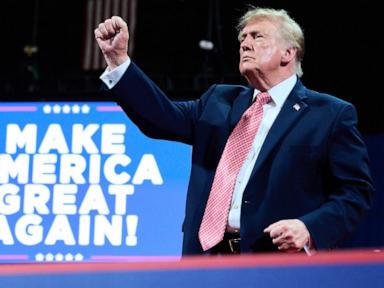
President Donald Trump didn't just campaign in Kansas on October 19, 2026 to save Sen. Roger Marshall—he handed Democratic challenger Adam Hamilton a giant megaphone right as the Kansas Senate race tightened.
A basic rally recap misses the real story. By parachuting into Park City, calling Hamilton a "disgrace" and a "lunatic," and turning a local affordability fight into a national culture-war brawl, Trump turned a tough midterm into an existential test of his own political reach. And two weeks later, on November 3, 2026, Hamilton snapped a 94-year Democratic losing streak in Kansas U.S. Senate races.
Why the Kansas Senate Race Tightened Before Rally Night
Honestly, nobody expected Kansas to be a nail-biter at the start of the cycle. Kansas hasn't elected a Democrat to the U.S. Senate since 1932, back during the Great Depression and Dust Bowl.
Yet by mid-October, the math looked ugly for incumbent Roger Marshall, a one-term Republican and former physician. In the third quarter of 2026, Adam Hamilton—the 62-year-old founder of the 24,000-member Church of the Resurrection in the Kansas City area—reportedly pulled in $11 million while Marshall brought in just $800,000. That fundraising gap wasn't a fluke. It reflected real kitchen-table anger across rural counties and suburbs alike.
Farmers were getting squeezed from multiple sides. Fallout from the conflict with Iran pushed diesel prices near or above $6 a gallon during harvest season. Cattle ranchers bristled at administration plans to lower import tariffs to bring down beef prices, while aggressive immigration enforcement left agricultural crews shorthanded. Even moderate Republicans were jumping ship—former GOP Kansas Gov. Bill Graves crossed party lines to endorse Hamilton, pointing to partisan gridlock and division.
Pocketbook Pain Versus National Rhetoric
When voters feel pinched at the fuel pump and the grocery store, insults rarely change their math. Marshall and Trump tried to paint Hamilton—a former Republican and megachurch pastor—as "too woke for Kansas" and a "radical left" wolf in moderate clothing.
Hamilton's campaign kept hammering a simpler line: rising gas and diesel costs, healthcare affordability, and Washington dysfunction. The contrast was stark. One side wanted to argue about cultural grievances and national boogeymen; the other kept pointing to the price of running a farm or paying a medical bill.
What Happened Inside the Park City Rally
Inside Heartland Credit Union Arena near Wichita, the evening felt less like a disciplined Senate rescue mission and more like a classic Trump barnstormer. Protesters interrupted the speech multiple times, rock musician Ted Nugent and local GOP candidates warmed up the crowd, and Trump spent the opening stretch ranging far beyond Kansas borders.
When he turned to the race in front of him, Trump went hard on two fronts: attacking Hamilton personally and defending Marshall's baggage. Voters and reporters had scrutinized Marshall's past as a physician in central Kansas who sued patients over unpaid medical debt, resulting in arrest warrants for some debtors. Trump brushed that off as a "bum rap," blaming judges and state law rather than the candidate.
To rally the base, Trump rolled out familiar promises and warnings:
- He announced an $8 billion support program aimed at helping farmers offset steep harvest-season diesel costs.
- He repeated his pitch of $5,000 in cash for every U.S. adult if Republicans held both chambers of Congress.
- He warned that a Democratic takeover would spark economic ruin and civil unrest, while leaning heavily into combative attacks on immigration and Muslim candidates and lawmakers in other states.
A Common Mistake Candidates Make With Presidential Coattails
Here's what campaigns get wrong all the time: assuming a presidential rally automatically transfers enthusiasm to a down-ballot or Senate race. Crowds cheer for the headliner. That doesn't mean persuadable independents or frustrated farmers walk out convinced their local problems are solved.
By nationalizing a Kansas Senate contest, Trump raised the stakes—and put his own presidency on the ballot in a state that usually votes safely Republican. If voters already felt sour about fuel costs, tariffs, or immigration raids, bringing the president front and center gave them a direct target for their frustration.
Why Attacking Hamilton Ran Into Headwinds in Kansas
Attacking a pastor with a massive local congregation and a former-Republican background is tricky terrain. Labeling Hamilton a "lunatic" or "too woke" clashed with how many Kansans saw him—as a familiar civic and religious figure in the state.
At the same time, cash poured into the state on a scale Kansas had never seen. Total spending on the Senate race reached roughly $110 million, a staggering sum for a state with relatively low media market costs. When a race gets that loud and expensive, negative attacks hit diminishing returns fast because voters tune out slogans and focus on who seems grounded.
What the Data and Election Outcome Show
Polls and pundits often debate whether late-October rallies move needles or just energize people who already planned to vote. In Kansas, the broader midterm environment pointed toward a tough night for incumbents tied to cost-of-living and trade frustrations.
On November 3, 2026, Hamilton defeated Marshall, ending the country's longest active Senate losing streak for a state party at 94 years. That same election night, Democrat Cindy Holscher won the Kansas governor's race after campaigning on a moratorium against data-center development, showing how strongly voters in the state reacted to local economic and infrastructure anxieties.
How to Read Similar Races Without Getting Fooled
If you follow midterm or special elections, a few practical habits keep you from falling for surface-level headlines:
- Follow the money early. Third-quarter fundraising numbers like Hamilton's $11 million haul versus Marshall's $800,000 often signal grassroots momentum before polls catch up.
- Watch local economic flashpoints. A single input—like $6 diesel during harvest or tariff shifts hitting cattle producers—can outweigh months of national talking points.
- Separate rally energy from swing-voter persuasion. A packed arena shows base loyalty, not necessarily growth among independent or crossover voters.
- Track crossover endorsements. When a former governor from the opposing party backs a challenger, pay attention to what coalition is forming behind closed doors.
In the end, the Kansas Senate race proved that even deep-red ground isn't immune when cost pressures collide with a candidate who speaks directly to everyday voters.