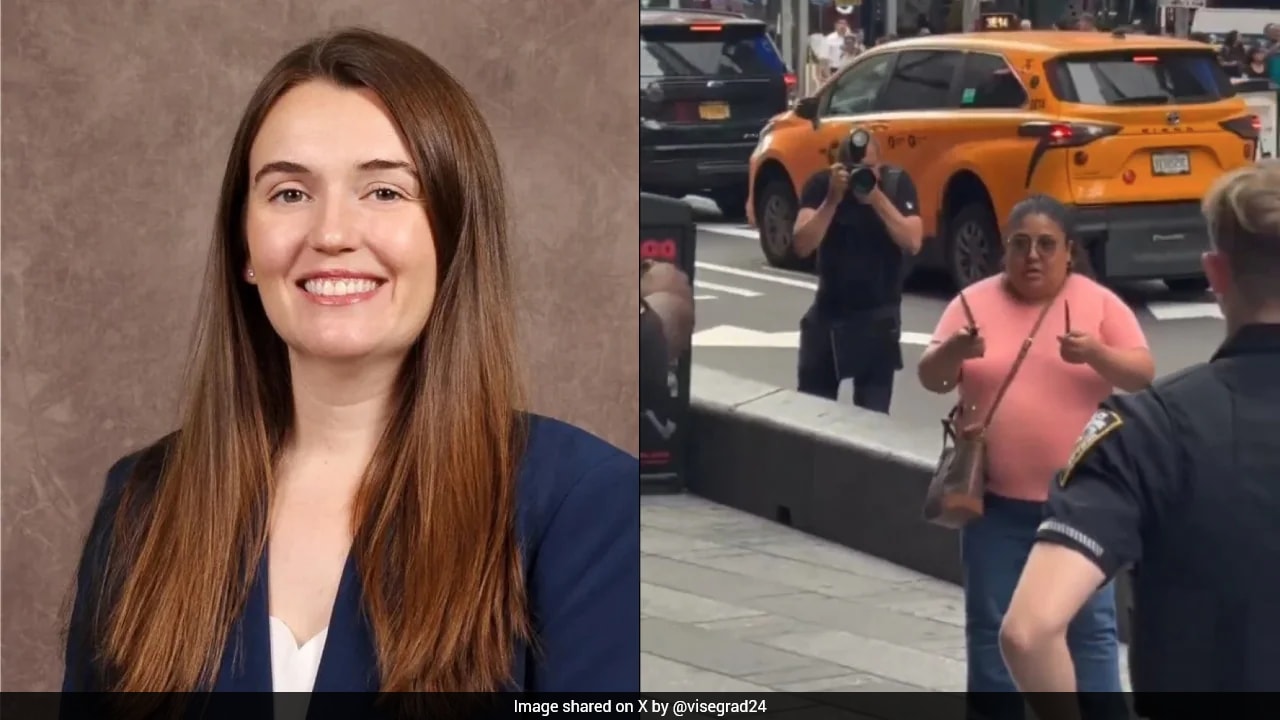
The media coverage following the killing of a Bank of America vice president in Times Square relied on a comforting, intellectually bankrupt narrative. We were told it was completely random. We were told it could have happened to anyone. We were told that urban violence is an unpredictable act of nature, like a lightning strike or a sudden cloudburst, defying human agency or systemic prevention.
This framing is worse than inaccurate. It is an intellectual defense mechanism designed to protect the status quo from accountability.
When a society labels a violent crime random, it surrenders its right to demand better public safety. It allows municipal leaders, transit authorities, and law enforcement agencies to throw up their hands, mumble platitudes about mental health crises, and return to business as usual. I have spent years analyzing urban infrastructure and public security allocation, and I can tell you flatly that truly random violence in dense public corridors is remarkably rare. What we call random is almost always a failure of predictability.
We ignore the compounding indicators that precede these events because acknowledging them requires dismantling comforting dogmas.
The Comfort of the Lightning Strike Myth
Calling a crime random is a rhetorical shortcut. It absolves everyone from the mayor's office down to the precinct commander. If an event is entirely stochastic, you cannot audit the systems that allowed it to happen. You cannot critique the repeat-offender policies, the chronic understaffing of transit hubs, or the degraded state of urban infrastructure that turns crowded transit nodes into high-friction zones.
Look at the operational realities of Times Square. It is one of the densest commercial and transit intersections on the planet. Millions of dollars in corporate and municipal revenue flow through its corridors every single week. Yet, when physical security breaks down, the reflex is to treat the resulting carnage as an unavoidable tax on modern urban life.
That is nonsense.
A financial institution managing billions of dollars does not treat operational failures as random anomalies. When a trading desk blows up or a security protocol is breached, management conducts a forensic root-cause analysis. They look at risk exposure, environmental triggers, threshold failures, and cascading vulnerabilities. They do not shrug and whisper that markets are just unpredictable forces of nature.
We must apply the same ruthless diagnostic rigor to public safety.
Deconstructing the Repeat Offender Reality
Let us look at the actual data behind urban violent crime instead of the emotional hysteria pushed by cable news networks. In most high-profile metropolitan assaults involving suspects with severe psychiatric histories or extensive arrest records, the perpetrator is rarely operating in a vacuum of institutional surprise.
Take the typical profile of high-frequency violent offenders in major transit hubs. They often boast dozens of prior unaddressed arrests, a documented history of erratic behavior in public spaces, and repeated interactions with social service interventions that lack teeth or enforcement mechanisms.
When a system chooses to prioritize abstract theories of decarceration over the physical containment of individuals who have proven themselves violently unstable, the resulting tragedy is not a bolt from the blue. It is the predictable output of a broken equation.
Imagine a scenario where an industrial plant operates with a malfunctioning safety valve, ignoring repeated warnings until an explosion destroys the facility. No engineer would step before the press and call the disaster a random act of fate. Yet, when urban policy loops chronically fail to contain dangerous actors, we are expected to nod along with the fiction that nobody could have seen it coming.
This is not about advocating for draconian mass incarceration without nuance. Let us be completely honest about the downsides of a hyper-aggressive policing model: it invites abuse of power, over-policing of marginalized communities, and a degradation of civil liberties if left unchecked. There are real trade-offs. I am acutely aware of the civil rights abuses baked into historical zero-tolerance approaches.
However, pretending that the opposite extreme—total systemic permissiveness disguised as compassion—carries no human cost is a form of moral cowardice. The human cost is paid in the blood of professionals, commuters, and ordinary citizens who simply wanted to walk from point A to point B without dodging erratic volatility.
Reframing the Public Safety Debate
If we want to stop these tragedies, we have to stop asking the wrong questions.
People ask: How do we make our streets feel safer?
That is a therapeutic question, not a logistical one. It invites more public relations campaigns, more comforting lighting, and more useless advisory committees.
The correct question is: How do we systematically eliminate the environmental and institutional friction that allows predictable threats to operate unchecked in high-density zones?
To answer that, we have to implement three concrete shifts in how urban centers manage public spaces:
- Relentless Environmental Auditing: High-density transit hubs and commercial centers must be treated as high-security operational zones. This means continuous monitoring of pinch points, rapid response infrastructure, and physical design elements that reduce concealment and erratic loitering in critical pathways.
- The End of Revolving-Door Impunity: When an individual accumulates multiple violent infractions, the legal and mental health apparatus must pivot from voluntary outpatient models to mandatory, secure institutionalization until stabilization is clinically verified. Compassion that leaves a patient dangerous to themselves and others on a freezing subway platform is cruelty dressed up in nice language.
- Corporate and Municipal Alignment: Major corporations whose employees power downtown economies must leverage their immense lobbying weight to demand structural accountability from city halls, moving past symbolic statements of grief into binding public-private security frameworks.
Until we strip away the lazy vocabulary of randomness, nothing will change. We will continue to offer thoughts and prayers to victims of predictable failures while protecting the dysfunctional systems that produced them. Stop accepting the alibi of the unpreventable. Demand accountability from the architectures of safety that surround you.