Every year, millions of people book flights to Indonesia expecting endless sunshine, beach clubs, and infinity pools overlooking lush green valleys. Then the tropical downpours hit, and those picturesque steep valleys turn into unstable mudslides without warning.
When news broke about a German tourist going missing in Indonesia's Bali after a landslide amid the rainy season, it wasn't an isolated freak accident. It was a stark reminder of what happens when heavy monsoon rains collide with rapid hillside development and steep volcanic terrain. Most travel blogs gloss over this reality because sunny photos sell affiliate links, yet understanding how Bali's terrain behaves between November and March can literally save your life. Discover more on a related topic: this related article.
Why Bali Landslides Catch Even Experienced Travelers Off Guard
Bali isn't flat. The island sits on the Pacific Ring of Fire, shaped by active volcanoes like Mount Agung and Mount Batur, which means much of central and northern Bali consists of sharp ridges, deep river gorges, and terraced hillsides.
During the dry season, the volcanic soil looks solid and stable. When the rainy season arrives—typically peaking between December and February—the ground absorbs massive amounts of water in a very short window. Indonesia's Meteorology, Climatology, and Geophysical Agency (BMKG) regularly issues extreme weather warnings during these months because localized cloudbursts can dump several inches of rain in just a couple of hours. More journalism by Travel + Leisure highlights related views on this issue.
Here's the problem. Soil saturation doesn't always trigger a collapse while it's pouring. Sometimes a slope gives way hours after the sky clears, when waterlogged earth finally becomes too heavy for tree roots or retaining walls to hold back.
The Hidden Danger of Cliffside Villas and River Valleys
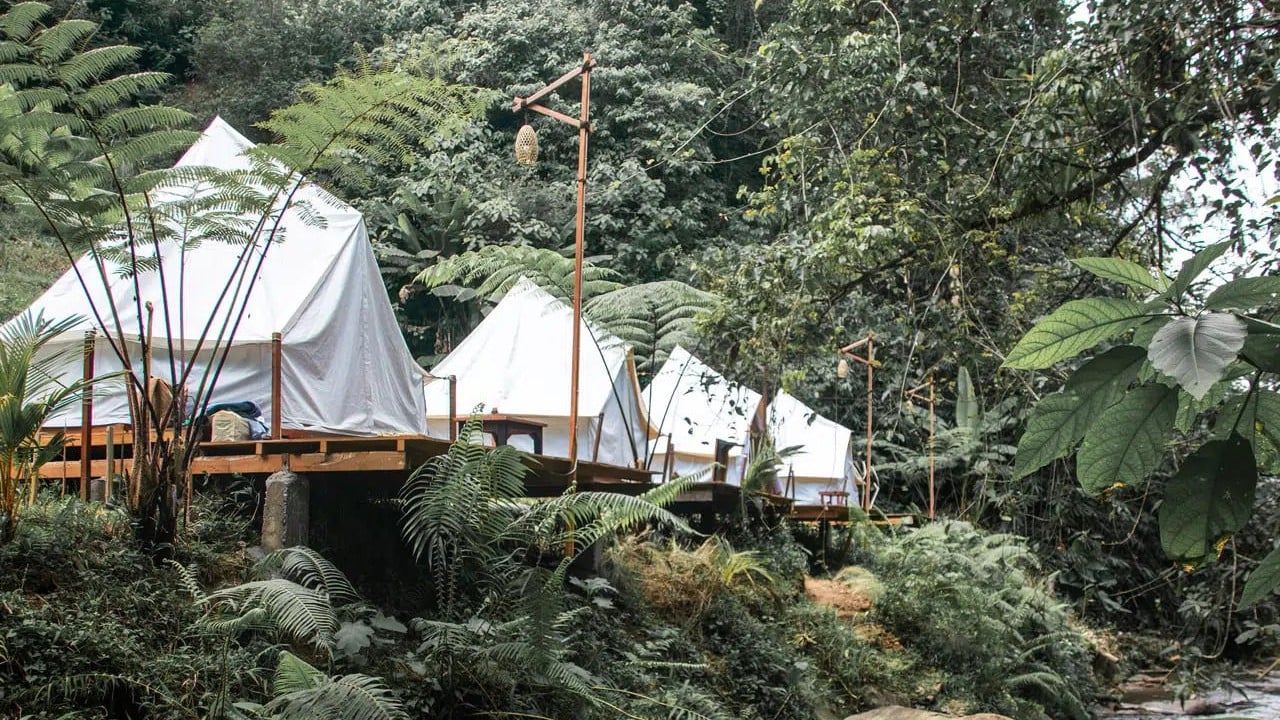
If you've browsed accommodation in Ubud, Sidemen, Kintamani, or Munduk, you know the exact aesthetic everyone wants. You want that bamboo villa perched right on the edge of a jungle ravine or tucked beside a rushing river.
Those exact locations carry the highest geological risk during monsoon months. Local construction in Bali has boomed over the past decade, and not every boutique guesthouse or private villa was built with deep-piled engineering standards. When developers clear natural forest cover to build infinity pools and steep access roads, they strip away the deep root networks that naturally anchor tropical clay.
I've watched roads outside Ubud crack and slump overnight after three straight days of rain. Locals know to stay away from steep riverbanks and cliff edges when the ground turns to mush, while visitors often keep hiking to remote waterfalls or sleeping in valley-bottom bungalows without realizing what sits directly above them.
What Actually Happens During Search and Rescue Operations in Bali
When someone goes missing in a landslide in Bali, emergency response falls primarily to Basarnas, Indonesia's National Search and Rescue Agency, working alongside local police, military personnel, and village volunteers.
Search operations in Bali's interior face brutal conditions. Thick mud, tangled bamboo, unstable secondary slopes, and ongoing rain often prevent heavy machinery like excavators from reaching remote gorges. Rescuers frequently have to dig by hand using shovels and simple tools while spotters watch the hillside above for signs of fresh movement.
Why Secondary Slides Slow Everything Down
A hillside rarely fails cleanly in one go. Once the initial mass of earth, boulders, and uprooted trees slides down, the remaining slope above it loses its support base.
If rain continues, rescue teams have to pause operations repeatedly to avoid being buried themselves. That's why missing person recoveries in regions like Gianyar, Badung, Buleleng, or Karangasem can stretch across days, even when authorities know the exact structure or trail where a traveler was last seen.
The Rainy Season Mistakes Tourists Keep Making
Most people treat Bali's wet season as a minor inconvenience—something you solve with a cheap plastic poncho and a Grab car instead of a scooter. That mindset misses the real hazards.
- Chasing waterfalls after heavy overnight rain. Popular waterfalls like Sekumpul, Nungnung, Tegenungan, and Leke-Leke sit at the bottom of steep gorges. Rainwater collects from miles uphill and funnels straight into these canyons, bringing flash floods and loose rocks down the canyon walls.
- Riding scooters on flooded or mud-streaked mountain roads. Mountain routes around Bedugul and Kintamani frequently collect runoff mud and gravel after storms, turning sharp blind corners into skating rinks.
- Ignoring local warnings because the sun came out. Tropical weather shifts fast, and bright morning sunshine doesn't dry out six feet of saturated hillside soil.
- Booking valley-floor or cliff-edge rooms without checking drainage. If a property sits directly beneath a raw, unreinforced dirt embankment, heavy rain puts that slope right above your roof.
How to Stay Safe in Bali During Monsoon Months
You don't need to cancel a trip to Bali between November and March, because plenty of travelers visit during wet season without incident. You just need to make smarter choices than the average tourist.
Choose Your Accommodation Location Carefully
When booking stays in hilly areas like Ubud or northern Bali, look closely at recent guest photos and satellite maps. Avoid structures built directly at the base of steep, bare dirt cliffs or crammed into narrow riverbeds.
Higher ground with gentle slopes and established stone or concrete retaining walls offers far better stability than newly cleared jungle edges. If you arrive at a villa and notice fresh cracks in walkways, leaning trees on the slope above, or muddy water seeping out of retaining walls, ask to switch rooms or move to another hotel immediately.
Track Official Indonesian Weather Alerts
Skip generic smartphone weather apps that show a rain cloud icon for all of Bali every single day. They're useless for real risk assessment.
Instead, check updates from BMKG for region-specific extreme weather advisories across Bali's regencies. Ask your hotel staff or local driver about road conditions before heading into central or northern highlands, because WhatsApp community groups in Bali share real-time reports of fallen trees, flooded bridges, and blocked mountain passes hours before news outlets pick them up.
Keep Your Waterfall and Trekking Plans Flexible
If it rained hard the night before, skip steep canyon waterfalls and Mount Batur sunrise treks. Swap them for coastal walks, museums, cooking classes, or temple visits on flatter terrain until the ground has time to drain.
Make sure your travel insurance explicitly covers natural disasters, emergency evacuation, and search and rescue operations in Indonesia—many budget policies exclude adventure terrain or weather-related disruptions unless you add specific coverage. Save the emergency contact number for Basarnas (115 in Indonesia) and your country's local consulate in Bali in your phone before you leave your hotel.



