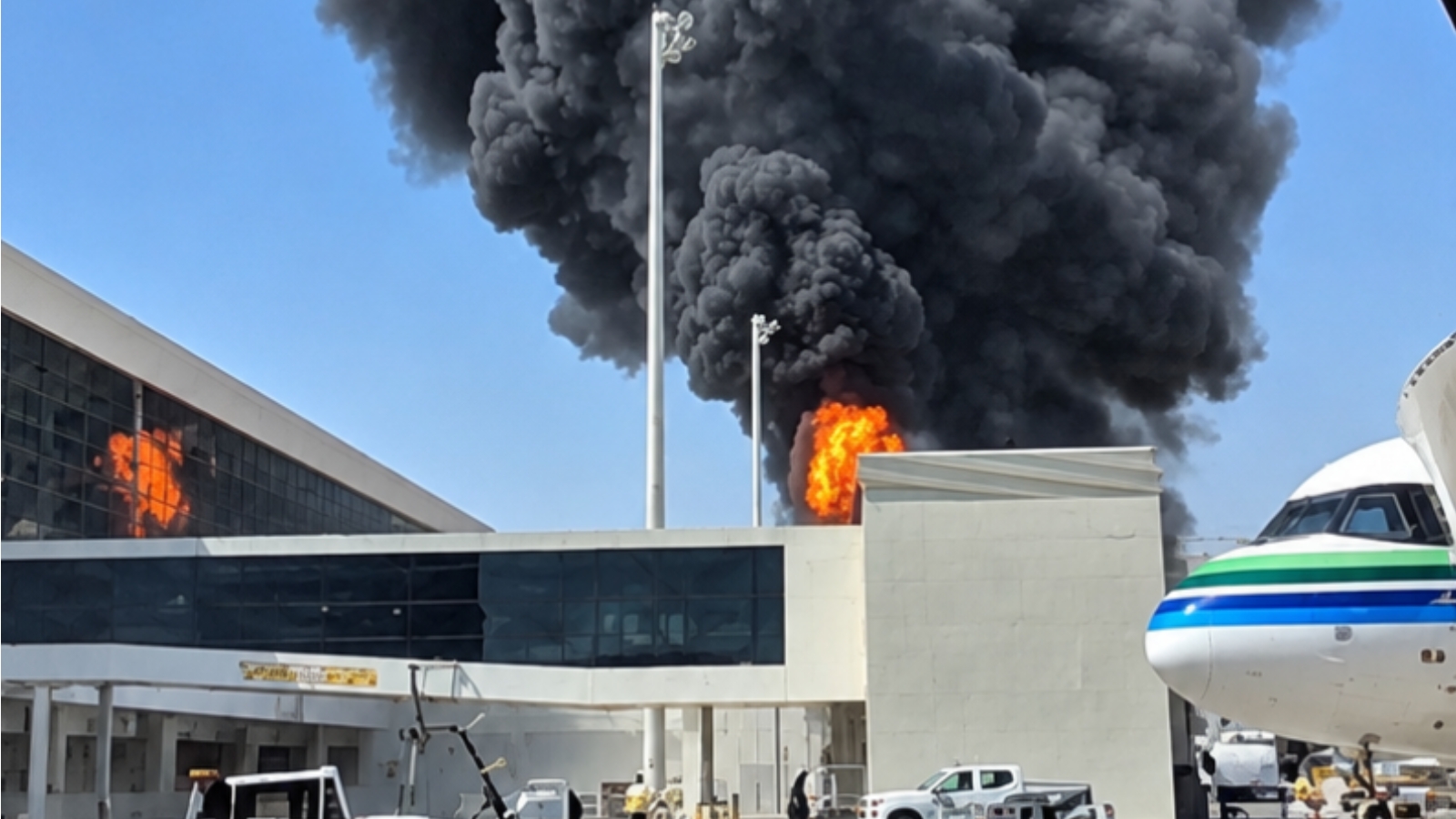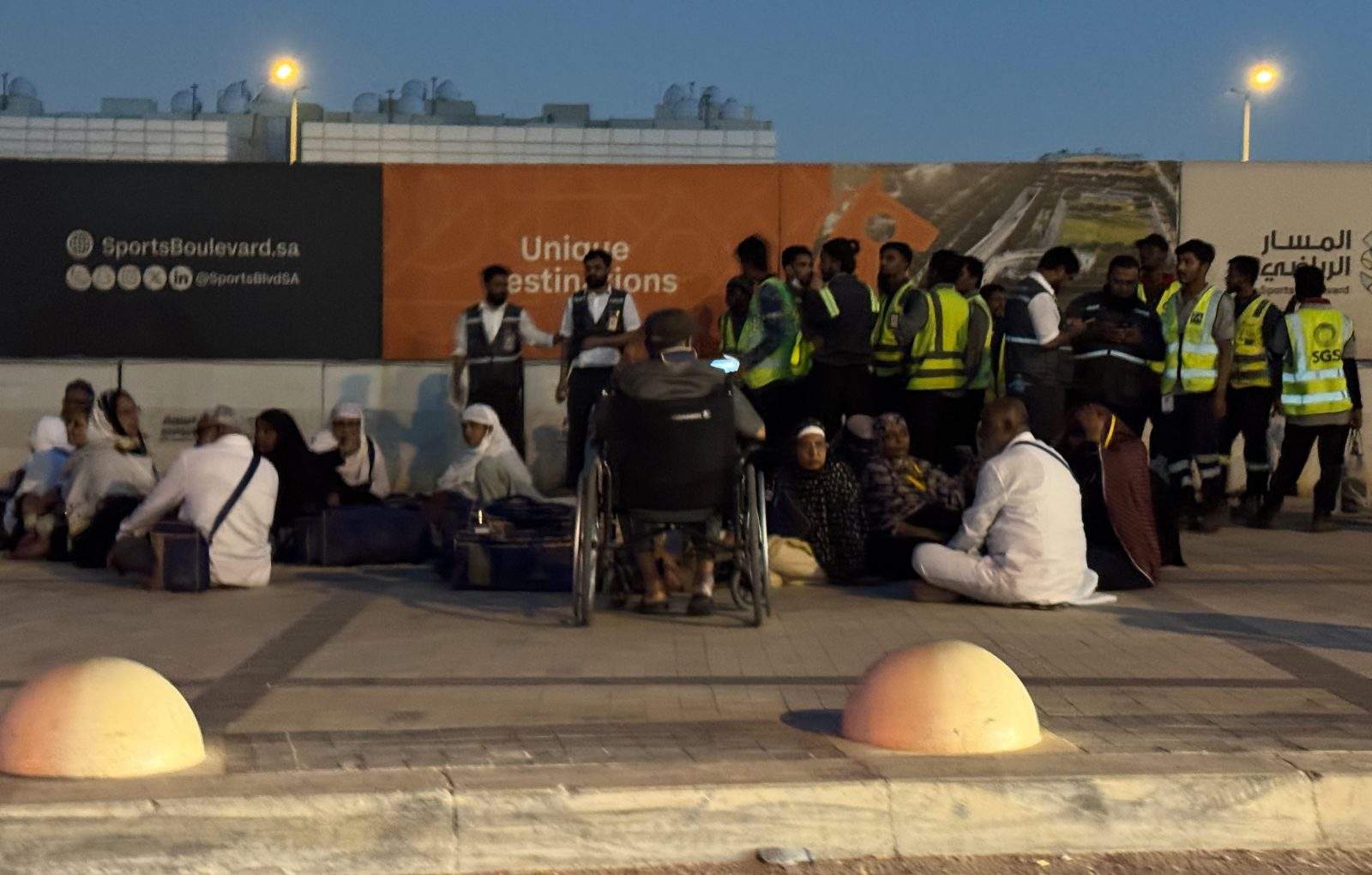
Governments love a good travel advisory. They write them from windowless basements in Ottawa or London, sipping lukewarm drip coffee, while calculating how to minimize political liability rather than how the real world operates. When Canada slaps a do not travel warning on Riyadh airport following regional missile or drone activity, the bureaucratic reflex is simple: cover your backside, push the panic button, and let the local economy twist in the wind.
It is lazy. It is cowardly. And it fundamentally misunderstands modern risk management.
I have spent decades watching risk averse institutions treat foreign capitals like active war zones because a single interception occurred fifty miles away. If you stop flying into hubs with world class air defense networks just because a hostile neighbor lobs a vintage projectile toward the horizon, you might as well stay locked in your suburban basement forever.
Let us break down why the standard advisory playbook on Riyadh airport is completely detached from reality.
The Illusion of Absolute Safety
The core premise of any blanket government travel ban is that safety is a binary switch. You are either inside a sterile safety bubble or standing in an open combat zone. That is a fairy tale told to taxpayers who cannot read a map or understand basic military telemetry.
Riyadh airport operates under a missile defense umbrella that costs billions of dollars and utilizes technology most Western capitals would envy. Patriot batteries and advanced radar arrays do not just sit there for decoration; they track, calculate, and neutralize incoming threats long before commercial tarmac registers a vibration.
Yet, when a single interception lights up the night sky, diplomats thousands of miles away panic. They look at a headline, skip the military
Why Travel Warnings for Riyadh Airport Reveal Our Deepest Security Theater Illusion
travel, news
Panic is a booming industry, and panic at 30,000 feet pays top dollar. When headlines flash warnings about regional drone activity or kinetic intercepts near major aviation hubs like Riyadh, the standard playbook kicks in immediately. Bureaucrats panic, risk-averse corporate compliance departments lock down itineraries, and travel advisories transform into blanket avoidance decrees. The lazy consensus is simple: if there is smoke anywhere on the horizon, ground the fleet and pretend isolation equals safety.
It is a comforting illusion, but it is entirely detached from how modern aviation risk actually functions.
I have watched risk assessment teams throw millions of dollars at imaginary prophylactic measures while completely ignoring the structural mechanics of regional airspace management. The standard travel advisory treats a massive international airport like a residential cottage facing a stray branch. That is not risk management. That is theater.
Let us look at the mechanics of what happens when a kinetic intercept occurs over a major Middle Eastern capital. Modern air defense architecture—specifically the systems deployed across Saudi airspace—does not operate like a medieval castle trying to fend off rocks. It is a multi-layered, highly integrated defensive grid designed to neutralize threats miles away from civilian corridors. When an intercept happens, the airspace does not turn into an open-air shooting gallery. It undergoes surgical, highly controlled management by air traffic controllers who have more live-fire data in a single shift than a domestic U.S. controller sees in a lifetime.
Yet, a single localized intercept triggers a cascade of automated, copy-paste travel warnings from Western governments. Why? Because liability lawyers write foreign office guidelines, not pragmatic operators. If a government warns you not to travel, they insulate themselves from a headline. They do not care if your supply chain freezes, your executive transit halts, or your business conference collapses. They care about covering their own administrative backside.
To understand why blanket travel bans on hubs like King Khalid International Airport are fundamentally flawed, you have to separate strategic threat from tactical panic.
First, define the terms. A kinetic interception is an event, not a permanent structural failure of a secure zone. Ground infrastructure at major Gulf hubs is hardened, redundant, and monitored by systems that dwarf the security apparatus of most European capitals. When an advisory screams that travelers should avoid an airport because of a distant intercept, it conflates the entire territory with a localized perimeter event. That is equivalent to shutting down all flights out of JFK because there is a drone scare in upstate New York. It is geographically illiterate and operationally absurd.
The real danger to travelers in these scenarios is not the theoretical threat of a falling projectile. The real danger is self-inflicted paralysis. When corporations blindly follow broad government bans without analyzing localized data, they strand personnel, disrupt critical supply lines, and surrender operational momentum to bad actors who want nothing more than to paralyze commerce through psychological pressure.
Admitting the downside to this contrarian view is essential: certainty does not exist in international logistics. Flying through a region with active geopolitical friction carries residual risk. Interceptions fail on rare occasions; debris lands where it should not. Absolute safety is a marketing pitch sold by insurance companies. But running away from every ghost in the machine is a fast track to irrelevance.
Smart organizations do not hide behind blanket bans. They look at operational telemetry. They check who is actually flying—because while Western carriers often pull routes out of extreme caution, regional carriers with skin in the game continue operations based on real-time radar data and direct military-civilian coordination channels. If local carriers are landing heavy bodies on the tarmac every four minutes, the sky is open, regardless of what an analyst sitting in a windowless basement in London or Washington decides to type into a PDF.
Stop treating localized geopolitical friction as a total system collapse. Stop letting risk-averse bureaucrats dictate your global footprint. Evaluate the mechanics, look at the actual data feeds, and stop confusing a government liability shield with actual security intelligence.
The next time a red alert drops on your desk regarding a Middle Eastern aviation hub, look past the bold red letters. Ask who benefits from the panic, examine the actual airspace telemetry, and remember that staying home because of a headline is the only guaranteed way to lose.