A sprawling federal indictment unsealed in Los Angeles has fundamentally rewritten the narrative surrounding international gang violence and high-profile assassinations. For over a year, the murder of Sikh separatist leader Hardeep Singh Nijjar outside a temple in British Columbia served as the flashpoint for a bitter diplomatic standoff between Canada and India. Now, the United States Department of Justice has bypassed the geopolitical posturing to reveal a far more pragmatic, terrifying reality. The assassination was not the clean work of a state intelligence apparatus, but rather a contract hit ordered by a transnational cartel operating out of maximum-security cells in India.
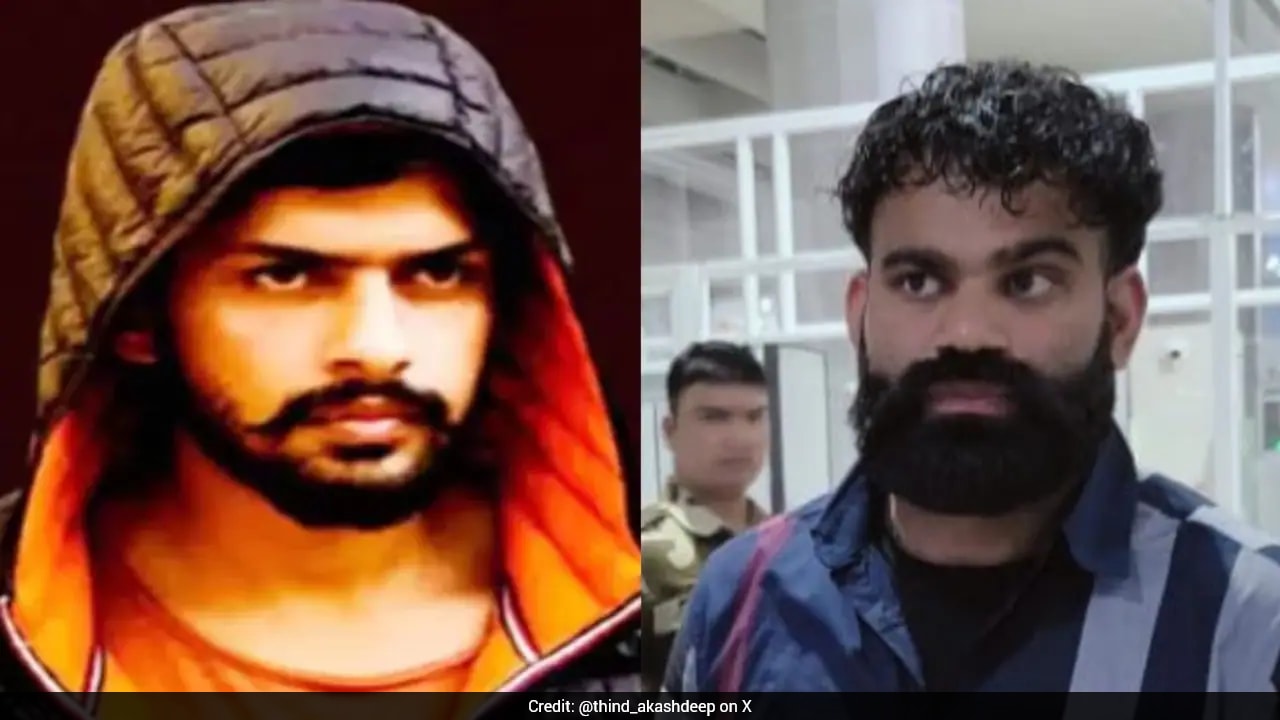
Codenamed Operation Hard Ball, the multi-agency law enforcement offensive led by the FBI has targeted three India-linked criminal syndicates. The sweep resulted in 37 defendants charged and 24 individuals arrested across the United States, Canada, and Europe. Law enforcement executed dozens of search warrants, seizing over 1,000 kilograms of cocaine, firearms, and bundles of illicit cash. At the center of this web sits Lawrence Bishnoi, a 33-year-old gangster who has been behind bars in India since 2015, yet somehow manages a global empire using smuggled mobile phones and encrypted messaging applications.
The formal charges provide an unvarnished look at how modern street gangs transition into global enterprises. While international politicians traded barbs, the Bishnoi network was operating like a multinational corporation, financing violence through large-scale drug trafficking and systemic extortion of the South Asian diaspora.
The Myth of State Control and the Reality of Jailhouse Command
For months, public discourse focused heavily on assertions that foreign government agents directed the June 2023 killing of Nijjar. The American federal indictments strip away that political framing. Strikingly, the charges brought by US prosecutors make no mention of Indian government complicity or awareness. Instead, they place the blame squarely on Bishnoi and his North American lieutenant, Satinderjeet Singh, widely known as Goldy Brar.
Bishnoi has cultivated a specific public persona. By using carefully managed social media accounts and sporadic media interviews from behind bars, he presents himself as a deeply religious nationalist. This digital branding serves as a highly effective recruitment tool, drawing in young associates across continents who view the gang's violence through a distorted lens of patriotism.
The mechanism of command is deceptively simple. Bishnoi relies on voice-over-internet-protocol (VoIP) devices and WhatsApp to maintain daily contact with his operational leaders. From his cell, he coordinates political assassinations, kidnappings, and human smuggling. His brother, Anmol Bishnoi, managed foreign operations before his arrest in California and subsequent deportation to India, while Rohit Godara oversaw the syndicate's expansion across Europe.
Stealing from Cartels to Fund a Global Franchise
Running a network that spans India, Canada, the United Kingdom, and the United States requires substantial capital. Operation Hard Ball revealed that the Bishnoi gang chose a highly dangerous, incredibly lucrative method to fund their activities. They began hijacking shipments from established drug trafficking organizations.
Between 2024 and 2025, the group allegedly stole roughly 520 kilograms of cocaine from rival traffickers in the Los Angeles area alone. They turned commercial trucking routes into private distribution channels, moving bulk quantities of narcotics across the border into Canada. This was not a secondary side-hustle. It was the financial engine driving their entire enforcement operation.
The money generated from these cross-border shipments flowed straight into an extortion machine targeting wealthy South Asian business owners. Gang members sent terrifying messages over encrypted apps, demanding millions of dollars under the threat of immediate violence. When victims refused to pay, the gang deployed foot soldiers to fire weapons at their homes, often recording the shootings on body cameras to post online as a warning to others.
The Fractured Alliances of the New Underworld
The American investigation did not stop with Bishnoi. It exposed a hyper-competitive criminal ecosystem where former allies quickly transform into lethal adversaries. Among those indicted was Jaggu Bhagwanpuria, a gangster who initially helped build Bishnoi’s infrastructure in India’s Punjab state before breaking away to form a rival transnational network.
Bhagwanpuria’s syndicate operates on a similar blueprint, using corrupt officials in India to facilitate domestic extortion while building an international distribution footprint across Australia, New Zealand, and Europe. Simultaneously, a third network led by Canada-based Ravinder Singh Dhanda was indicted for providing bulk smuggling services, moving mass quantities of methamphetamine and cocaine through Southern California.
This is no longer a localized problem of street-level turf wars. The National Investigation Agency of India has likened this current era to the pre-1993 Mumbai underworld, where criminal syndicates seamlessly merged with extremist elements, weaponized the entertainment industry, and built deep financial networks that western law enforcement is only now beginning to map.
The Western world long viewed these syndicates as domestic issues contained within the subcontinent. Operation Hard Ball has shattered that illusion, proving that a locked prison doors in Gujarat offer no protection against an enterprise that views international borders as nothing more than logistical hurdles.
The FBI is currently pursuing ten remaining fugitives scattered across the United States, India, and Europe. The global crackdown proves that while political leaders argue over sovereignty and diplomatic protocols, the real threat travels through encrypted bandwidth and commercial freight lanes, completely indifferent to the flag flying over the soil where the blood is spilled.


